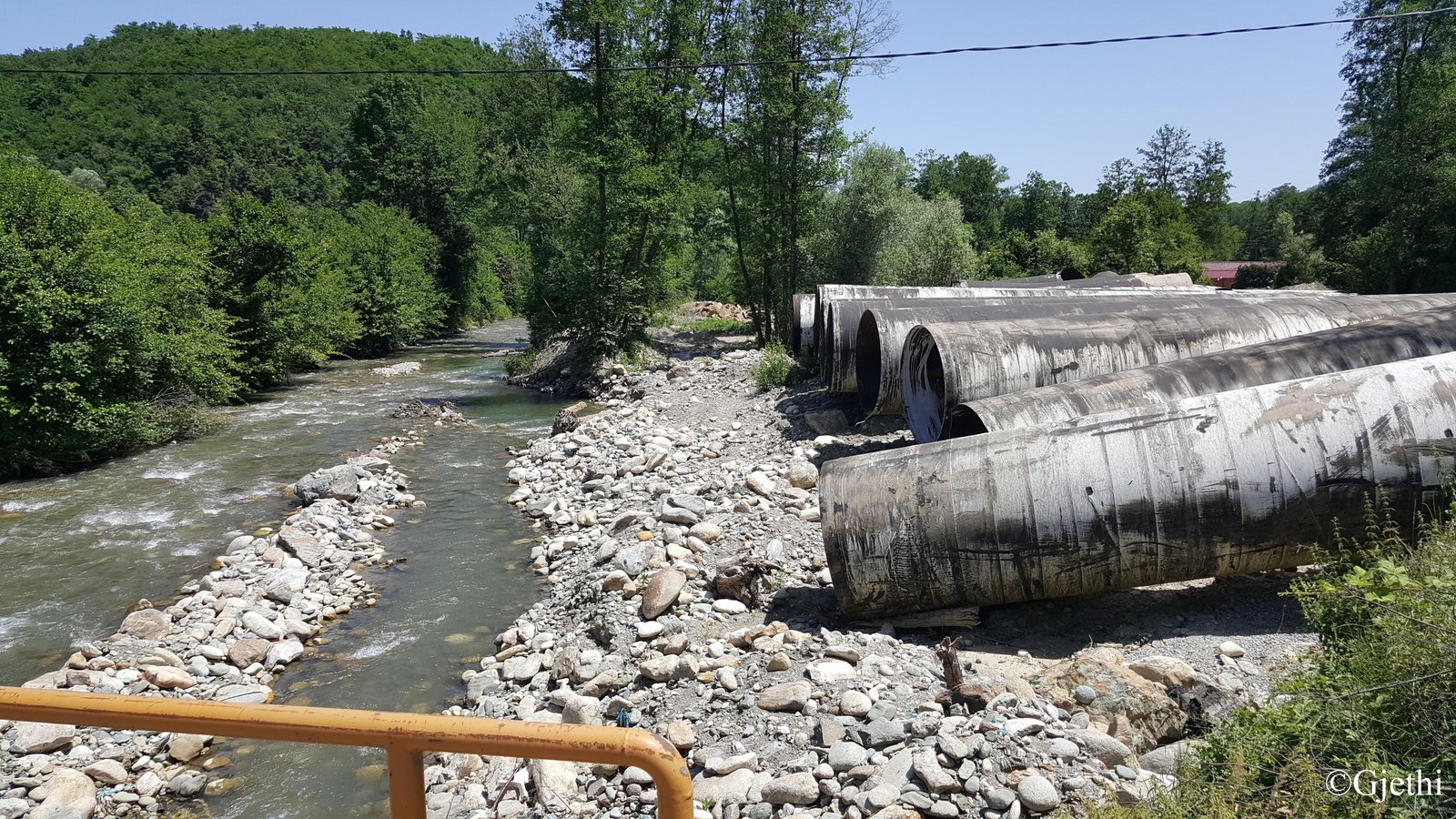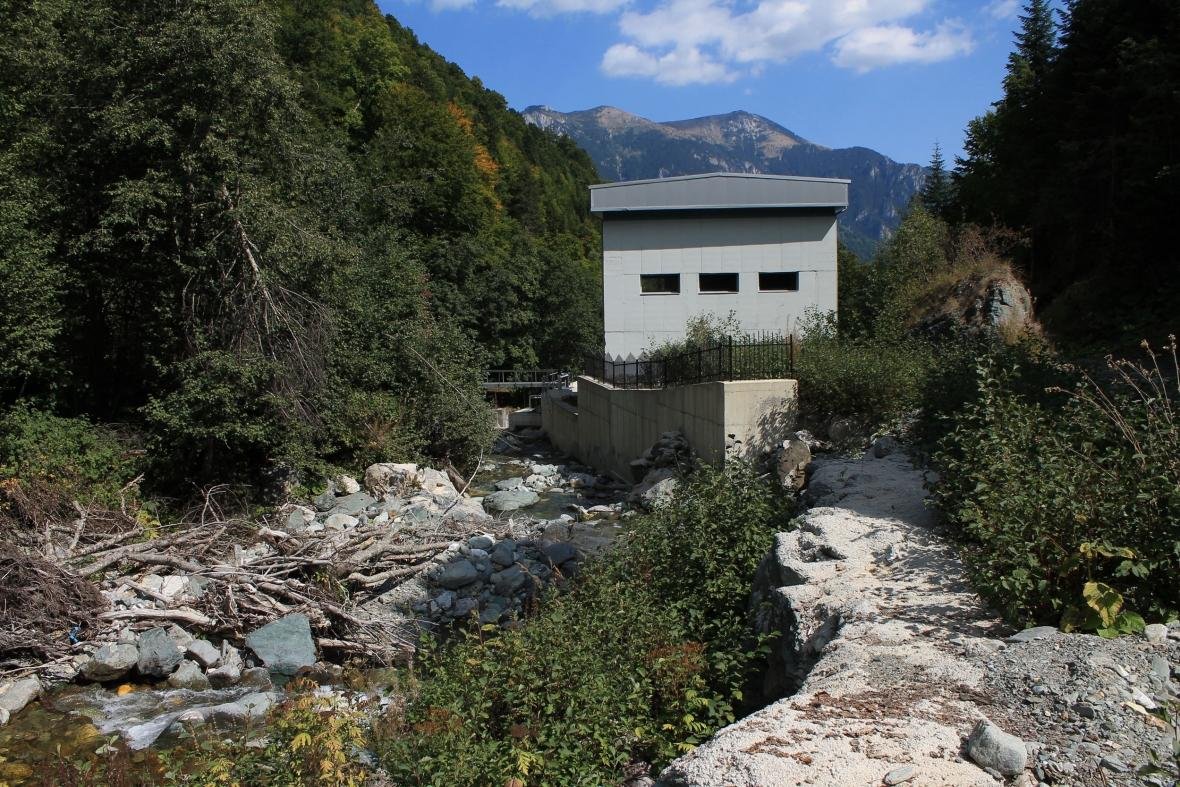

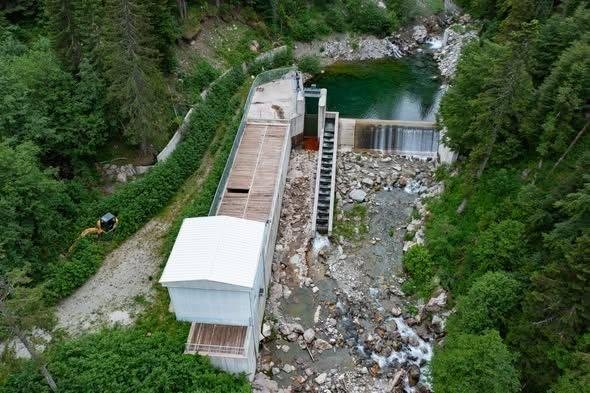
The construction of hydropower plants in Kosovo has been marked by ongoing debate and public concern over the environmental damage they have caused and continue to cause. Meanwhile, numerous investigations, reports, and studies have documented the wide-ranging environmental harm resulting from both the construction and operation of these hydropower plants.
Various forms of damage have also been suffered by residents of the villages where the hydropower plants were built.
Because of these extensive impacts, the issue of removing hydropower plants has been raised by affected residents as well as civil society activists working on environmental issues.
However, it appears that granting permits and licenses for these hydropower plants was far easier than shutting them down. In this regard, their potential closure—or the process of decommissioning them—could pose significant legal and financial challenges for the state of Kosovo.
Rinon Arifi, a lawyer and legal expert, says that the legal process for suspending or shutting down a hydropower plant must be led by the responsible institutions, namely the competent inspectorates for water management and environmental protection. According to him, continuous oversight and monitoring of operators' activities, combined with the documentation of legal or environmental violations, provide the basis for taking administrative measures.
Arifi says these measures may include fines, the temporary suspension of permits and licenses until the identified legal violations are remedied, and, in cases of repeated or serious violations, their permanent revocation or cancellation.
According to him, the current legislation provides for the periodic review of environmental and water permits. The Law on Environmental Protection requires environmental permits to be reviewed or reassessed every five years, while the Law on Waters stipulates that water permits must be reviewed at least every five years, even when they have been issued for longer periods.
“These mechanisms are intended to ensure continuous institutional oversight of compliance with environmental standards and legal requirements, although in practice they have often not been implemented effectively,” Arifi says.
He believes that Kosovo’s courts play an important role in reviewing administrative acts, including water and environmental permits. Arifi notes that a case currently pending before the Constitutional Court since late 2024 is considered a landmark case in the field of environmental protection and is directly related to hydropower plants.
According to him, the Constitutional Court’s decision is expected to have a significant impact on setting environmental protection standards and guiding the regular courts and administrative authorities to give careful consideration to environmental aspects when authorizing and reviewing such projects.
However, he emphasizes that the decisions and actions of the responsible institutions must be professional and evidence-based; otherwise, operators may initiate legal proceedings, including arbitration.
“If the institutions take measures based on clear documentation of violations and follow proper administrative procedures, the state's legal position is significantly strengthened, reducing the likelihood of financial liabilities arising from compensation claims,” Arifi says.
Egzona Shala-Kadiu, Executive Director of the environmental organization EcoZ, says that hydropower plants cannot be shut down solely through political decisions. Instead, the violations committed during their construction and operation must first be properly identified and documented.
Nevertheless, she believes that the existing legal framework already provides the competent institutions with sufficient authority to monitor and oversee compliance with environmental standards and the conditions set out in permits. For this reason, she argues that legislative amendments are not necessarily a prerequisite for a more rigorous approach to regulating hydropower plants.
Shala-Kadiu also says that the concept of public interest can serve as a legal basis for intervention in hydropower plant operations, particularly when the objective is to protect the environment and natural resources.
“Since permits and licenses may be treated as property rights, their revocation or cancellation must be based on documented violations and the gradual application of administrative measures, such as fines, improvement orders, or temporary suspensions,” she emphasized.
Can Hydropower Plants Be Removed from Protected Areas?
One of the key concerns raised by environmental activists has been that several hydropower plants were built within protected areas. In addition, numerous investigations and studies have documented the extensive environmental damage caused by both the construction and operation of hydropower plants in these areas.
Egzona Shala-Kadiu says that protected areas enjoy special legal protection and, in principle, activities that may harm ecosystems, including hydropower projects, should be prohibited within these areas.
She noted that there have been cases where hydropower projects were developed even in protected areas, with permits and licenses issued by the competent state authorities themselves, resulting in numerous legal and environmental disputes.
We asked the Ministry of Environment and Spatial Planning (MESP) whether it had ever considered the possibility of shutting down hydropower plants operating in environmentally sensitive areas. While the Ministry did not provide a detailed response, it stated that the Regional River Basin Authority (RRBA), in accordance with Administrative Instruction No. 03/2018, Article 30, provides professional opinions on activities carried out in environmentally sensitive areas, including sanitary protection zones for water sources.
“Within this framework, the possibility of restricting or terminating activities that may endanger these areas has also been considered,” the Ministry said in its response.
North Macedonia removed hydropower projects from protected areas
Following the designation of the Shar Mountain as a national park in 2021, the implementation of hydropower projects in the area was halted.
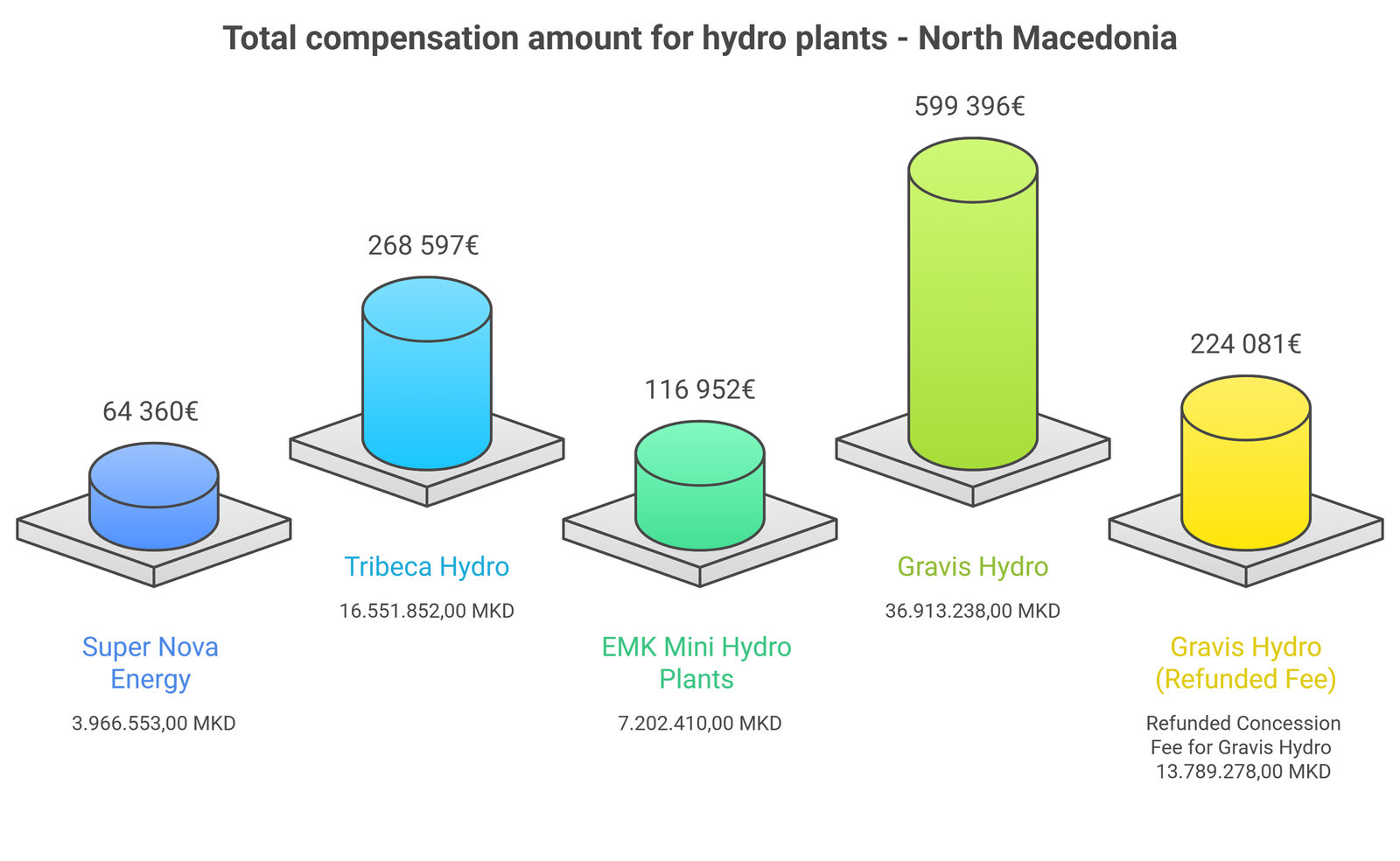
According to a response from North Macedonia's Ministry of Environment, construction was stopped on eight small hydropower plants that were being developed in the park: MHE Leshočka 100, MHE Leshočka 101, MHE Beloviška 107, MHE Vratnička 66, MHE Ljubotenska 67, MHE Pena 82, MHE Mazdrača, and MHEC Šeljice 9.
The Government of North Macedonia compensated the companies that owned these hydropower projects.
According to the Ministry's response, the compensation amounts ranged from €64,000 at the lowest end to €597,000 at the highest. (See the infographic at the bottom)
MESP may initiate procedures to revoke water permits
The Ministry of Environment, Spatial Planning and Infrastructure (MESPI) has not taken a clear position regarding the possible closure of hydropower plants. However, it stated that it maintains a supervisory role and seeks the full implementation of the applicable legislation governing the operation of existing hydropower plants in Kosovo.
“The Ministry’s primary focus is the protection of water resources, the prevention of misuse, and ensuring that operators carry out their activities in accordance with the conditions of their water permits and environmental standards,” the Ministry said in its response.
Regarding procedures for suspending the operation of hydropower plants, the Ministry explained that the Water Inspectorate monitors compliance with permit conditions, verifies violations, and initiates procedures for the revocation of water permits. Once violations are identified, the Ministry is notified and may issue a Water Order requiring the immediate suspension of activities if there is a risk to the environment or water resources.
“The Ministry may also grant the operator a 30-day deadline to remedy the violations. If the operator fails to comply within the prescribed period, the Ministry issues a decision to revoke the water permit,” the Ministry stated.
With regard to the legal basis for suspending the operation of hydropower plants, MESPI emphasized that this is clearly established in the applicable legislation, namely Article 76 of the Law on Waters, which specifies the grounds for revoking a water permit, as well as Article 77 and Article 18 of Administrative Instruction No. 03/2018, which regulate the procedures for permit revocation.
Under Article 18 of Administrative Instruction No. 03/2018, a water permit may be revoked if water is used in violation of the permit conditions, the required concession is missing or procedural violations exist, the permit holder fails to pay the fee for water use, a court prohibits the operator from carrying out its activities or significant damage is caused to the ecosystem and the environment.
Regarding the risk of arbitration or other legal consequences arising from the removal of hydropower plants, MESPI acknowledged that operators may initiate court proceedings or arbitration against the state. However, according to the Ministry, the Law on Waters and Article 18 of Administrative Instruction No. 03/2018 provide for the revocation of water permits without compensation where an operator has acted in breach of permit conditions or applicable legal provisions. In such cases, the state has a solid legal basis for protecting the public interest.
Halting hydropower operations would be the ideal outcome
For years, the environmental organization Gjethi has campaigned against hydropower plants built in Sharri National Park, organizing protests and various awareness-raising activities while informing citizens about the environmental damage caused by these projects.
Valon Raka, the organization's Executive Director, says that shutting down hydropower plants would be the ideal solution. However, he believes that under the current circumstances, several practical measures could be taken to improve conditions on the ground, including enforcing the minimum ecological flow to prevent rivers from drying up and to sustain aquatic life. He adds that another important step would be to halt operations that fail to comply with regulations, require comprehensive environmental impact assessments before any new construction or expansion, or prohibit such projects altogether in the future.
“Proper fish passages should be installed instead of the concrete structures we currently have, which do not reflect the conditions on the ground. Fish screens and bypass channels should be built to allow upstream and downstream migration and prevent blockages, rather than being installed merely for appearances,” Raka says.
He also believes that restoring habitats through tree planting, creating ponds, flushing river channels to replenish gravel beds, and developing river basin management plans would help reduce negative environmental impacts.
According to Raka, regular inspections and community reporting are also essential to prevent future violations.
Dams as an alternative to hydropower plants
The Government of Kosovo has recently announced plans to build five dams. However, it remains unclear whether their construction will affect the operation of existing hydropower plants.
On this issue, MESPI stated that on cases where it is determined that small hydropower plants have been licensed in areas designated for strategic projects—such as dams for drinking water supply or irrigation—the Regional River Basin Authority (RRBA) has the authority to review water permits and take action to facilitate projects of significant socio-economic importance.
“This authority is provided under Article 5, paragraph 2.1 of Administrative Instruction No. 03/2018,” the Ministry stated.
Agron Rushiti, a resident of the village of Biti in the municipality of Shtërpcë, has long opposed the construction of hydropower plants and the diversion of the Lepenc River into pipelines, participating in protests and other advocacy efforts. He says he has little hope that Kosovo's institutions will remove the hydropower plants already built on the Lepenc, despite the serious consequences they have had for the river and the surrounding communities. However, he has heard discussions about the planned construction of the Firaja Dam.
Rushiti says that if the dam is built, its water could also be used to generate electricity, making additional hydropower plants in the area unnecessary.
“The dam is our only hope—not just for our village and the Lepenc River, but for all of Kosovo,” Rushiti said.
Hydropower plants continue to damage the ecosystem
Hydropower plants operating in Kosovo continue to cause environmental harm. This has recently been confirmed by the Ministry of Environment, Spatial Planning and Infrastructure itself.
On 2 March this year, Minister Fitore Pacolli ordered an extraordinary inspection of all operating hydropower plants in Kosovo to be carried out within 30 days. The decision cited numerous reports of riverbed degradation and well-founded suspicions of illegal operations by several economic operators.
Following inspections of 25 hydropower plants, the Inspectorate's report identified repeated environmental violations and a failure to comply with the conditions of water permits.
One of the report's main findings was the failure to maintain the minimum ecological flow—that is, leaving the minimum required volume of water in rivers after water is diverted for electricity generation. According to the report, in several cases the remaining flow was insufficient to sustain river ecosystems and aquatic life.
The report also identified the absence of equipment for measuring the minimum ecological flow and water meters at several hydropower plants. According to the Inspectorate, in some cases these devices had not been installed because the necessary approvals and software had not been provided by the responsible institutions.
In addition, inspectors found infrastructure deficiencies, including unfinished or non-functional fish passages, closed gates, and poorly maintained water intake structures.
As enforcement measures, the Inspectorate imposed fines for violations of water permit conditions, issued orders requiring compliance with minimum ecological flow requirements, and set deadlines for environmental rehabilitation and the harmonization of documentation. The fines ranged from €1,000 to €5,000 for economic operators.
Under the applicable legislation, systematic violations may lead to a range of enforcement measures, including the suspension or eventual termination of hydropower operations. This underscores the need for more rigorous monitoring of hydropower plants, while ensuring that any measures taken are legally sound and defensible.
Egzona Shala-Kadiu of EcoZ says that, from a legal perspective, a gradual approach is the safest and most effective way to avoid significant legal and financial consequences for the state. According to her, measures such as not renewing licenses, strengthening environmental standards, and enhancing monitoring create a more robust legal basis for intervention against operators./EcoZ/