

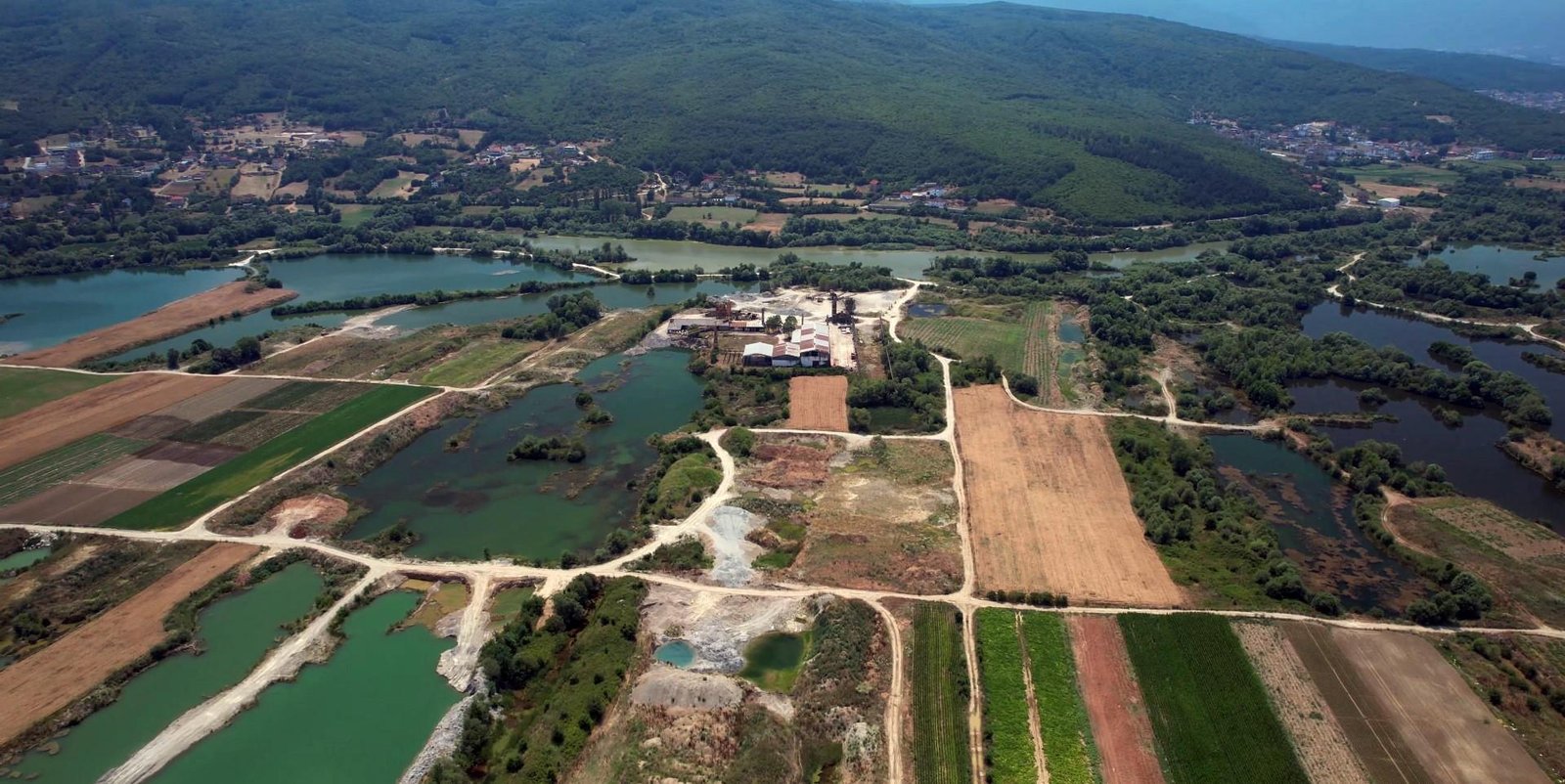
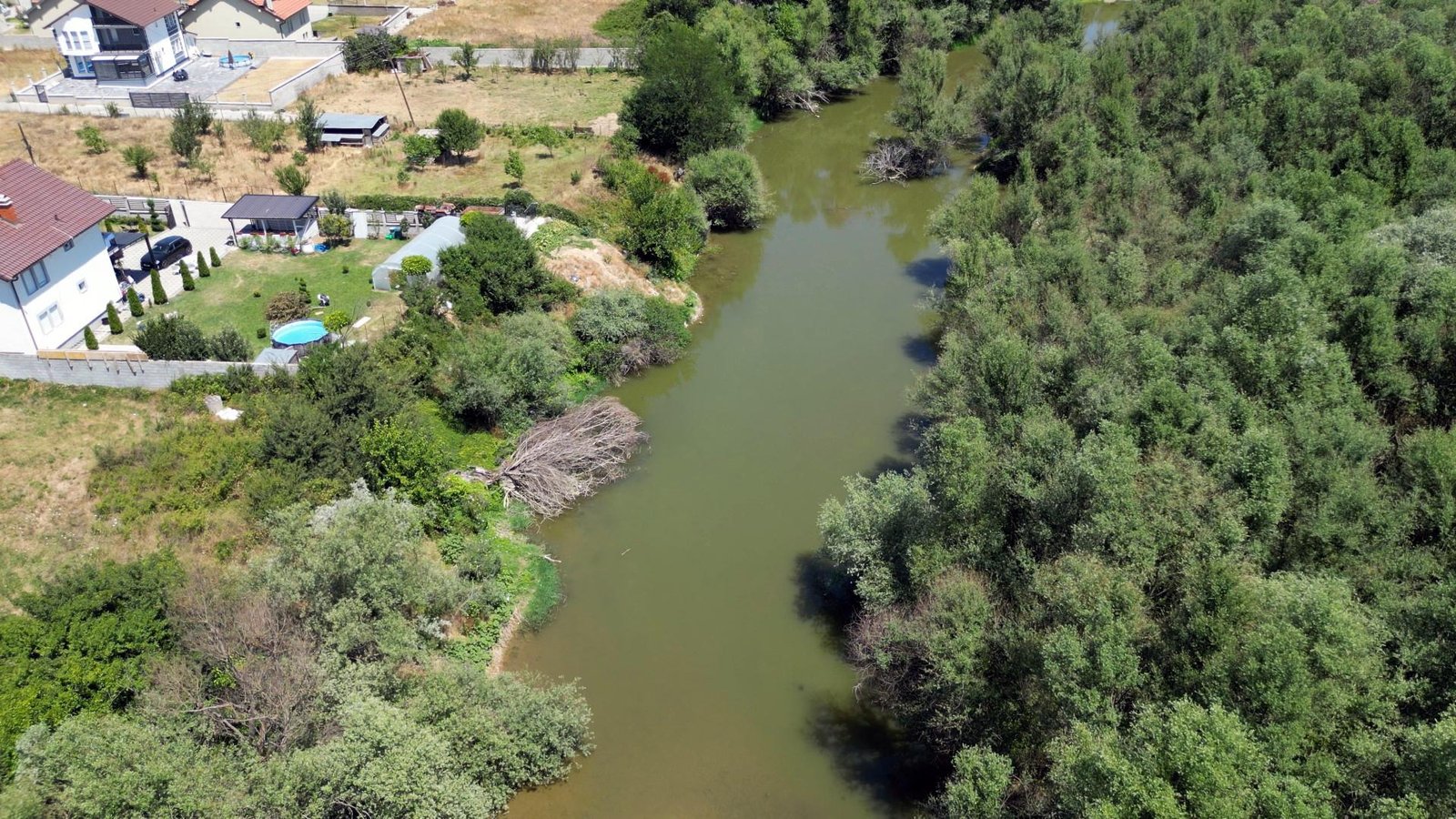
In the village of Nashec, near Prizren, another water stream joins the White Drin River. From above, it sometimes looks like an ordinary tributary. But as soon as you get closer, it becomes clear that something is wrong. The water is darker, foul-smelling, and spreads into the main river like a stain of pollution.
This is not a river. It is a large, open sewage channel that discharges directly into the White Drin.
When we visited this location during the summer, the volume of water was lower than in other seasons. Residents of Nashec say that in summer the pollution appears less severe due to the lack of rainfall and drinking water restrictions, whereas in other seasons this “river” is visibly much larger.
Nevertheless, even during this period, its impact on the river’s pollution was evident not only to the naked eye, but also through drone footage, where the difference between the waters of the Drin and the sewage discharge was clearly visible as two distinct streams meeting.
We reached this location after reviewing satellite imagery as part of an analysis on the pollution and degradation of the White Drin’s riverbed. The discharge of this massive sewage channel is clearly visible in the images available on the Google Maps platform.
According to the residents of Nashec, this situation has persisted since 2005 and has significantly damaged the environment from the point where the sewage is discharged all the way to the river.
Shukri Quni, the head of the village and a former municipal councilor in the Municipality of Prizren, says that more than 50% of Prizren’s wastewater, along with that of several other villages, is discharged into this section of the White Drin.
“Now you can see for yourself the kind of pollution being caused to the Drin. This used to be a recreational area for residents, whereas now it smells like sewage,” Quni says.
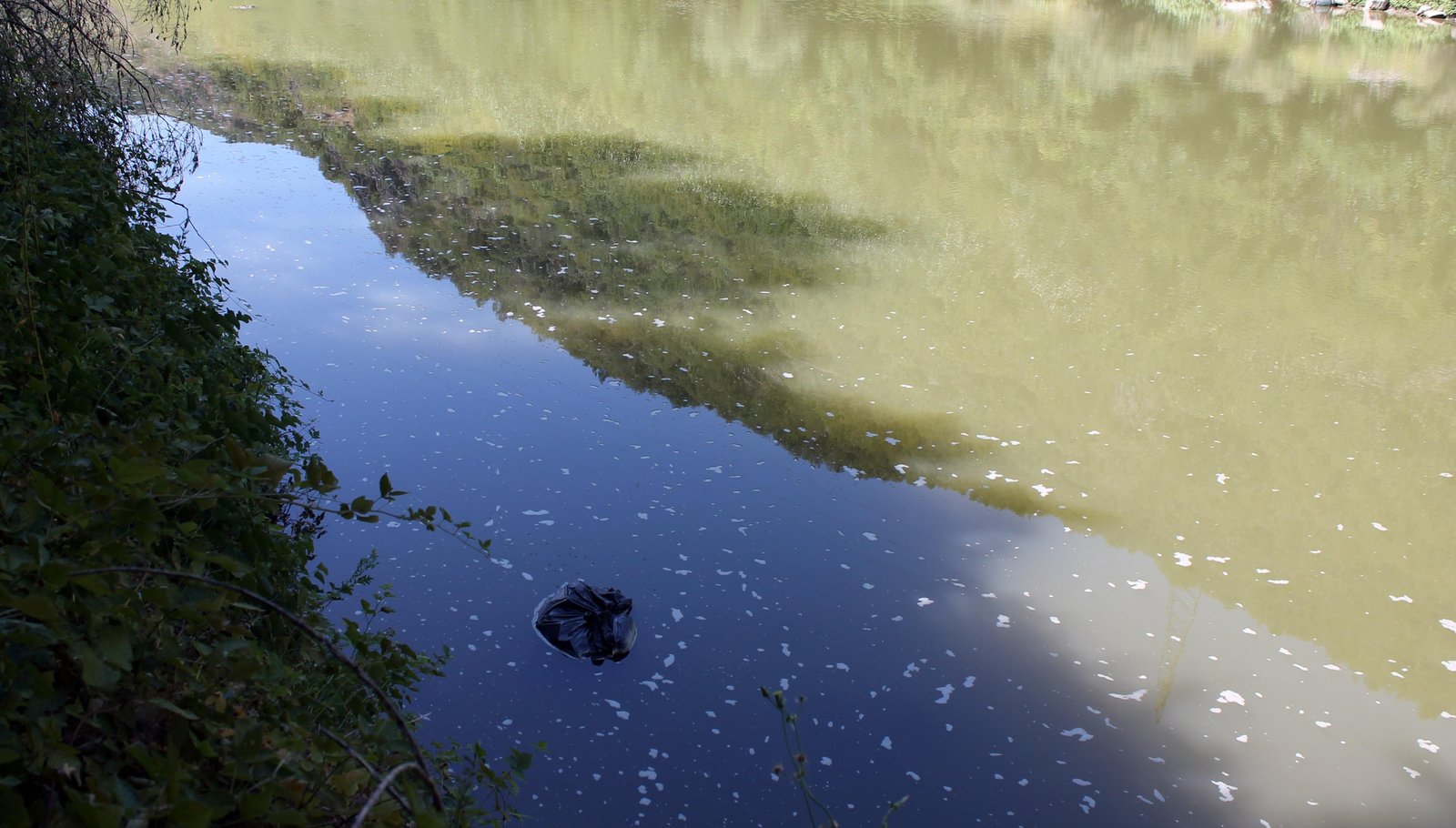
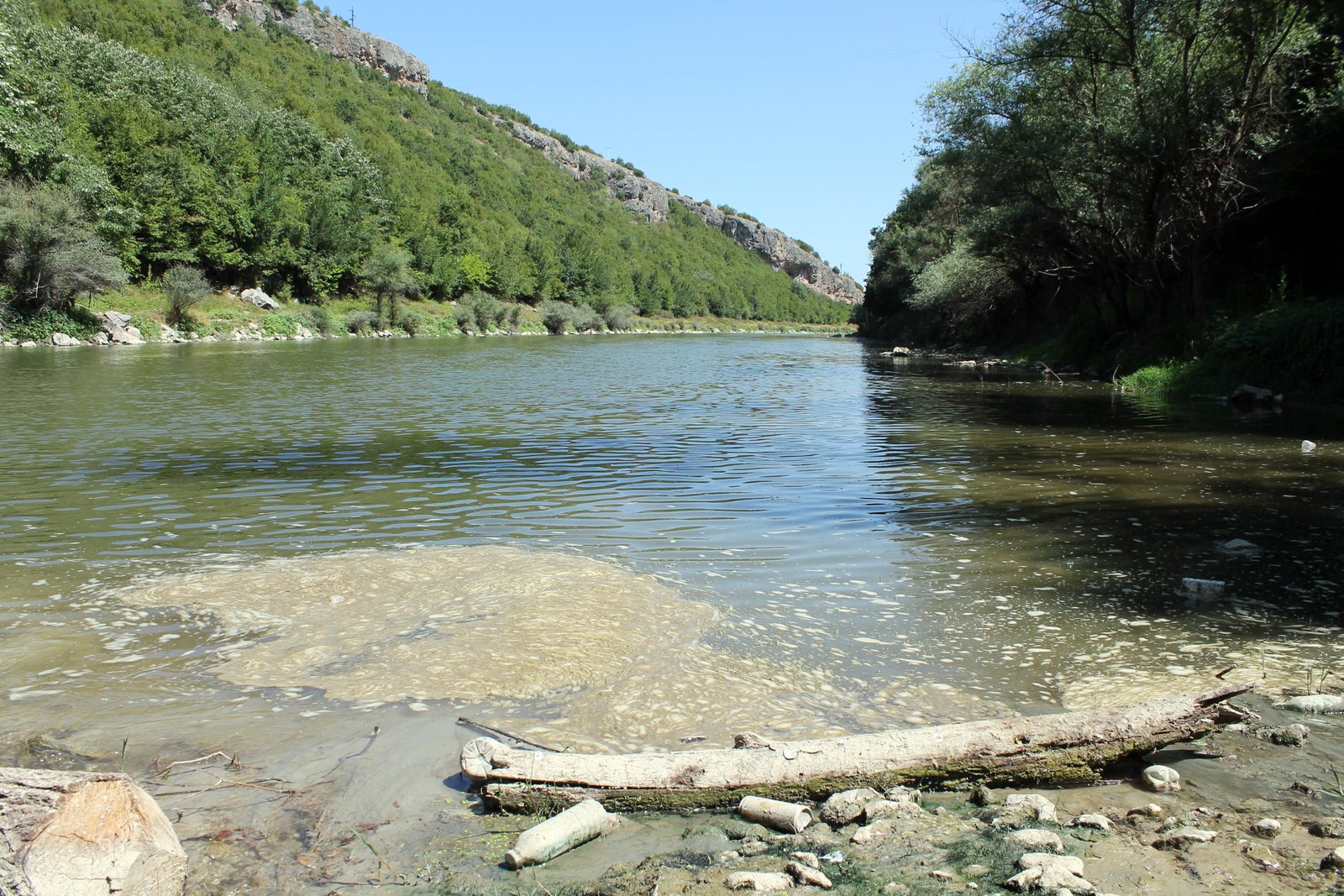
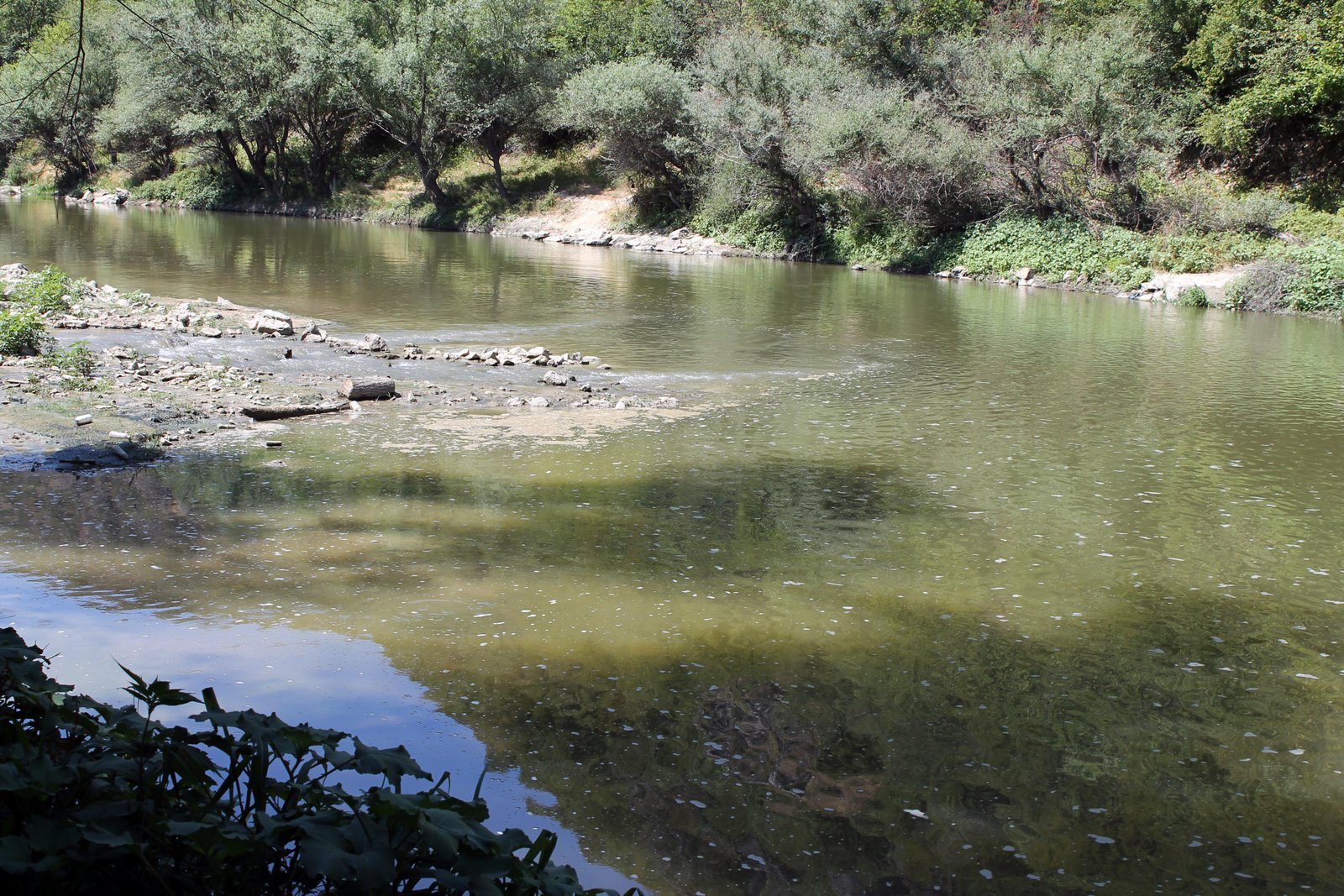
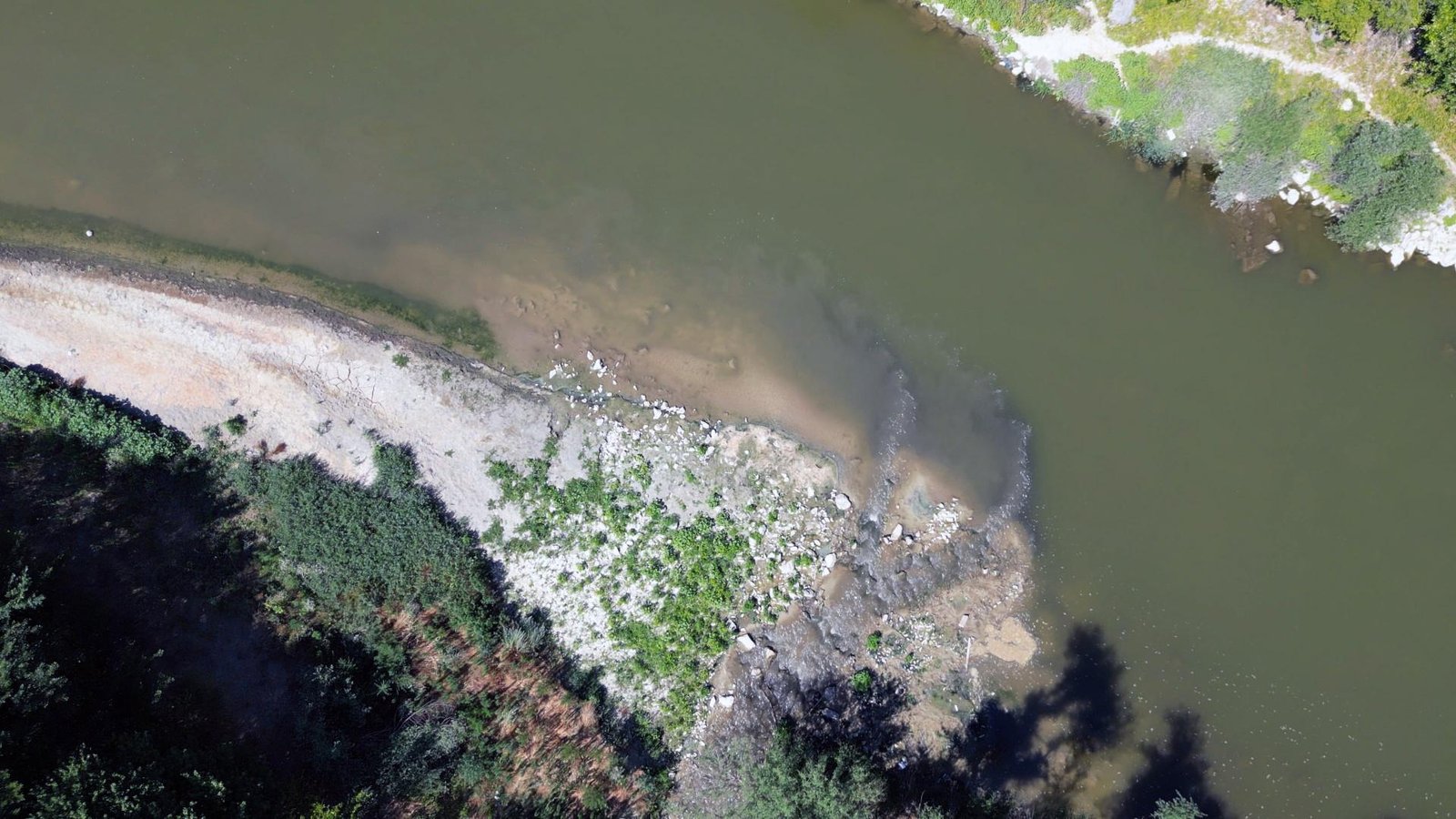
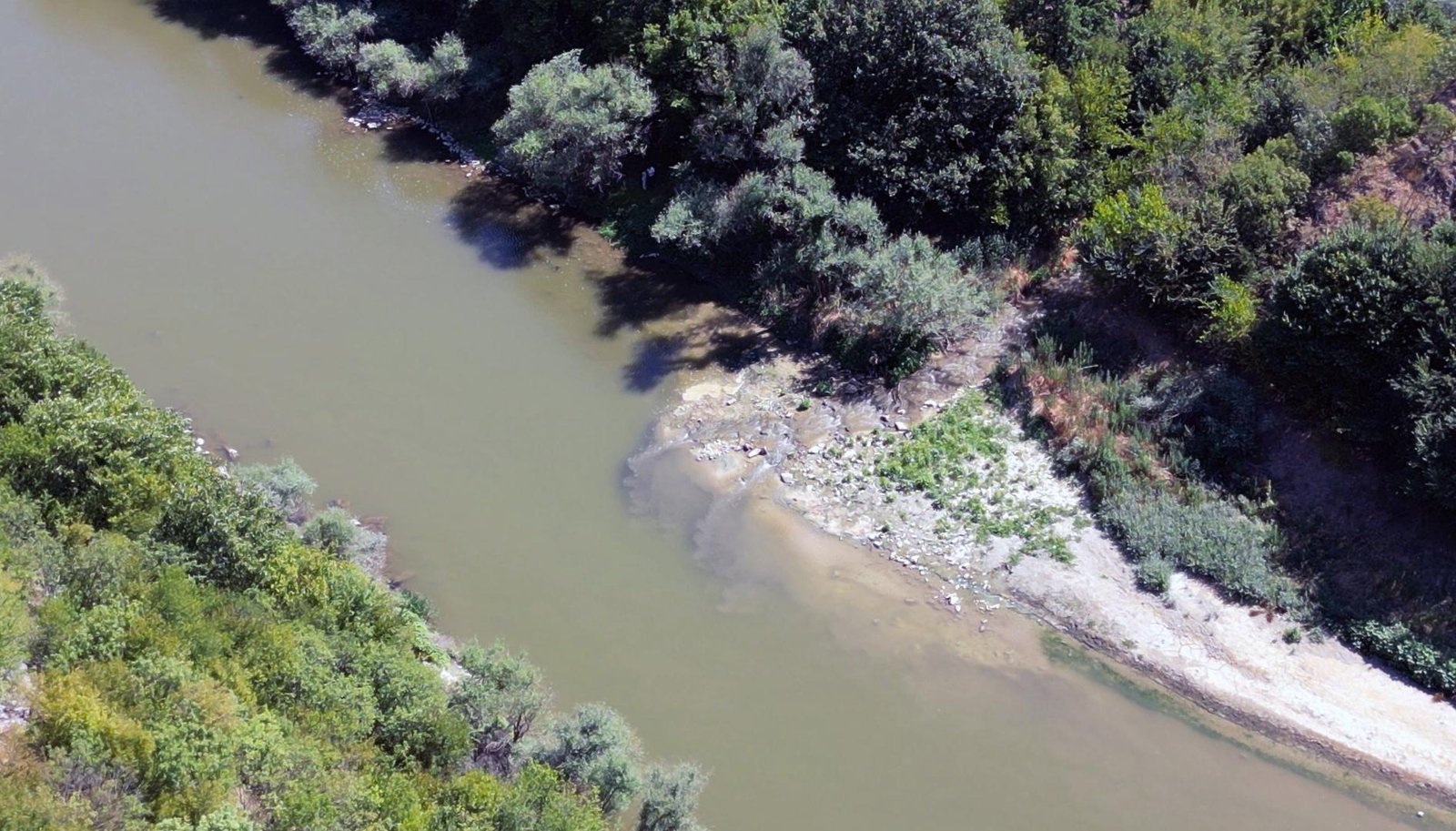
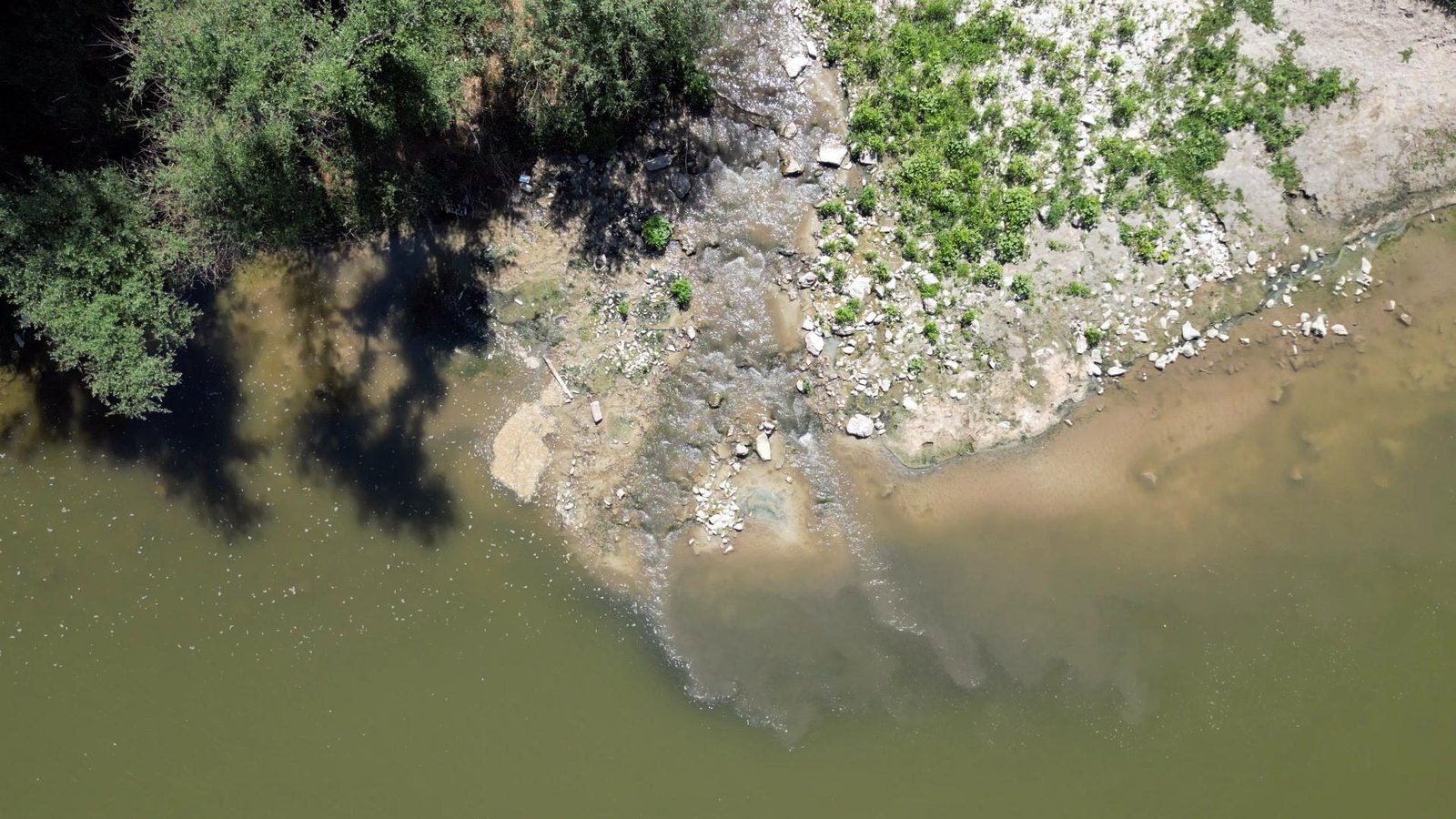
This is the “Black River” of Prizren, which flows into the White Drin in the village of Nashec. | Photo: Besnik Boletini
He also took us to the large pipes from which the sewage flows before reaching the river. A treatment plant had been planned to be built there, but it was never constructed. Quni says that the residents of Nashec were misled by those promises, because they would not have allowed the sewage pipes to be installed if they had known they would ultimately discharge directly into the river.
Quni says they have submitted several requests for the construction of a treatment plant, but so far nothing has been done in this regard.
In a written response regarding the massive discharge of wastewater in the village of Nashec, the Municipality of Prizren stated that two feasibility studies have been conducted. However, the high cost of the project has slowed down its implementation, and government cooperation is also required to move it forward.
“The Municipality of Prizren currently has no plan in this regard,” the response states.
In the absence of wastewater treatment plants, it has become a “normality” in Kosovo for sewage to be discharged directly into rivers.
Egzona Shala-Kadiu, Executive Director of the organization EcoZ, says that the most critical problem affecting surface waters is the various types of discharges into them whether urban, agricultural, or household waste and in Kosovo, rivers are often the only destination for such discharges.
“Only about 2 percent of wastewater in our country is treated before being discharged into rivers due to the lack of treatment plants. The remaining 98 percent goes directly into rivers or septic tanks,” she says.
In addition to pollution from wastewater, the White Drin is filled with large amounts of different types of waste. Significant damage has also been caused by illegal sand and gravel extractors, who have excavated extensively, with the result that in many locations even the river’s true bed is no longer clearly identifiable.
Watch the video for more details.
Also as a result of these activities, at the beginning of each year many villages and towns along the White Drin experience flooding, causing extensive damage. This happened in Kosovo during the first week of January this year. The rising water level collected waste dumped into the river, mainly around bridges, where the flow was blocked, causing the river to divert. In areas where excavation had taken place, the river shifted more easily, flooding fields, yards, homes, and business properties, resulting in damages worth millions of euros.
Along the Polluted Drin: Wastewater, Garbage, Exploitation
The White Drin is the longest river in Kosovo, stretching approximately 122 kilometers. During this investigation, we visited several points along the river’s course, from the village of Radac in Peja, where it originates, all the way to Kukës near the lake of Fierza. All the pollution originating in Kosovo ends up in Albania, especially when the water level rises, as it did at the beginning of January. Waste dumped into the river and along its banks accumulates and largely flows into Kukës.
Pollution of the White Drin begins right at its source. There, sewage from restaurants and some nearby houses is discharged directly into the river. Following the flow for 200–300 meters, one can also find a large sewage pipe, as well as mainly plastic waste that has been dumped and accumulated in various spots along the river.
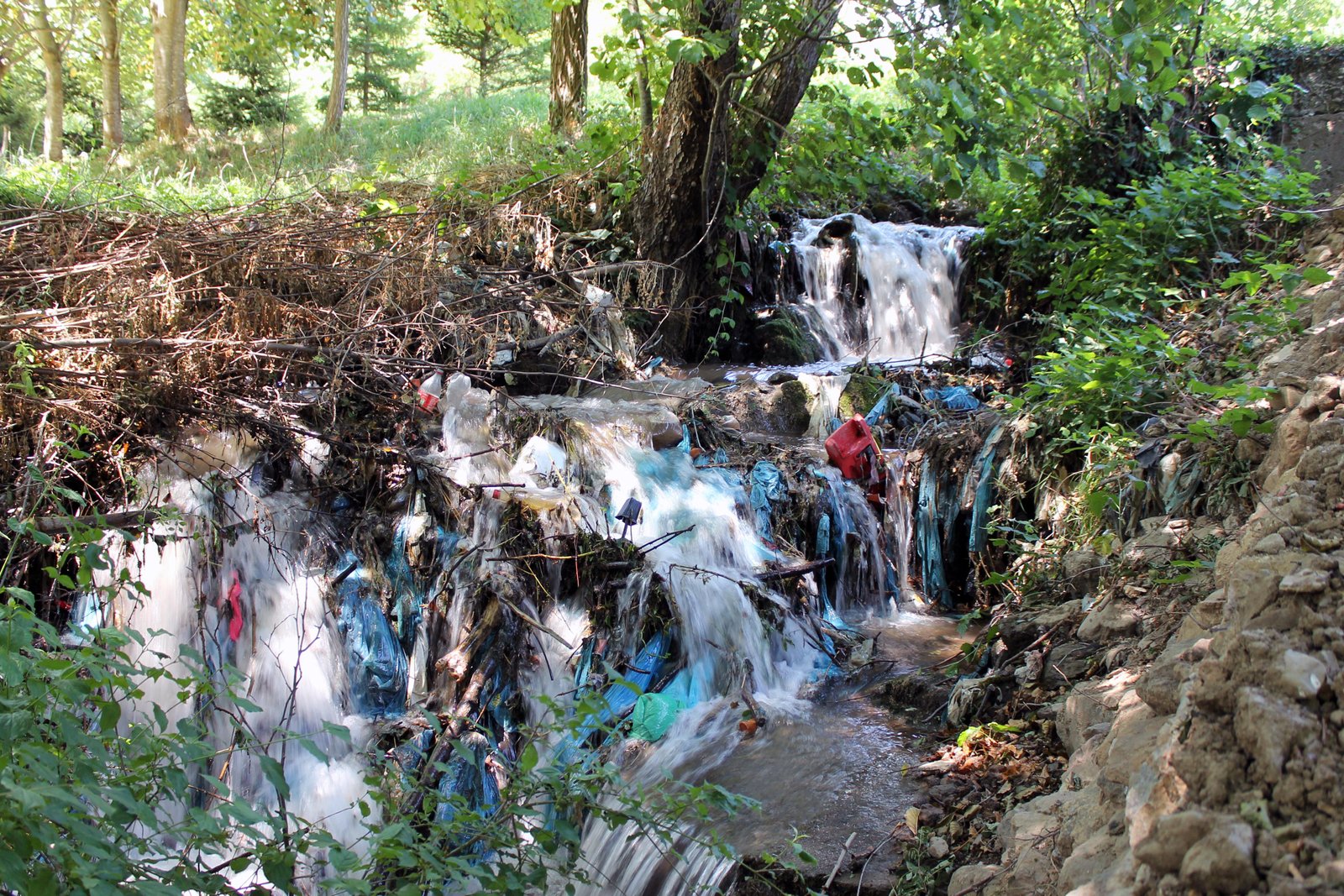
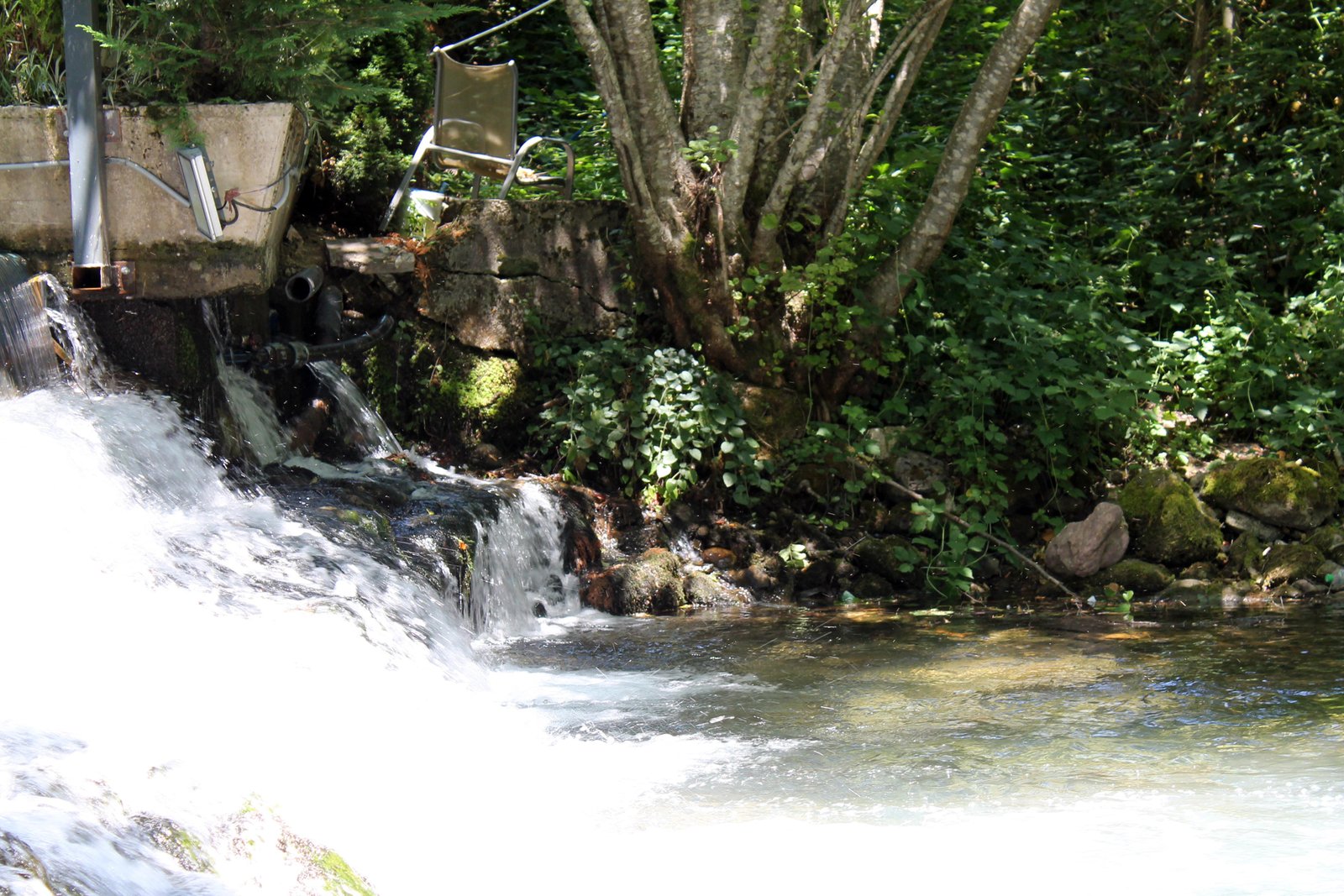
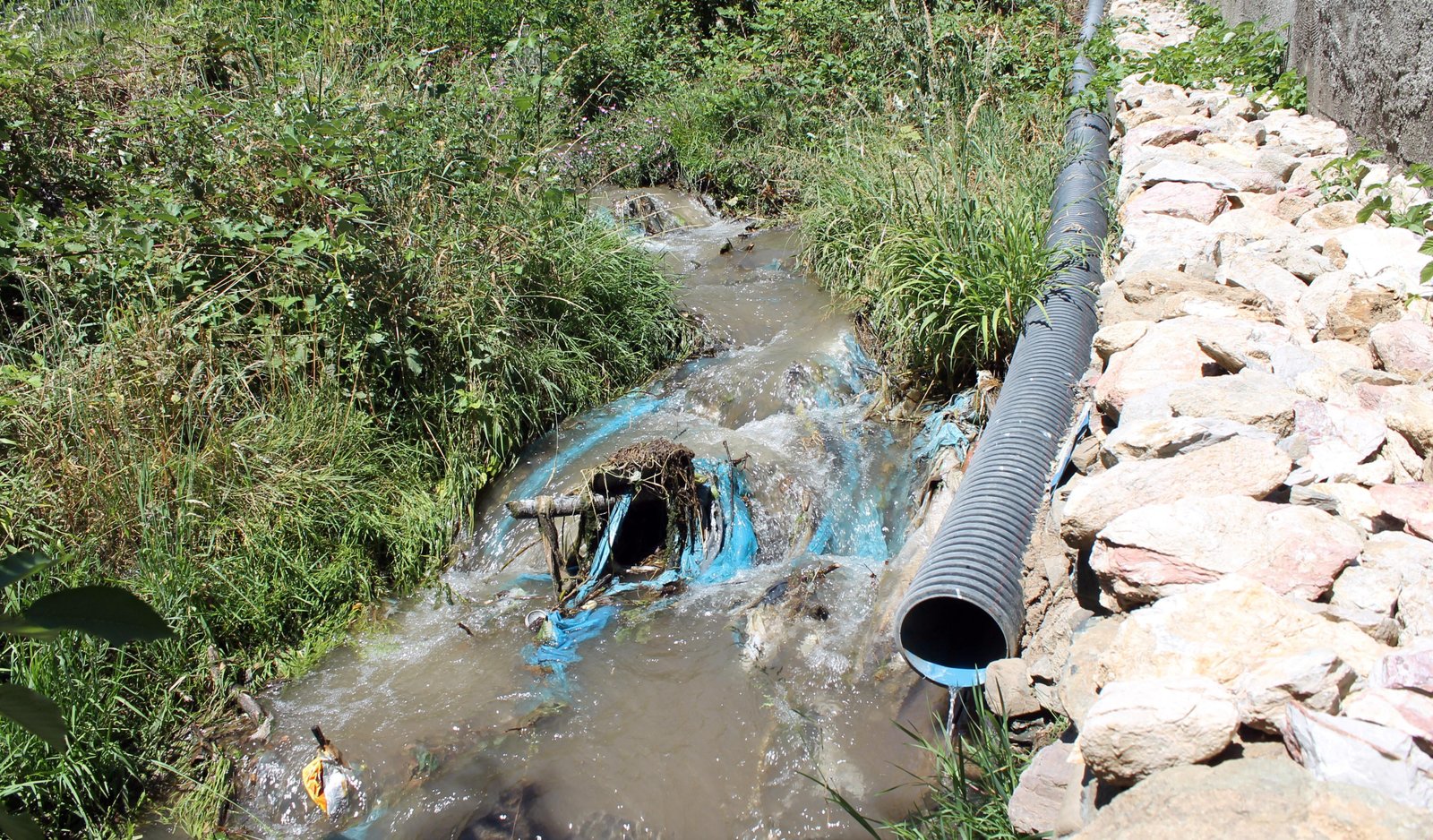
Pollution from sewage and waste starts right at the source in the village of Radac, Peja. | Photo: Besnik Boletini
The same problem continues in other villages across the Peja and Istog areas. A resident of the village of “Dubovë e Vogël” in the Municipality of Istog, who wished to remain anonymous, says that most households discharge their sewage directly into the river or into septic tanks, which eventually also end up in the river.
“The greatest damage is caused by the sewage, especially due to the use of various detergents. These have a very negative impact on fish and other aquatic life,” he explains.
Near Dubovë e Vogël is the village of Baicë, where a wastewater treatment plant was built about 15 years ago. However, this plant, located roughly 20 meters from the river, is non-functional. Wastewater flows there and is discharged directly into the river. The current state of the plant shows that it is not maintained and is overgrown with grass and shrubs.
Fatlije Buza, head of the River Basin Management Division at the Ministry of Environment, says that building such small treatment plants was an effort to address wastewater management, but “they remain non-functional due to lack of maintenance, because no one takes responsibility. For example, it should be managed either by a regional company or by the Ministry of Economic Development,” she says.
We continued our journey along the river to the village of Rakovinë in Gjakova. There, we found large amounts of various types of waste, including tires (around the river and submerged in water), plastic bottles, construction debris, and other garbage, all dumped in or along the river. In some dry sections of the river, numerous pieces of debris carried by the water were visible. A little further on, a sewage pipe covered with grass discharges wastewater into the river.
The village head, Ismet Kelmendi, says that the White Drin has been extremely polluted in this village. He explains that some of the waste has been deliberately dumped by residents to prevent the river from overflowing its banks, since no one has taken measures to expand the riverbed.
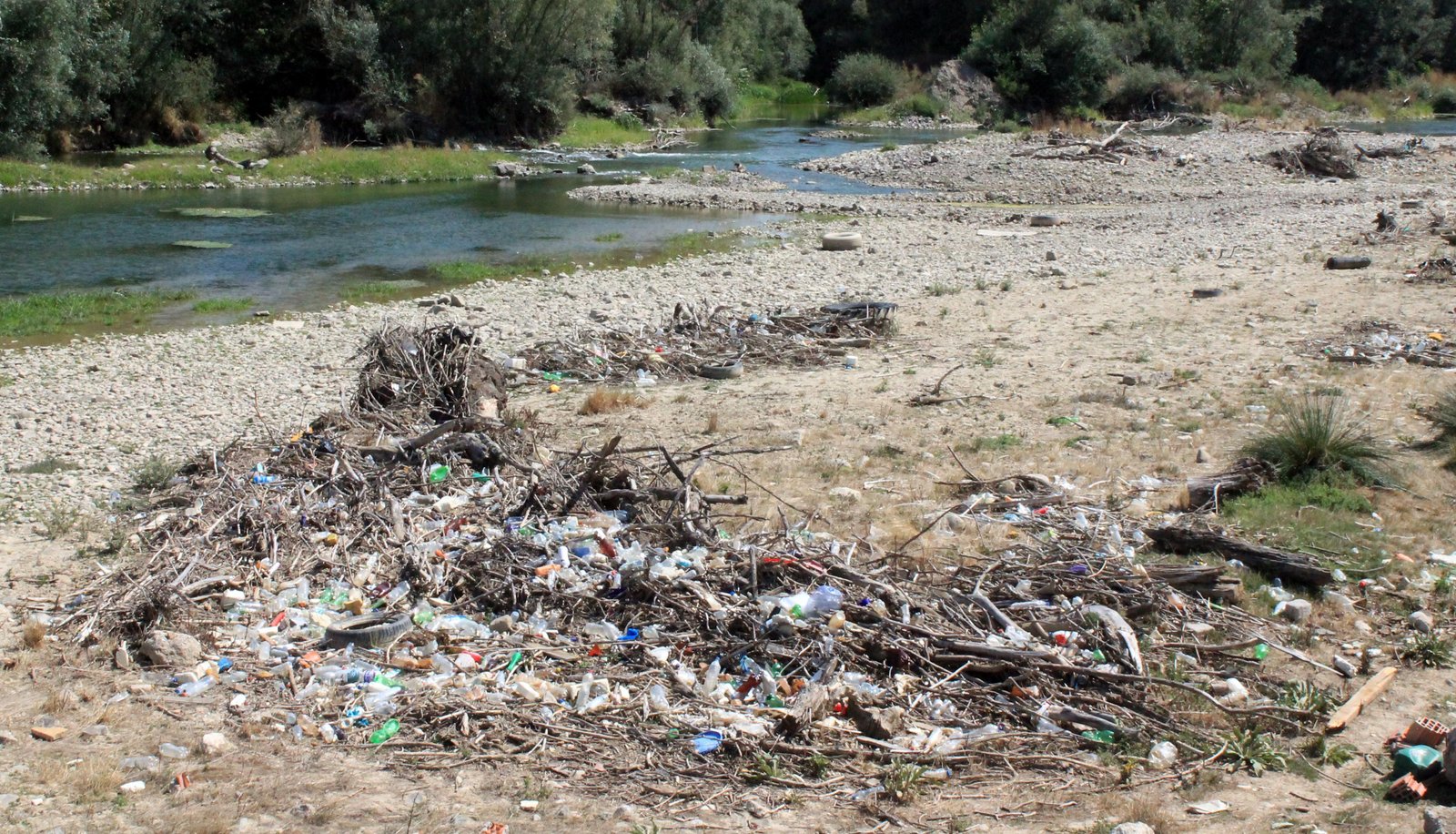
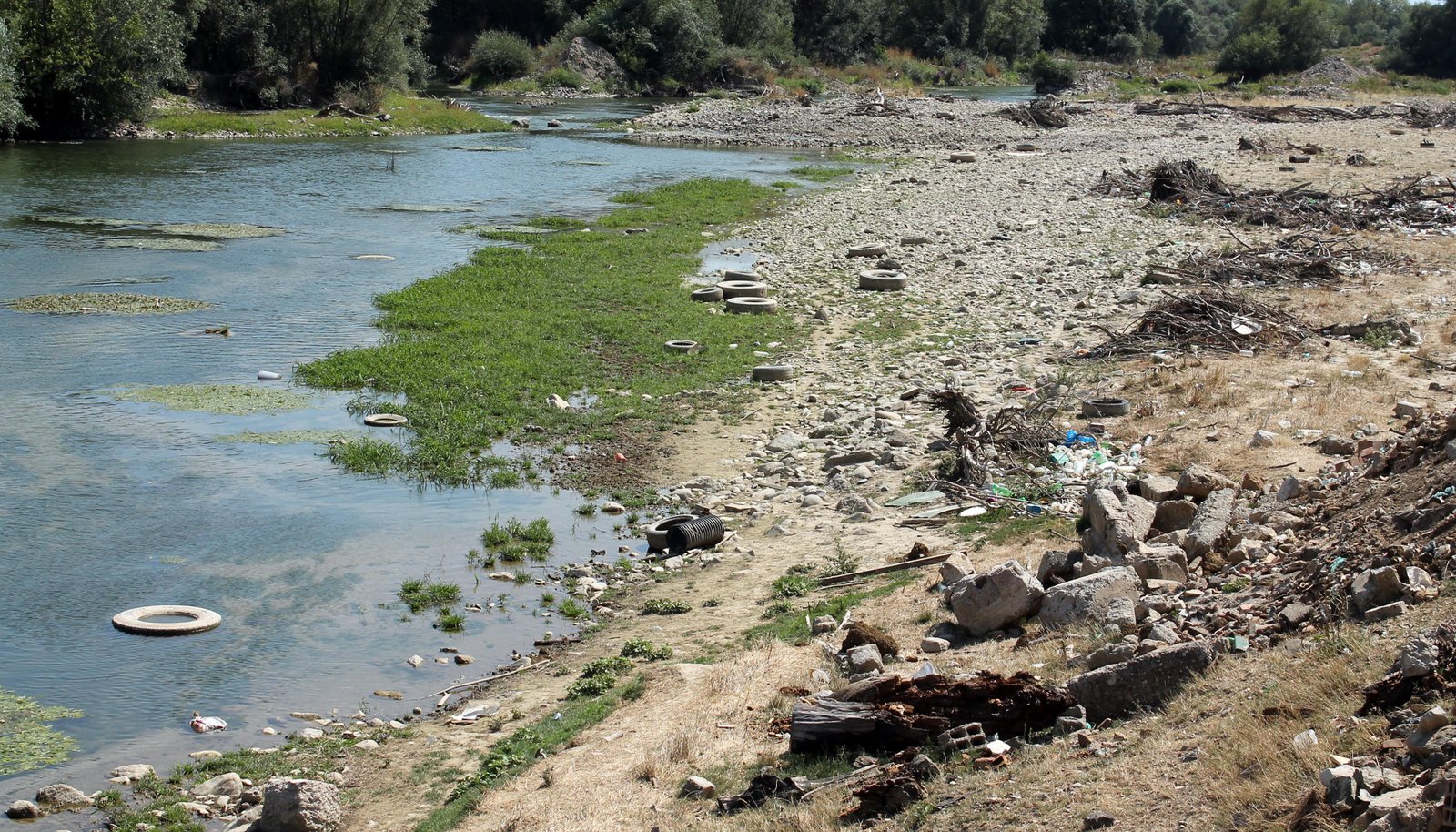
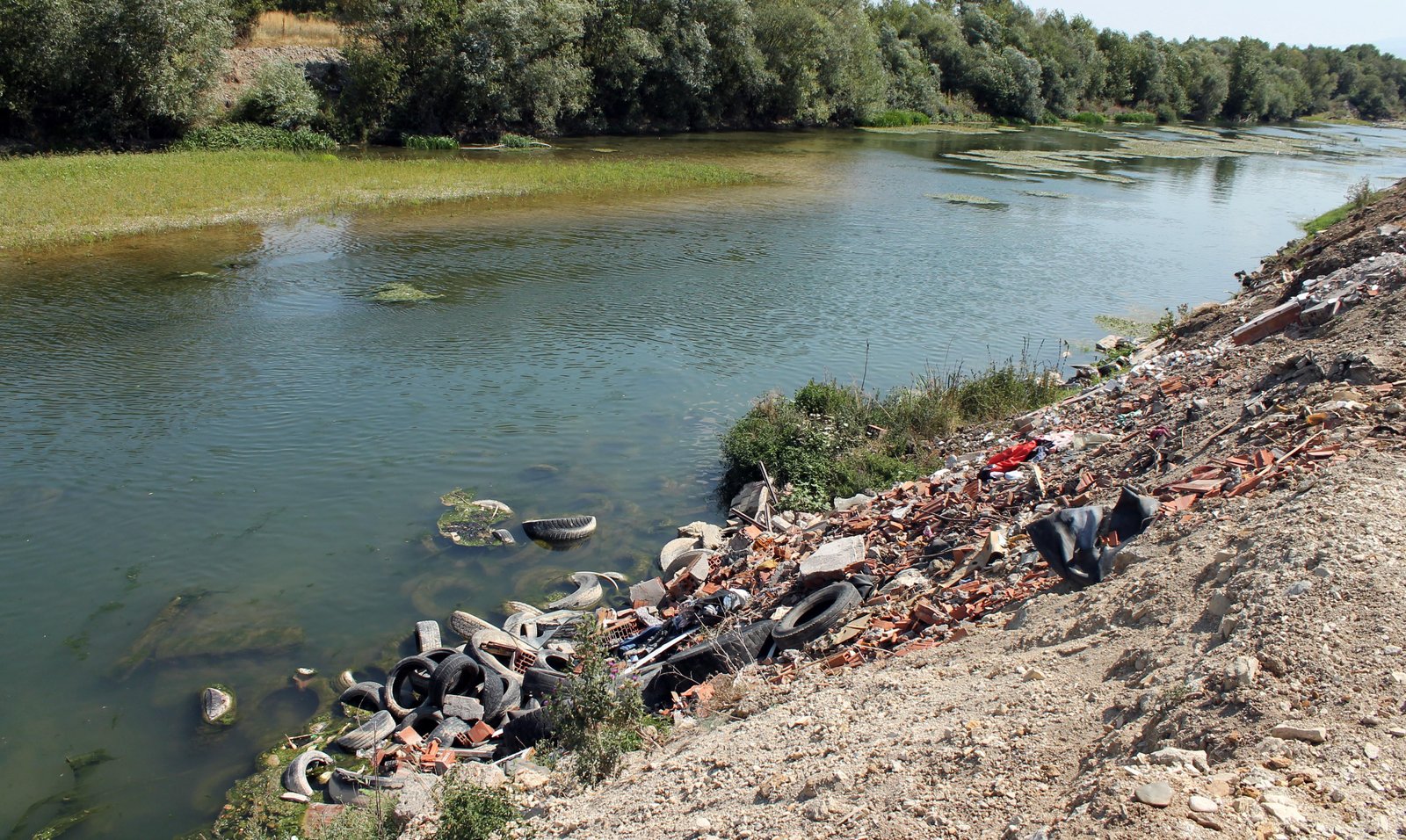
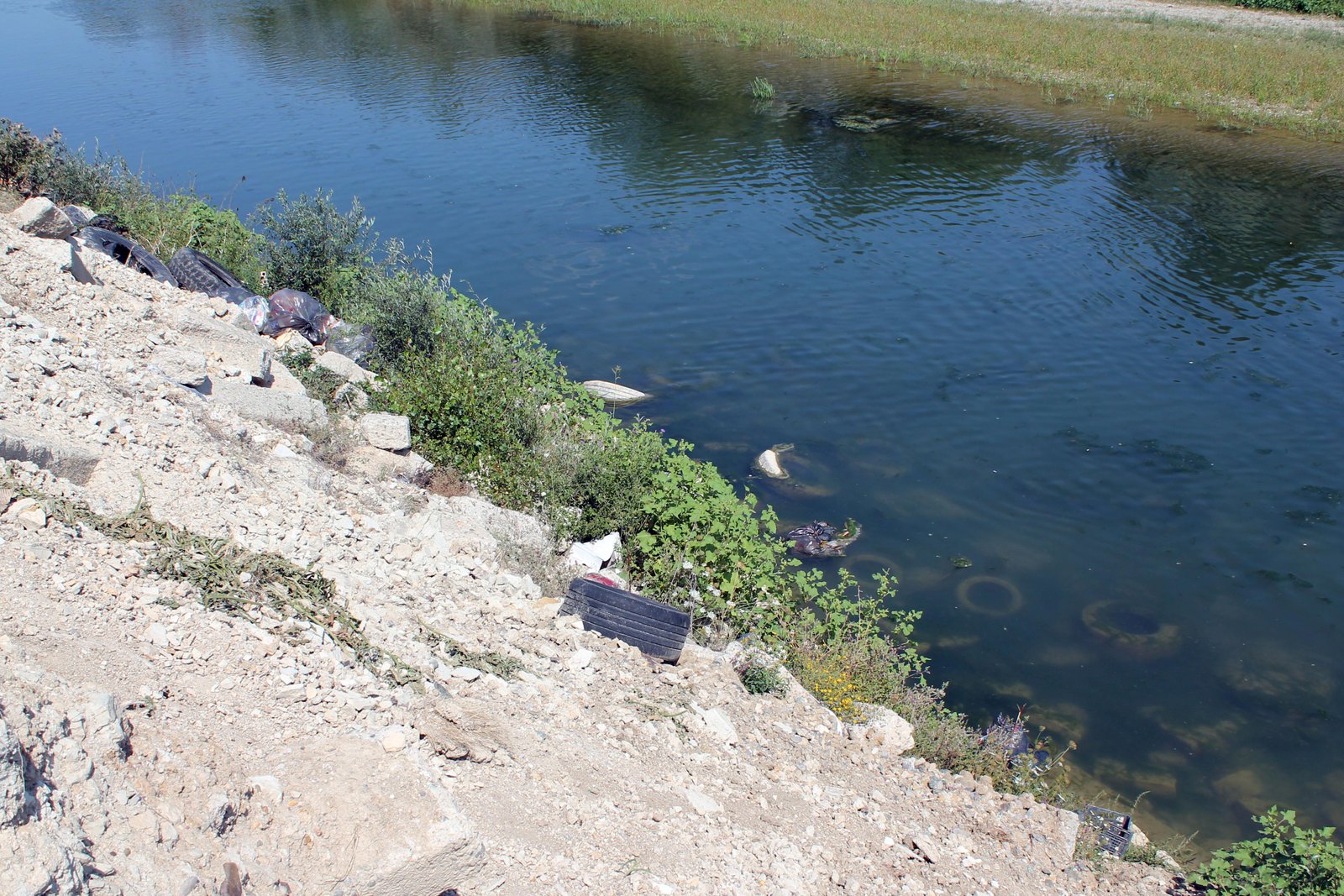
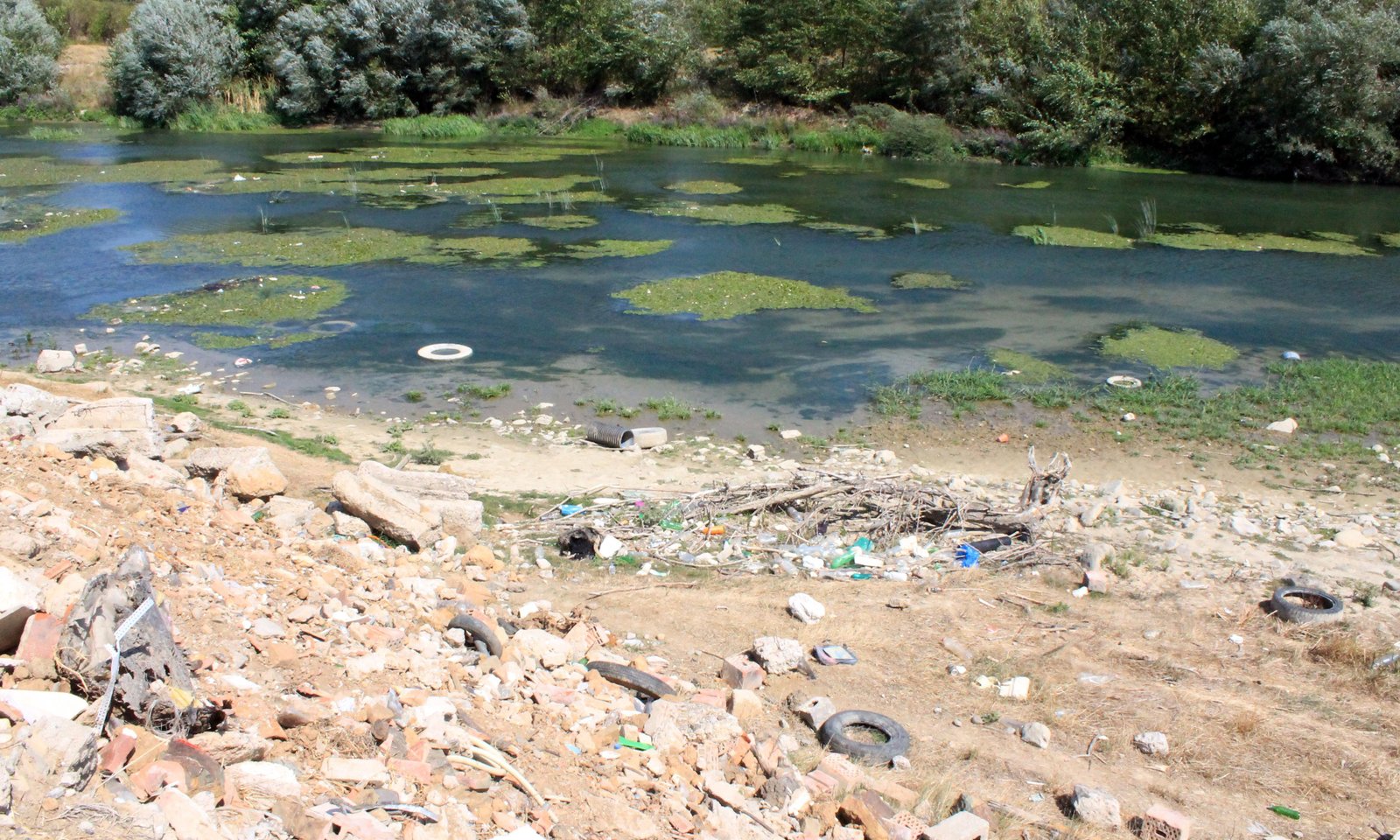
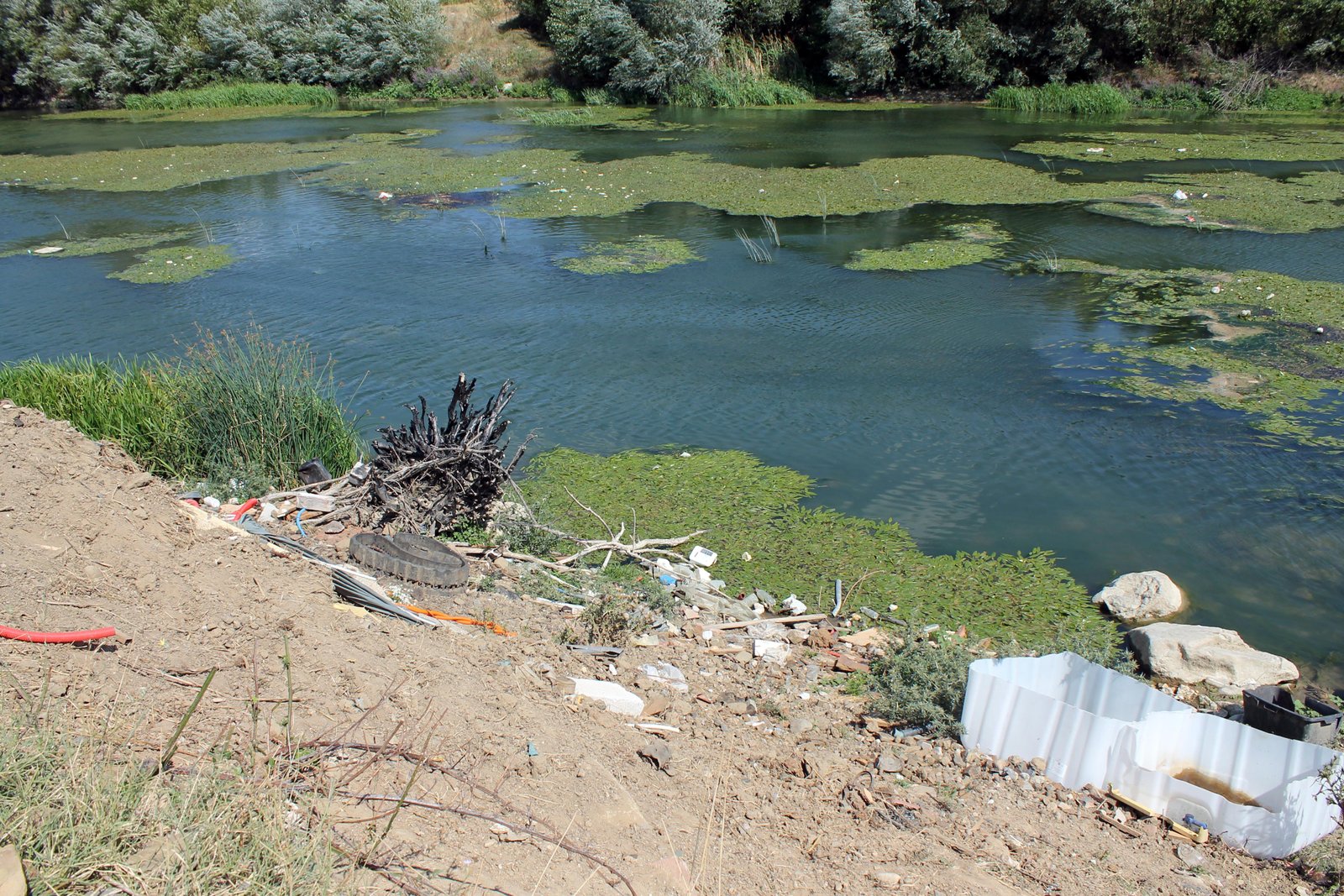
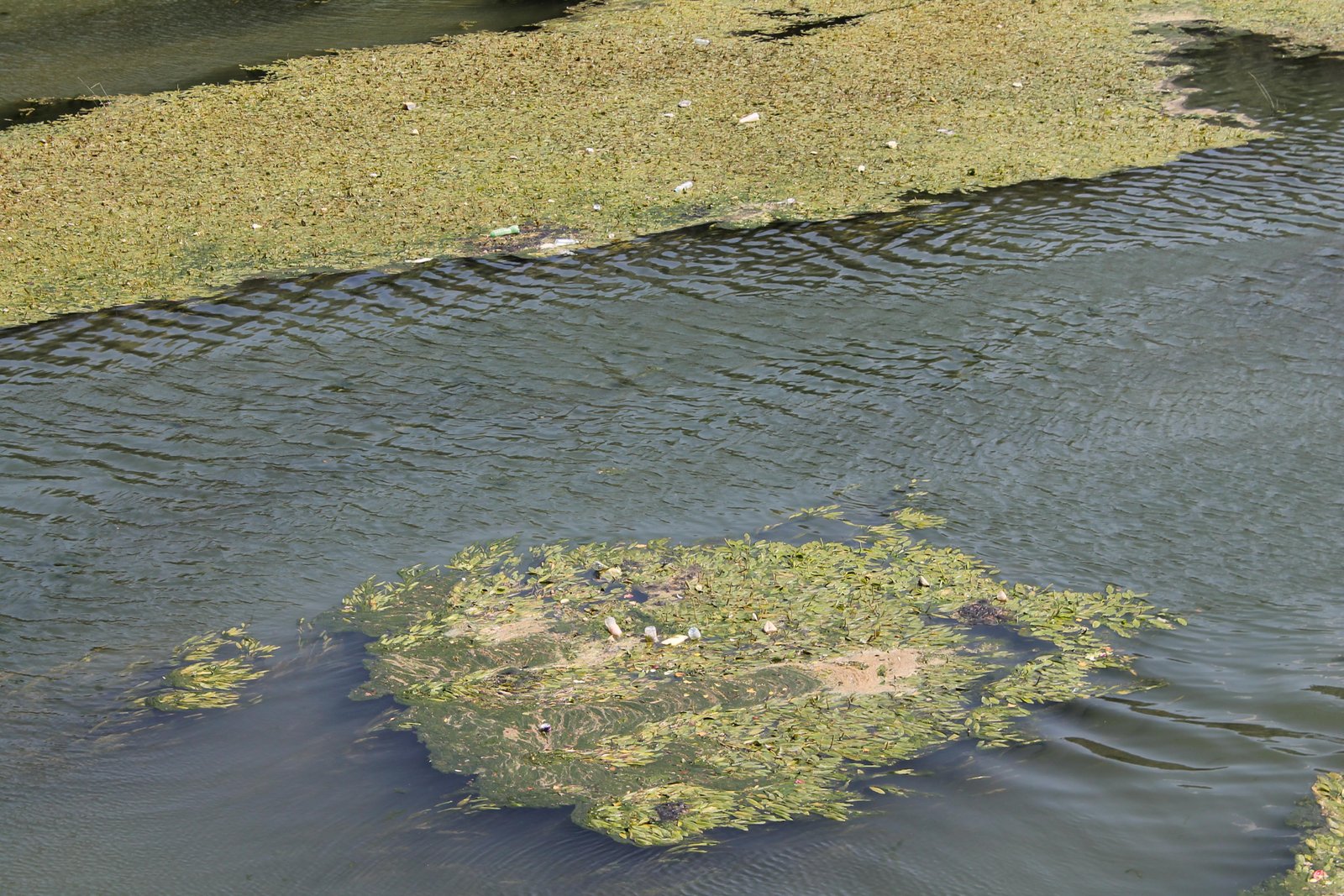
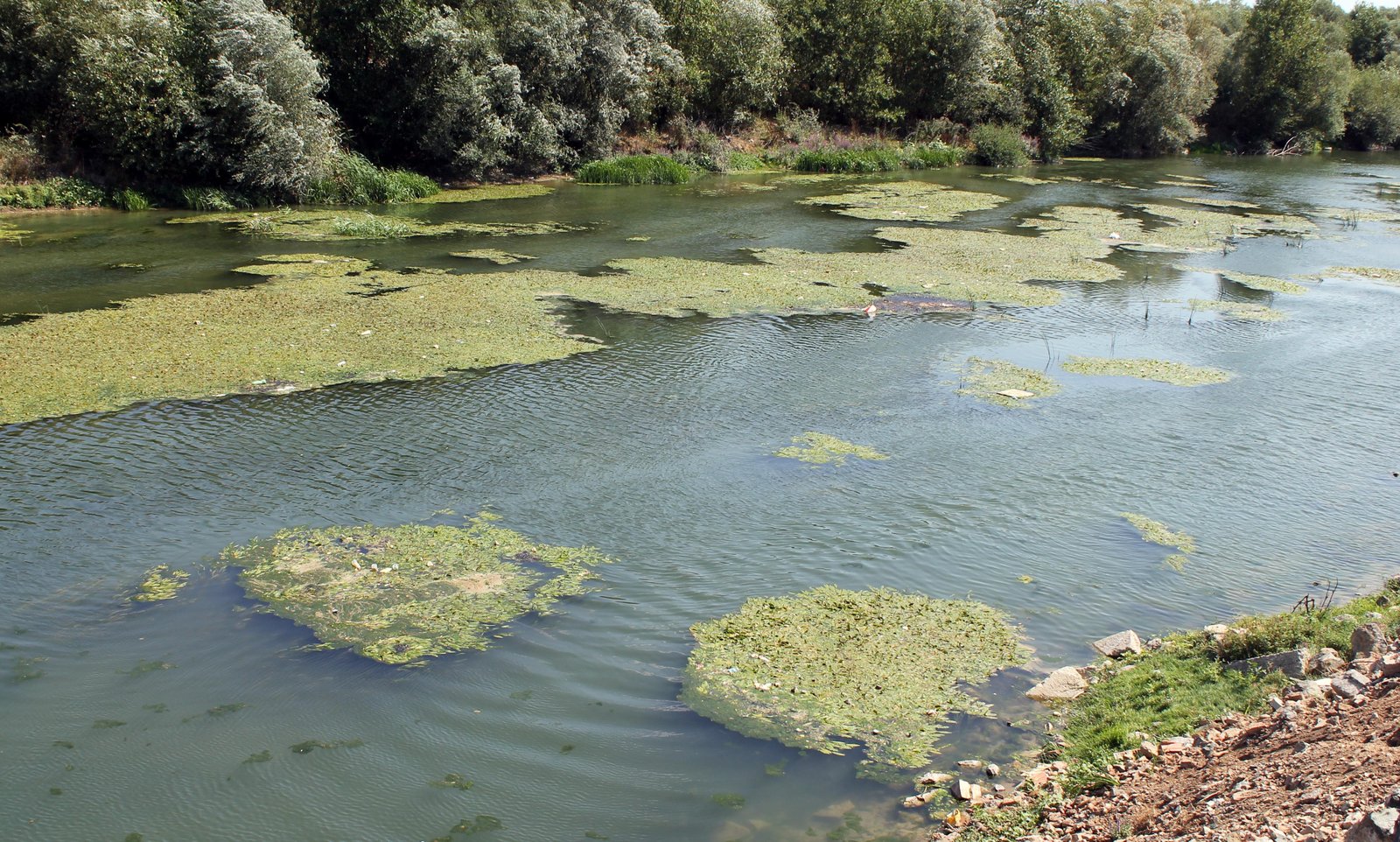
The condition of the White Drin in the village of Rakovinë, Gjakova. | Photo: Besnik Boletini
“Plastic, iron, tires, pieces of concrete, asphalt everything is here. All of this has been done, in a way, with the village’s consent, just to protect the farmland because no one intervenes. In trying to protect the river, we’ve caused damage,” he says, while urging local and central authorities to find a solution to this situation.
Çifllaku is the “champion”
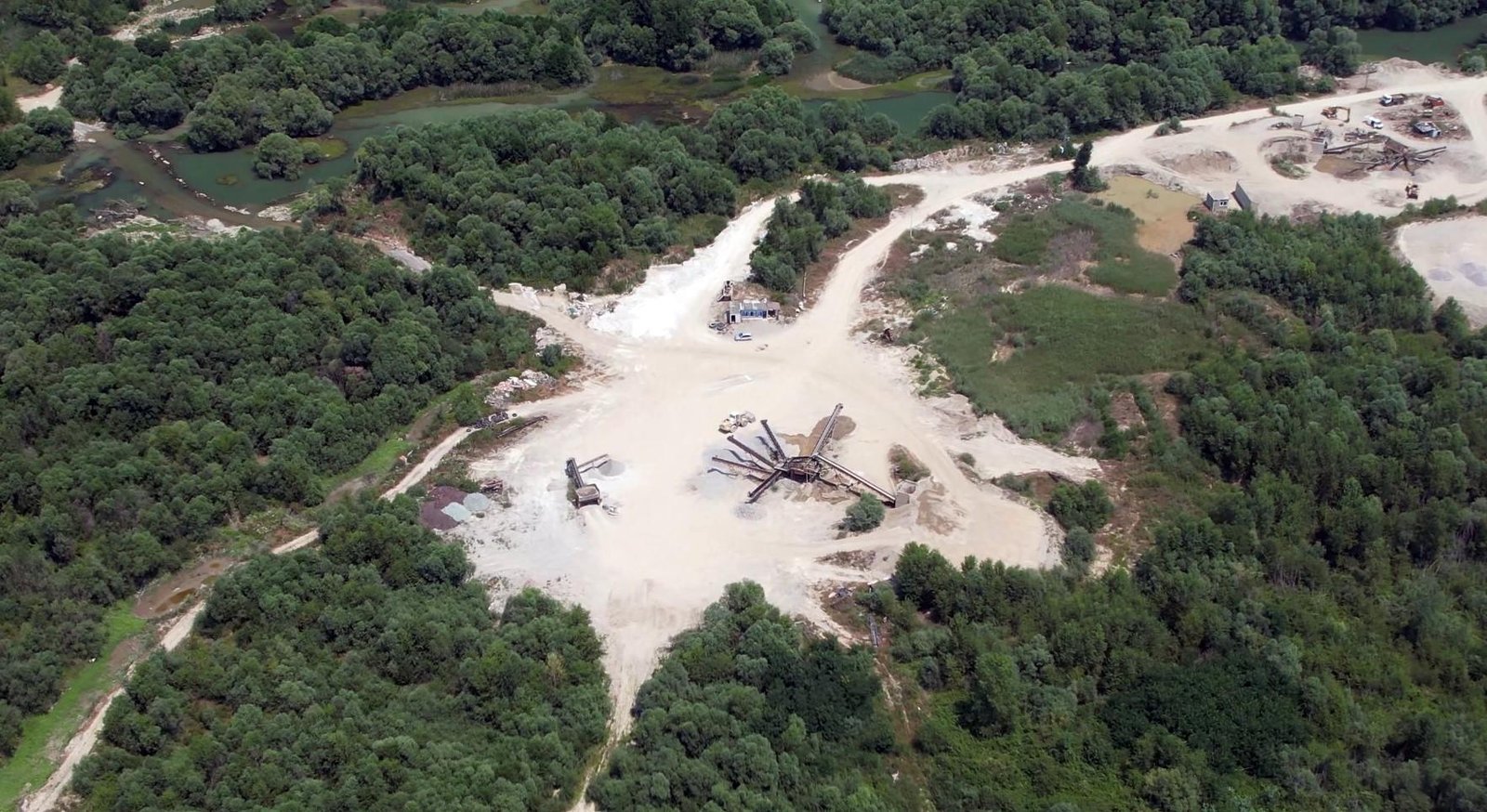
Not far from Rakovinë lies the village of Çifllak in Rahovec, the place where we observed the largest amounts of waste as well as degradation from excavation activities. Drone footage shows significant damage to the river and its riverbed caused by illegal sand and gravel extractors. The excavations have diverted the river in many areas.
In addition, various types of waste have been dumped there, including plastic and glass materials, cans, wood, concrete posts, and other inert materials. Hundreds of tires have been thrown in this area, some along the riverbank and many directly into the river. Even a sofa rests atop the piles of trash.
Dumping tires into the river poses a serious environmental risk. Over time, the tires release toxic substances and microplastics, which pollute the water and harm aquatic organisms. They also obstruct the river’s natural flow, alter its riverbed, and create stagnant water areas, increasing the risk of insect proliferation and the spread of diseases.
Even in Kramovik, the neighboring village of Çifllak, the degradation of the White Drin riverbed is extensive. This is one of the villages where the most sand and gravel extraction has taken place, causing massive environmental damage. Drone footage shows that in a relatively small area near the river, three sand and gravel separation operations are active.
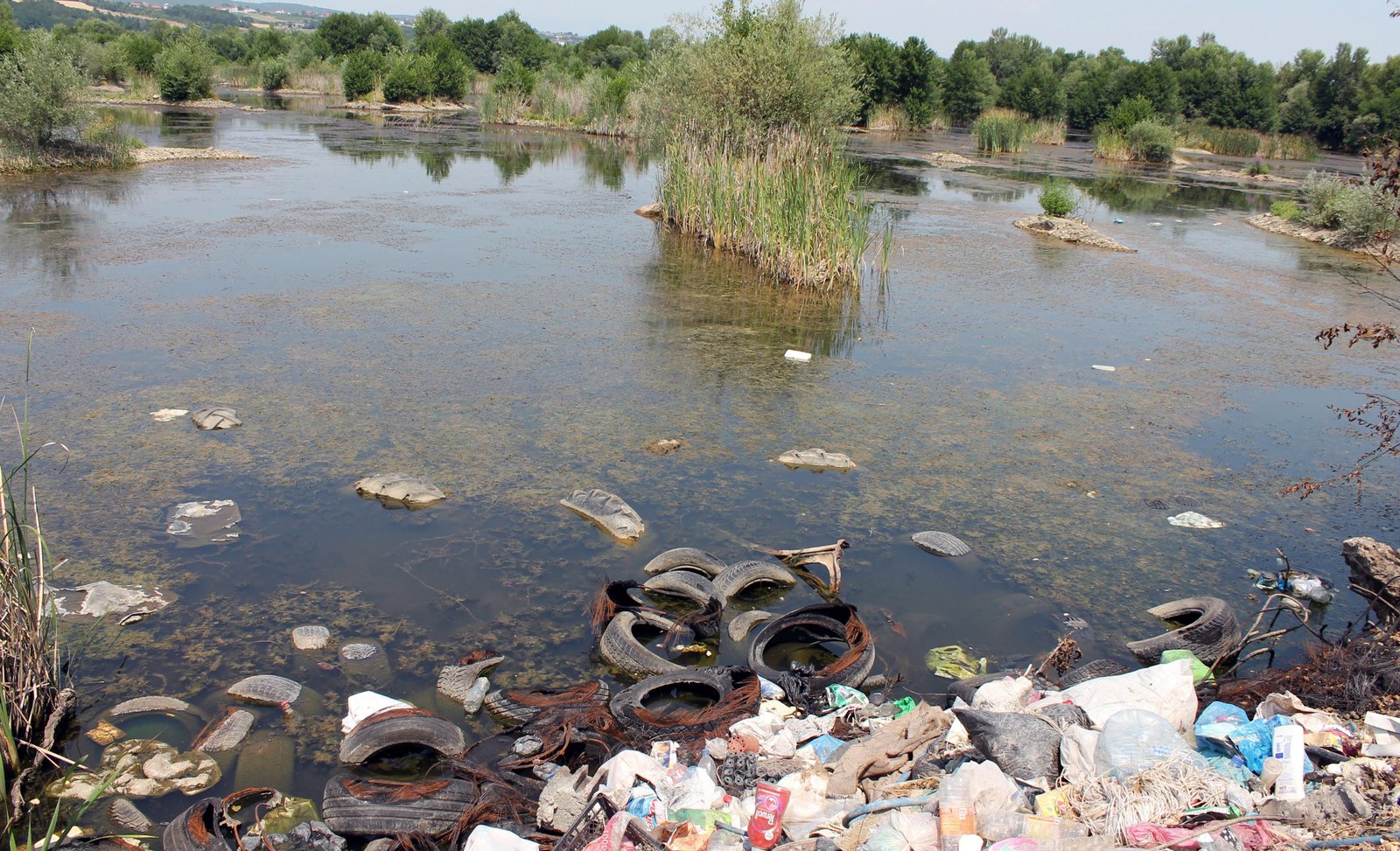
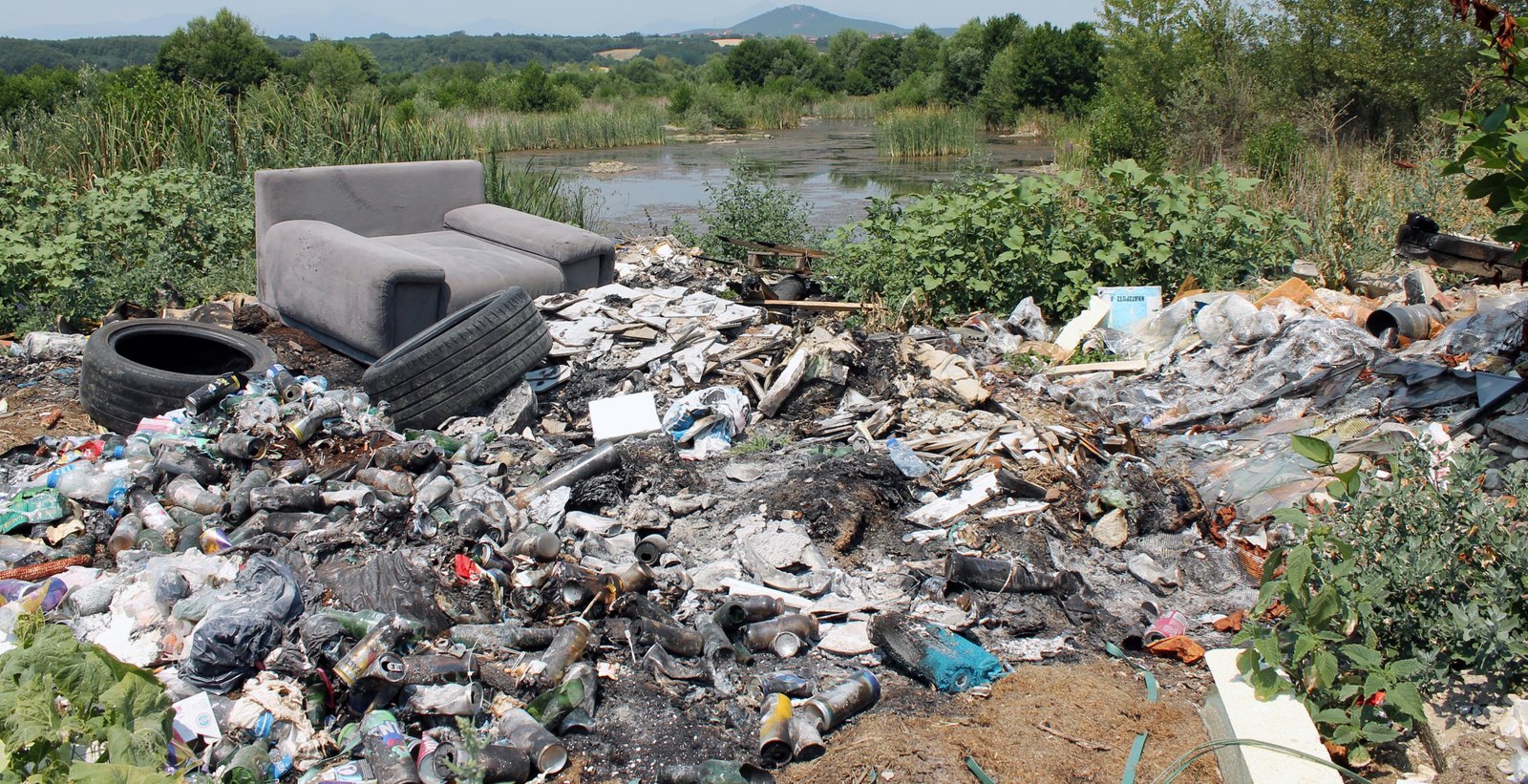
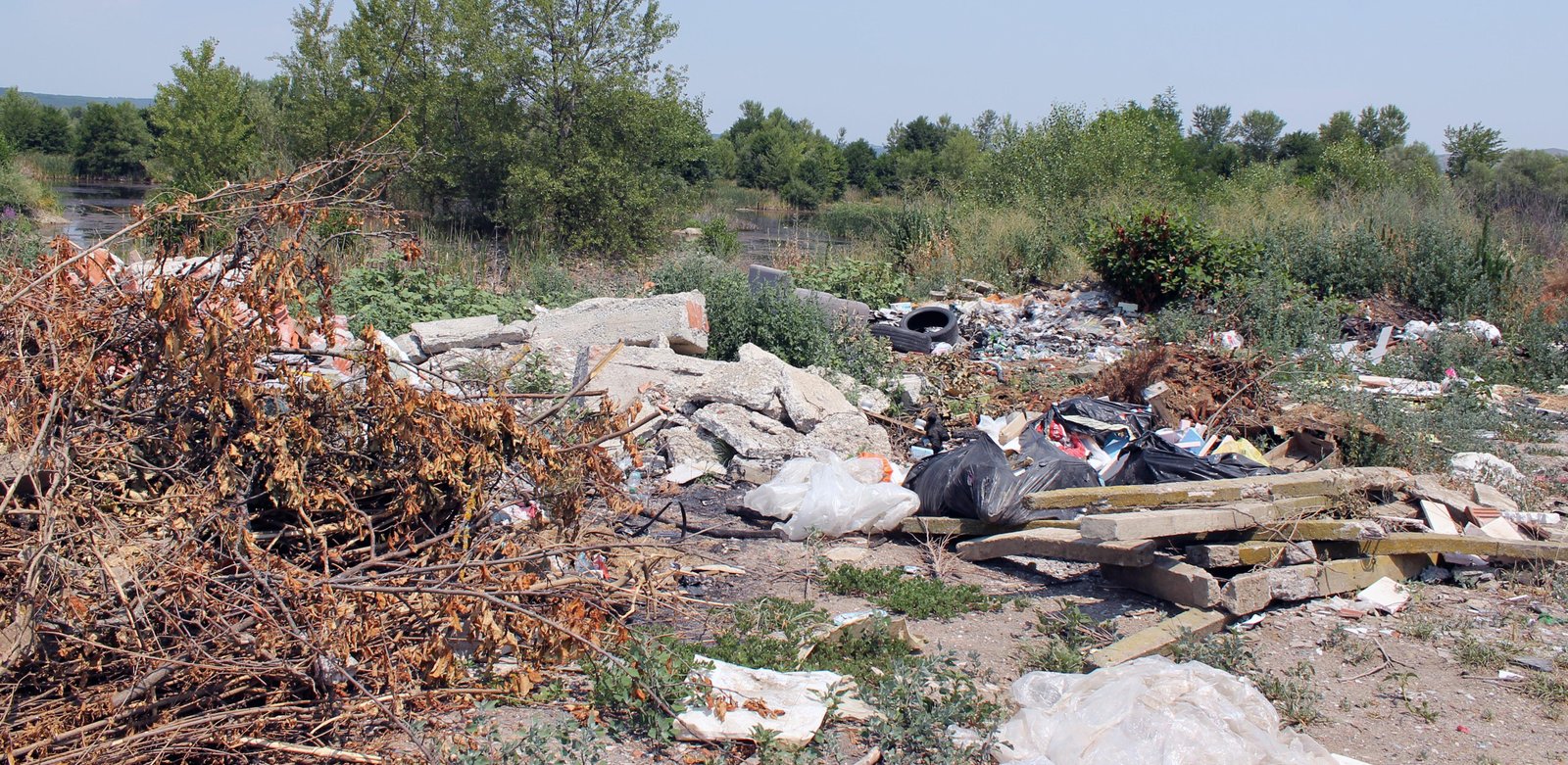
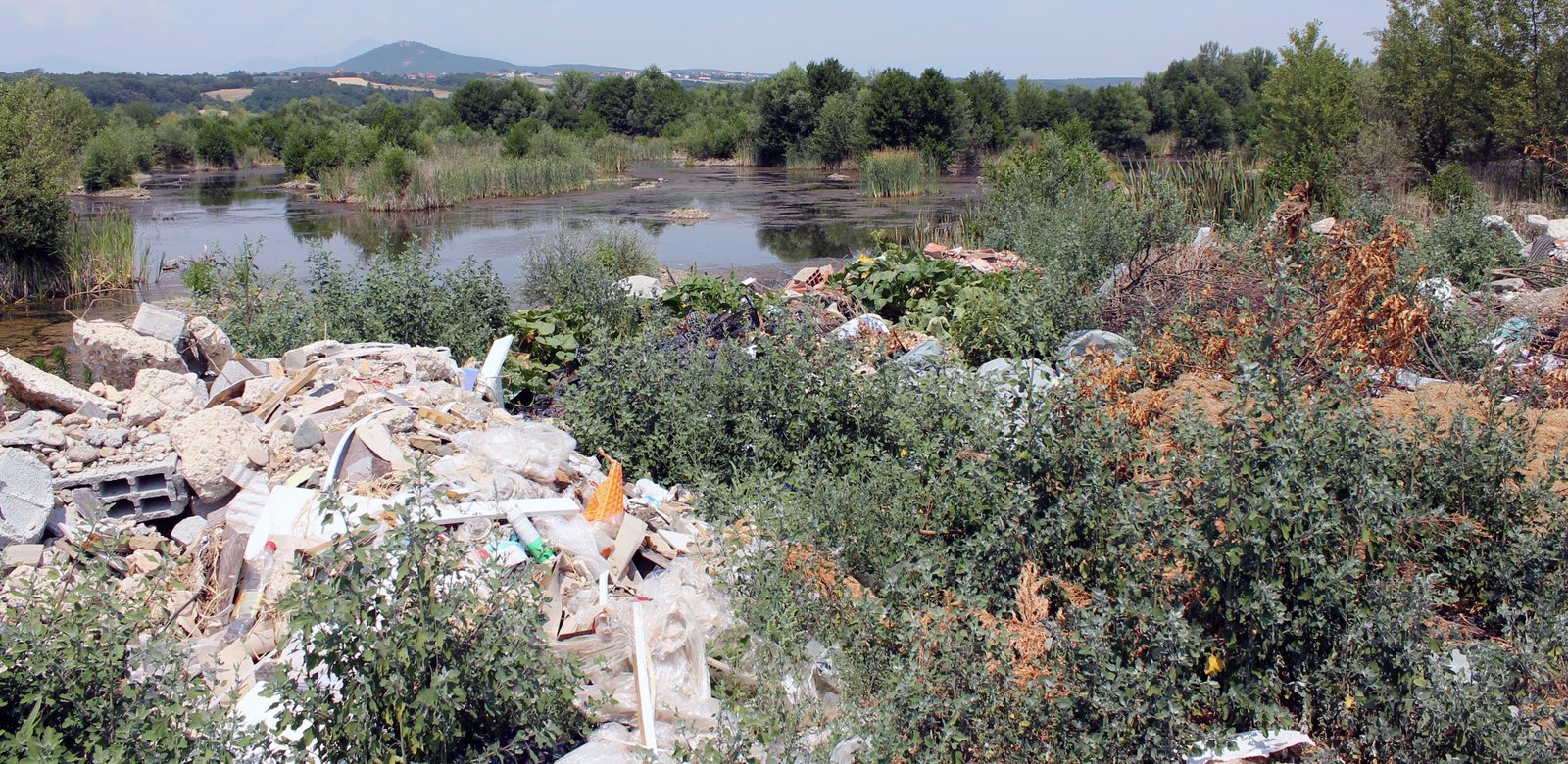
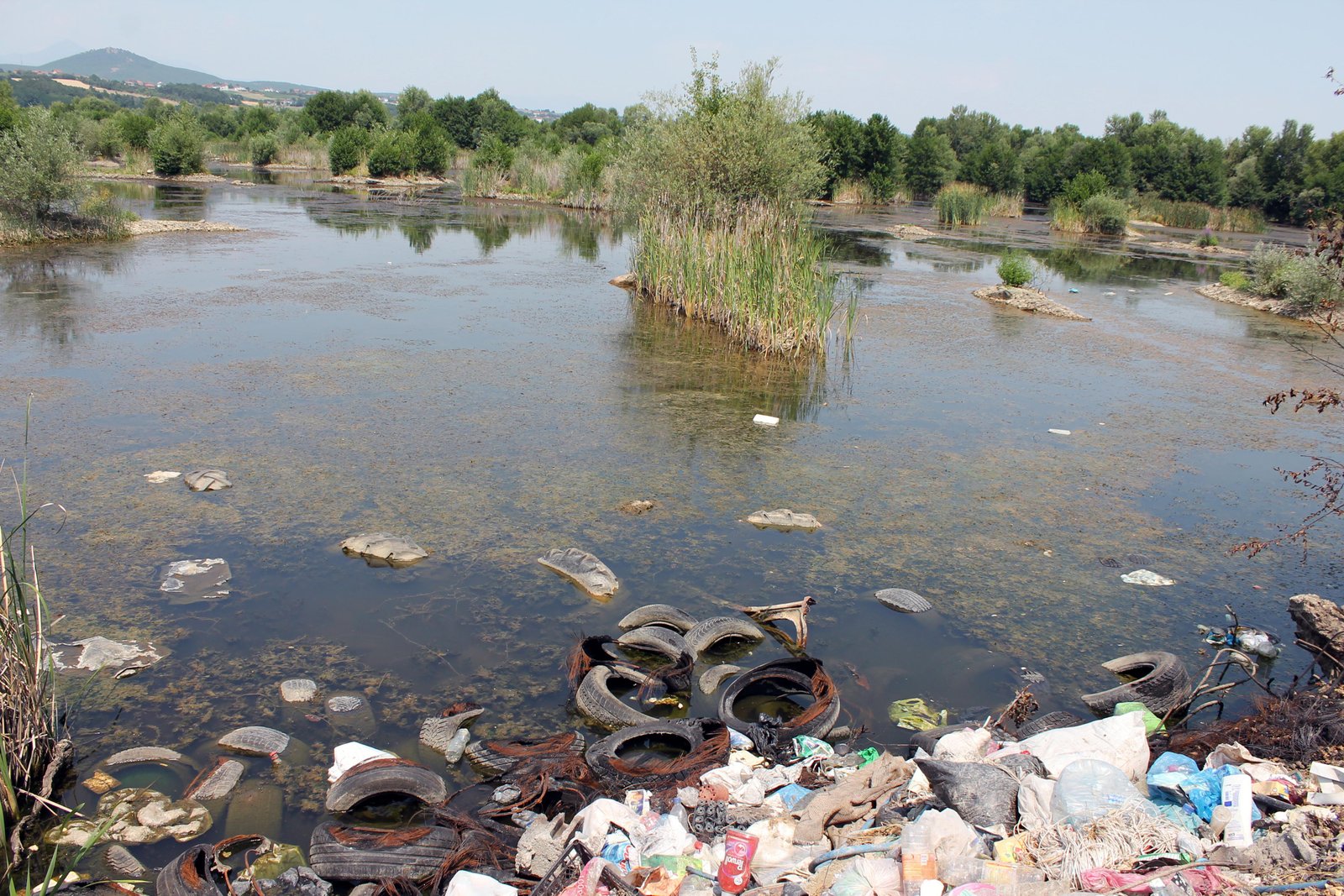
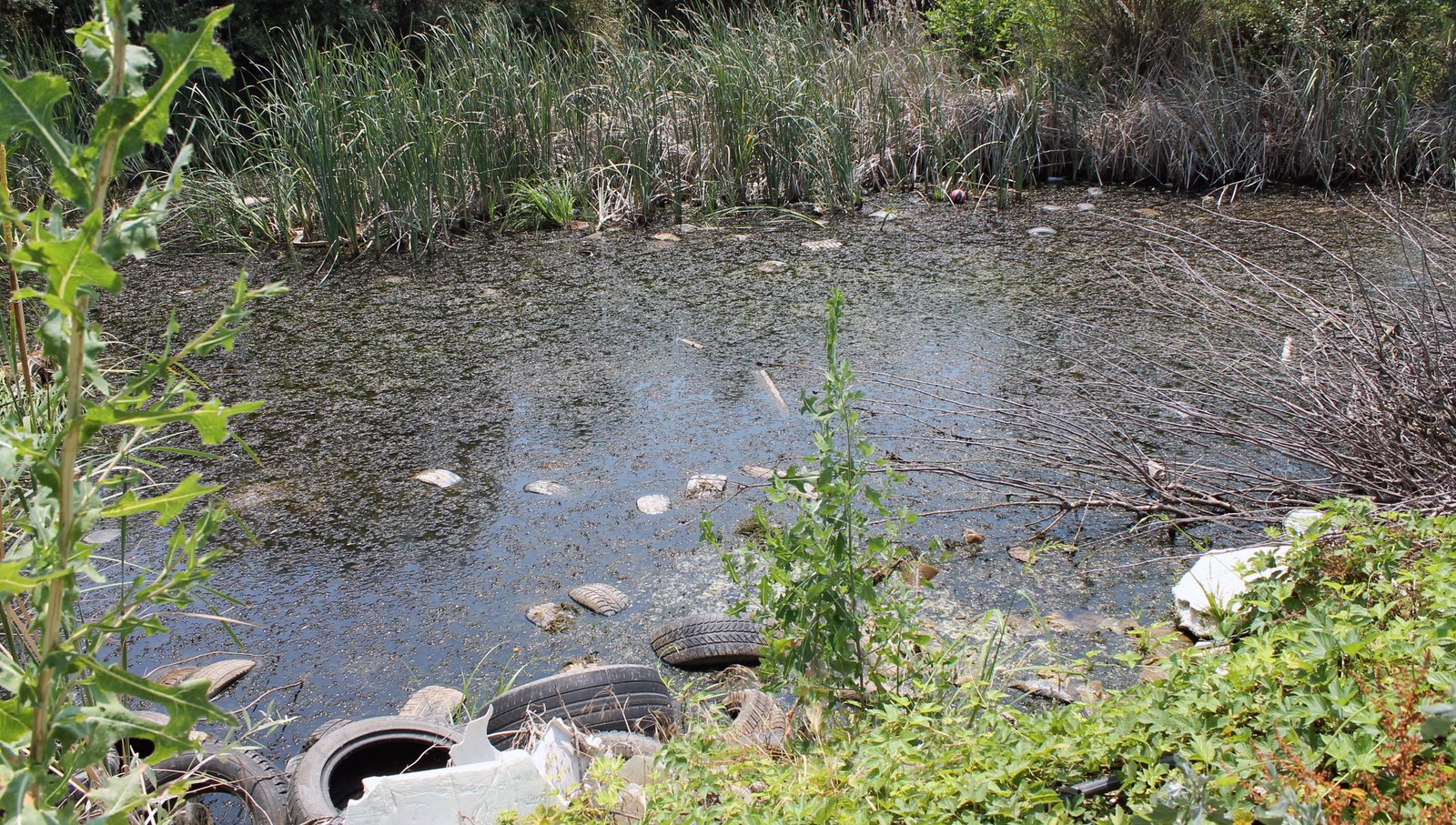
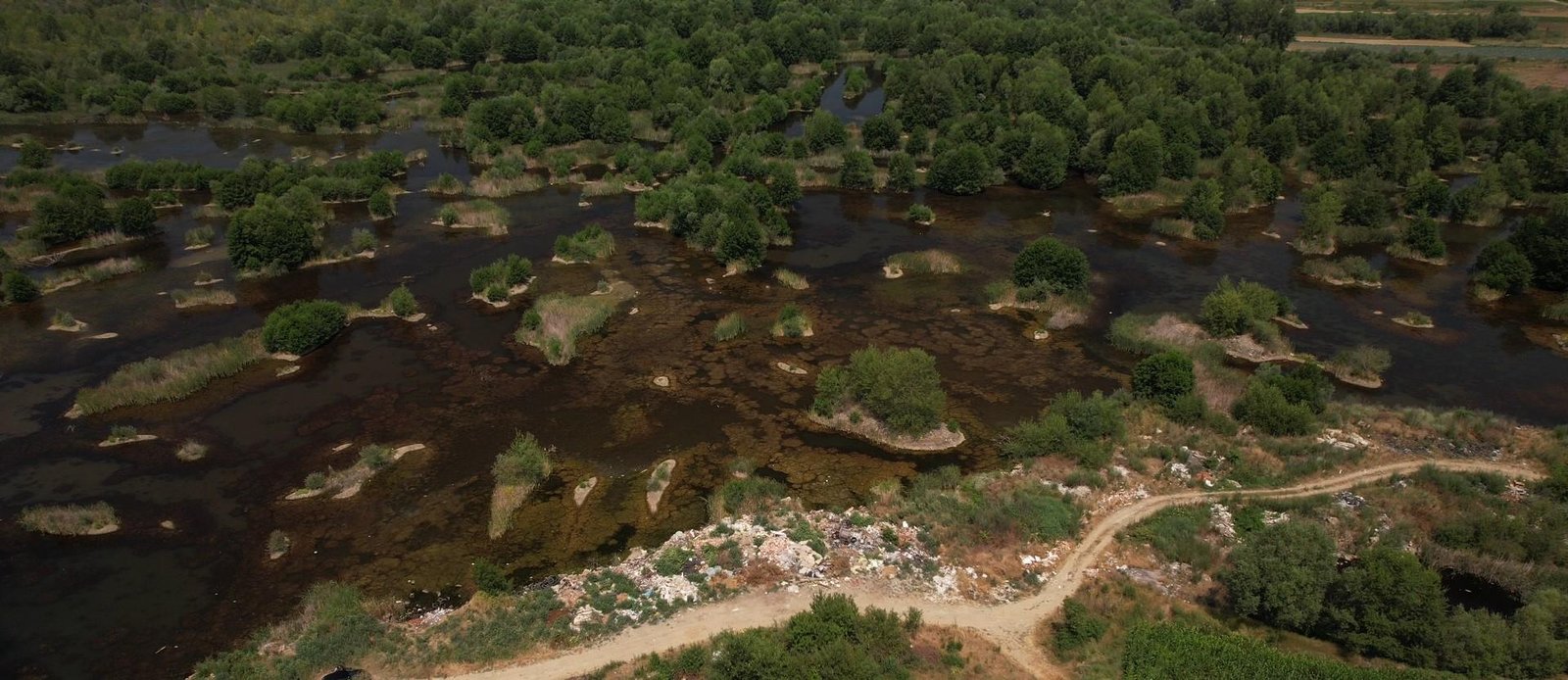
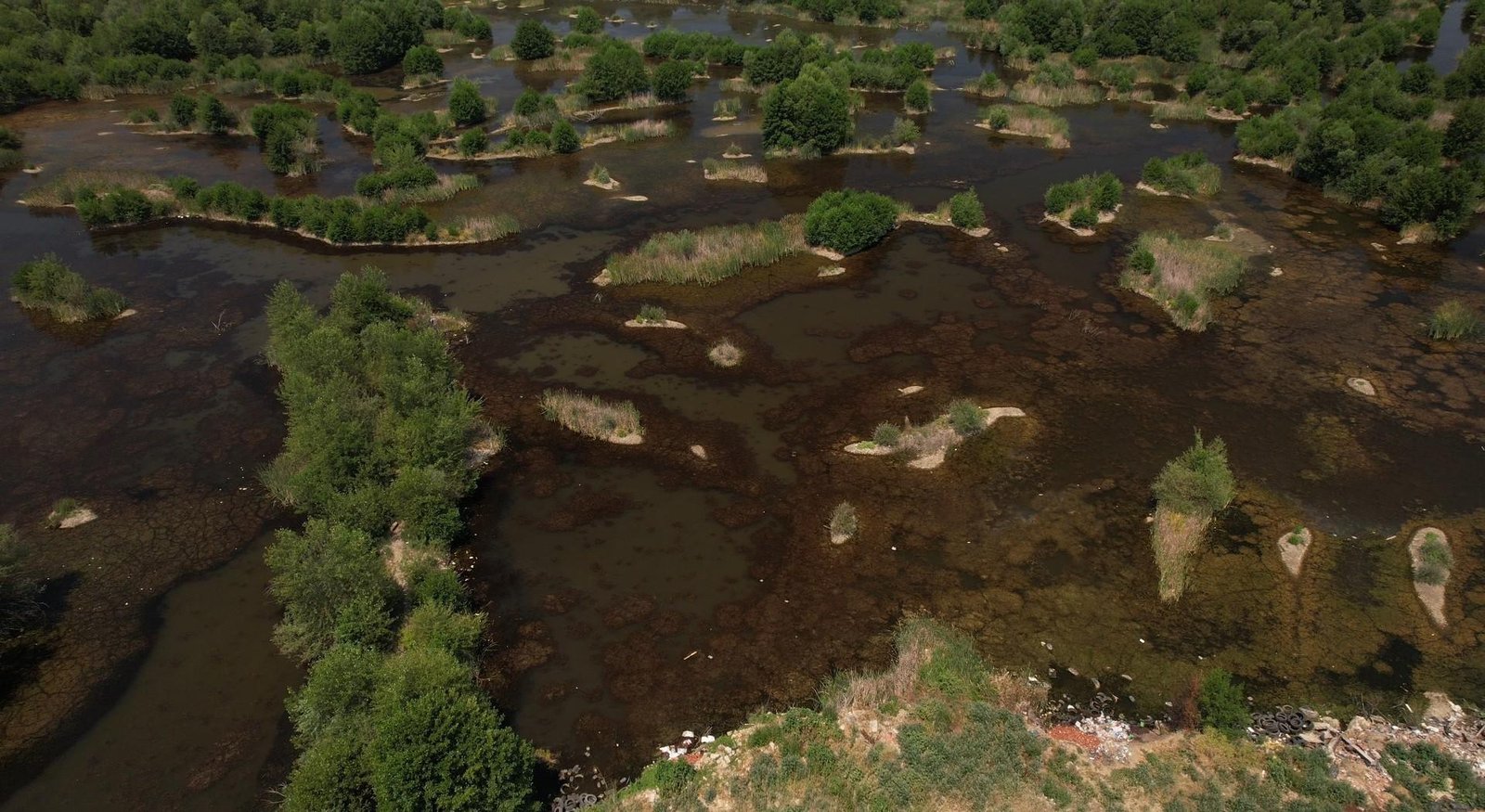
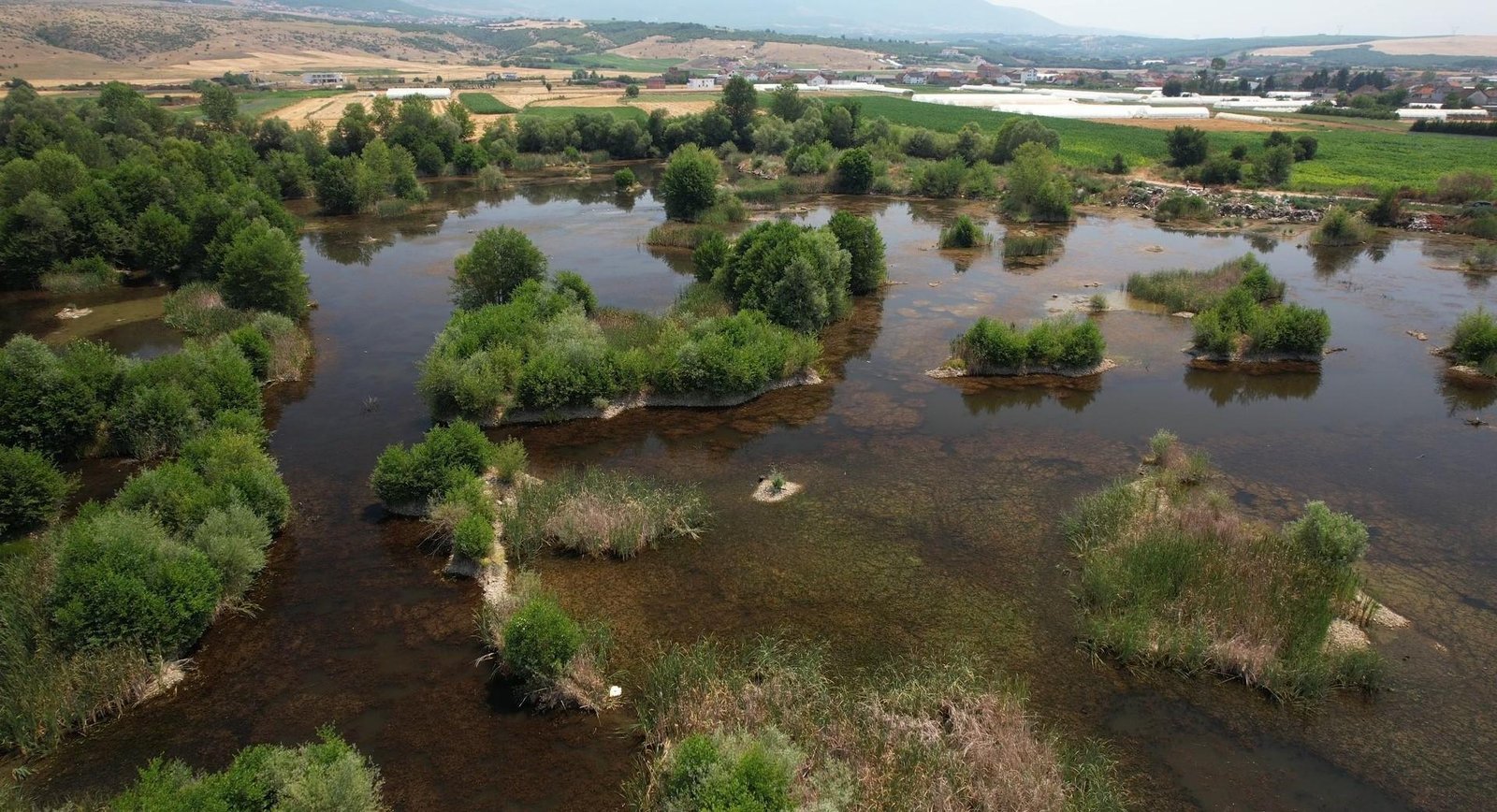
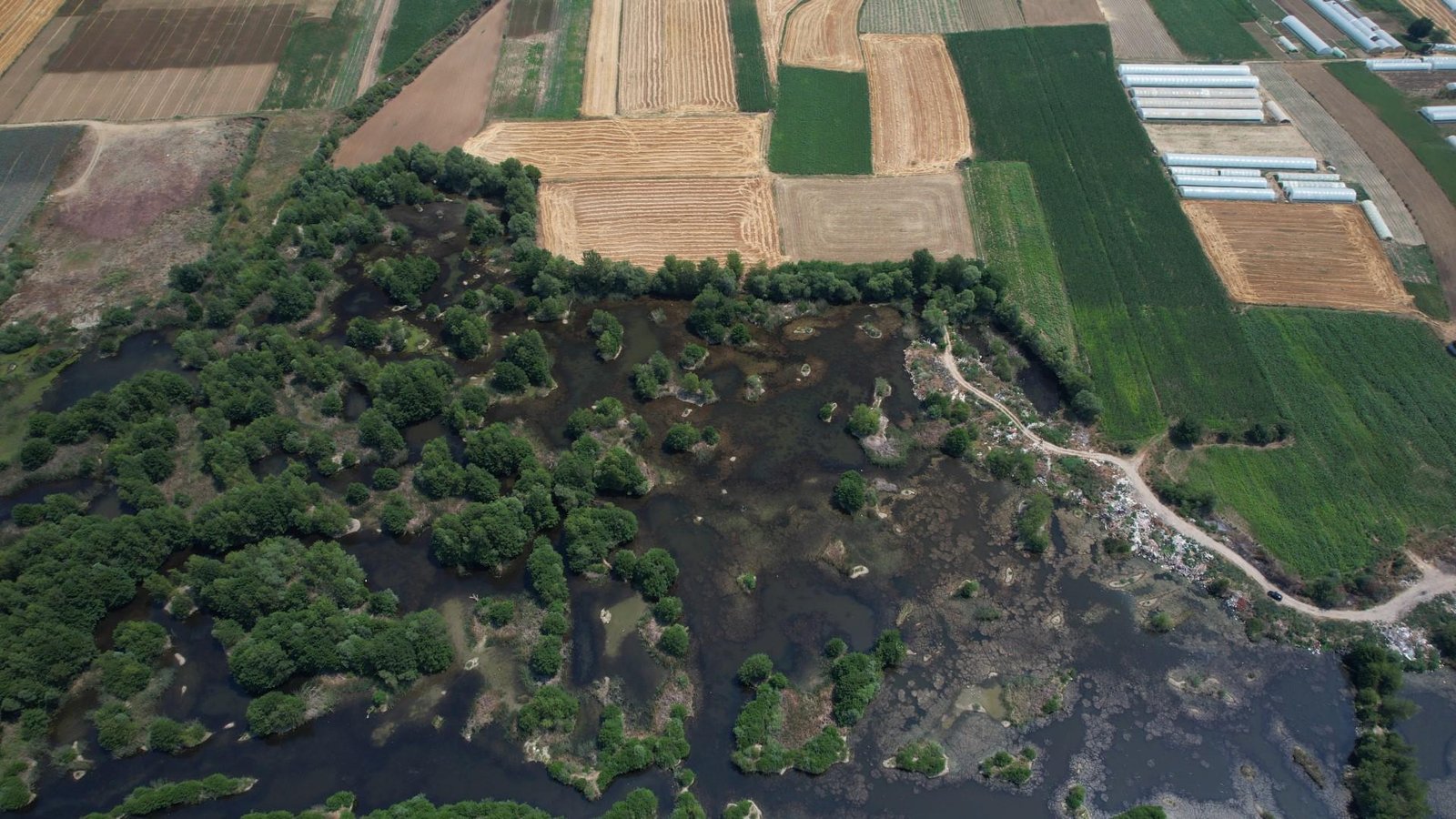
In addition to the degradation of the riverbed, an illegal landfill created along the White Drin in the village of Çifllak, Rahovec. | Photo: Besnik Boletini
According to a report by the Ministry of Environment, published in 2022 and based on field assessments up to 2018, 1,393 hectares along the White Drin were identified as degraded. By comparison, in 2008 this area was 861 hectares, indicating a continuous increase in degradation over the years.
In the village of Krushë e Madhe in Rahovec, damage along the river is also evident. Four operations extracting and processing sand and gravel are active near the river in that area.
Additionally, residents of Krushë e Madhe, in the absence of other solutions, have installed a sewage pipe directly into the White Drin about one kilometer from their homes. Although we visited this location at the end of August 2025, during a period of severe drought, the pipe was still discharging a significant amount of wastewater into the river.
Selami Hoti, head of the village, says that the sewage connection to the river was installed 20 years ago.
“The problem is that we are among the few villages in Kosovo where residents paid 60 euros per person to extend the sewage system to the river,” he explains, adding that they have repeatedly requested an alternative solution from the authorities, but their requests have been ignored.
He notes that the river can no longer be used as it once was. He recalls that the area used to be a tourist spot, and residents also used the water for irrigating their lands.
“Today, this water is polluted and no one can use it for anything,” Hoti says.
Përparim Krasniqi, Director of Public Services in the Municipality of Rahovec, states that they are aware of the wastewater discharge in the area, but the municipality lacks the budgetary capacity to build treatment plants. He adds that every year they request financial support from donors and the Kosovo government to implement such a project.
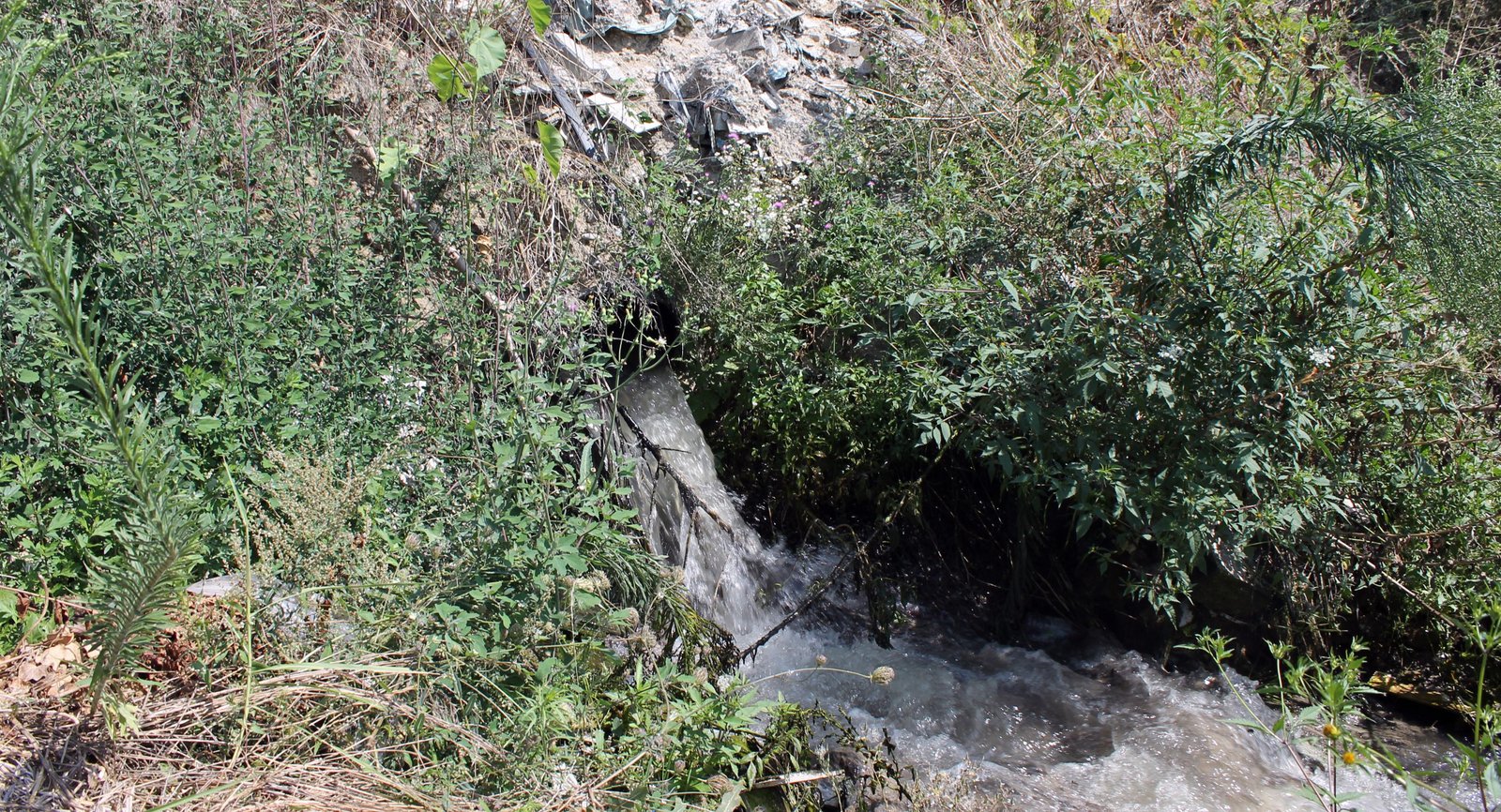
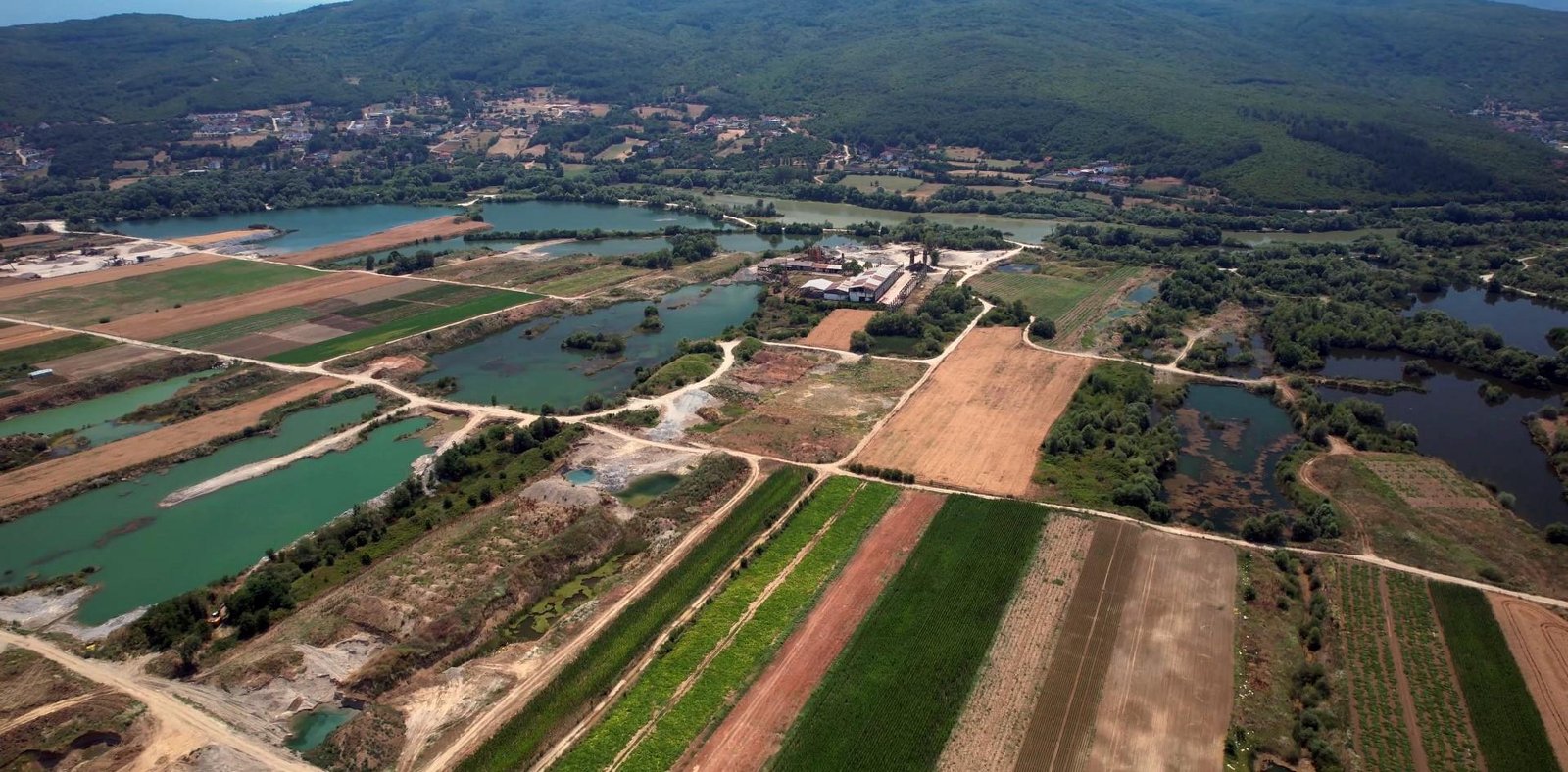
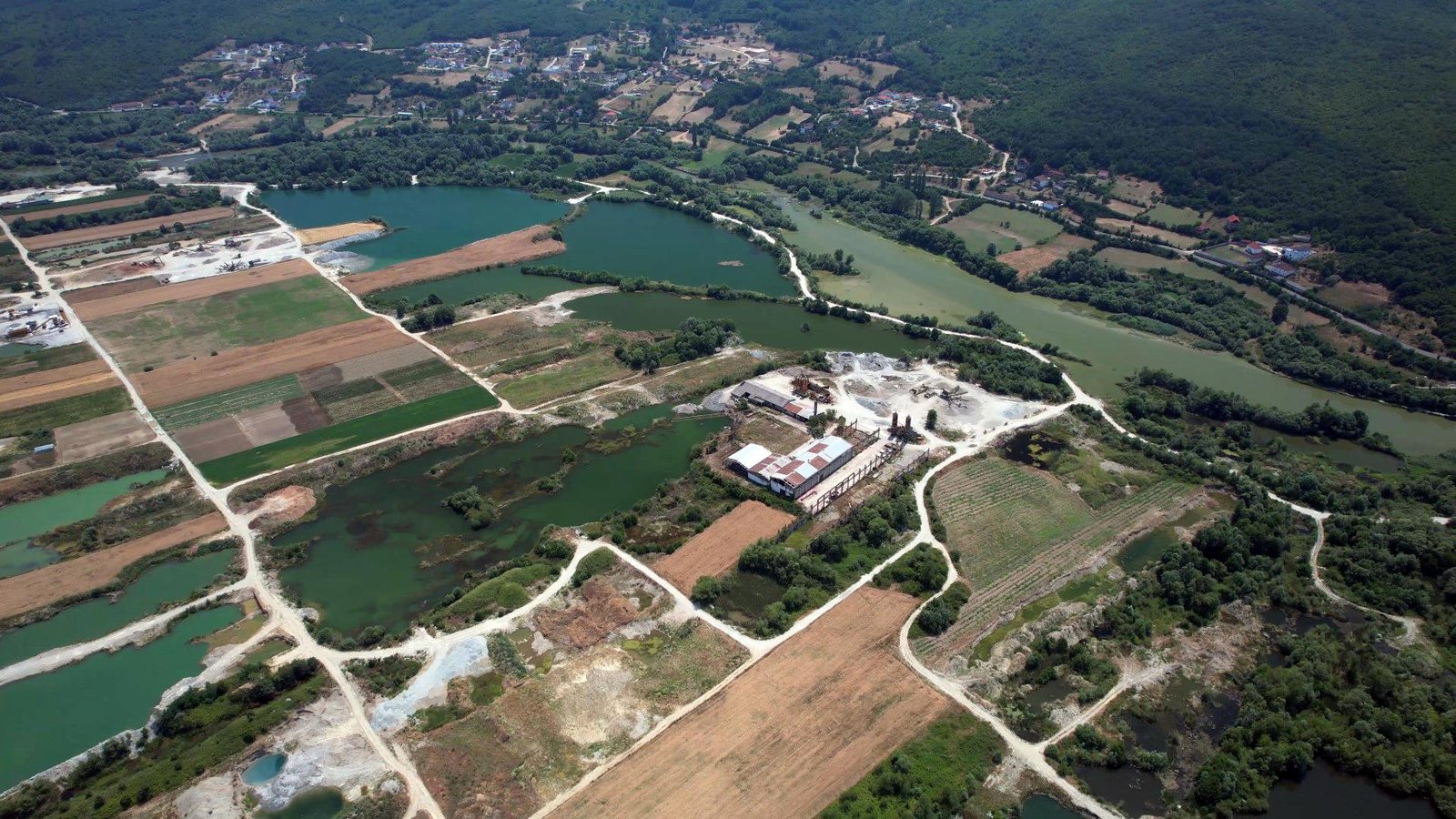
Residents of Krushë e Madhe, Rahovec, financially contributed to install a large sewage pipe discharging into the White Drin. | Photo: Besnik Boletini
Based on existing projects in Kosovo, building a wastewater treatment plant for medium and large towns typically costs between 20 and 40 million euros, depending on capacity and the technology used.
Another “Source” of Sewage Flows into the White Drin
Following the course of the White Drin and tracing the sources of pollution, we reached the village of Gjonaj in Prizren. In this village, a large “source” of sewage is forcefully discharged into the White Drin through a big pipe. When we told the local residents that we were going to visit the site, they advised us to wear masks because of the strong odor, as the sewage contains fecal matter. The polluted water coming from the pipe is immediately noticeable, showing a different color as it joins the river.
Herolind Osmanollaj, head of the local council in Gjonaj, says that this sewage serves around five thousand residents and is discharged continuously into the river.
According to him, when it rains and there are no restrictions on drinking water, this discharge appears almost like a waterfall.
“Before this sewage was discharged, the river was clean, residents used to bathe here, and people spent recreational time along the river. Agricultural lands were irrigated as well. Now the river is heading toward degradation,” he says.
About 20 meters from the river stands a house which, ironically, has a small concrete basin filled with water evidence that the river is no longer used for recreation.
“We are asking the relevant authorities to build a new treatment plant to solve this problem,” Osmanollaj said.
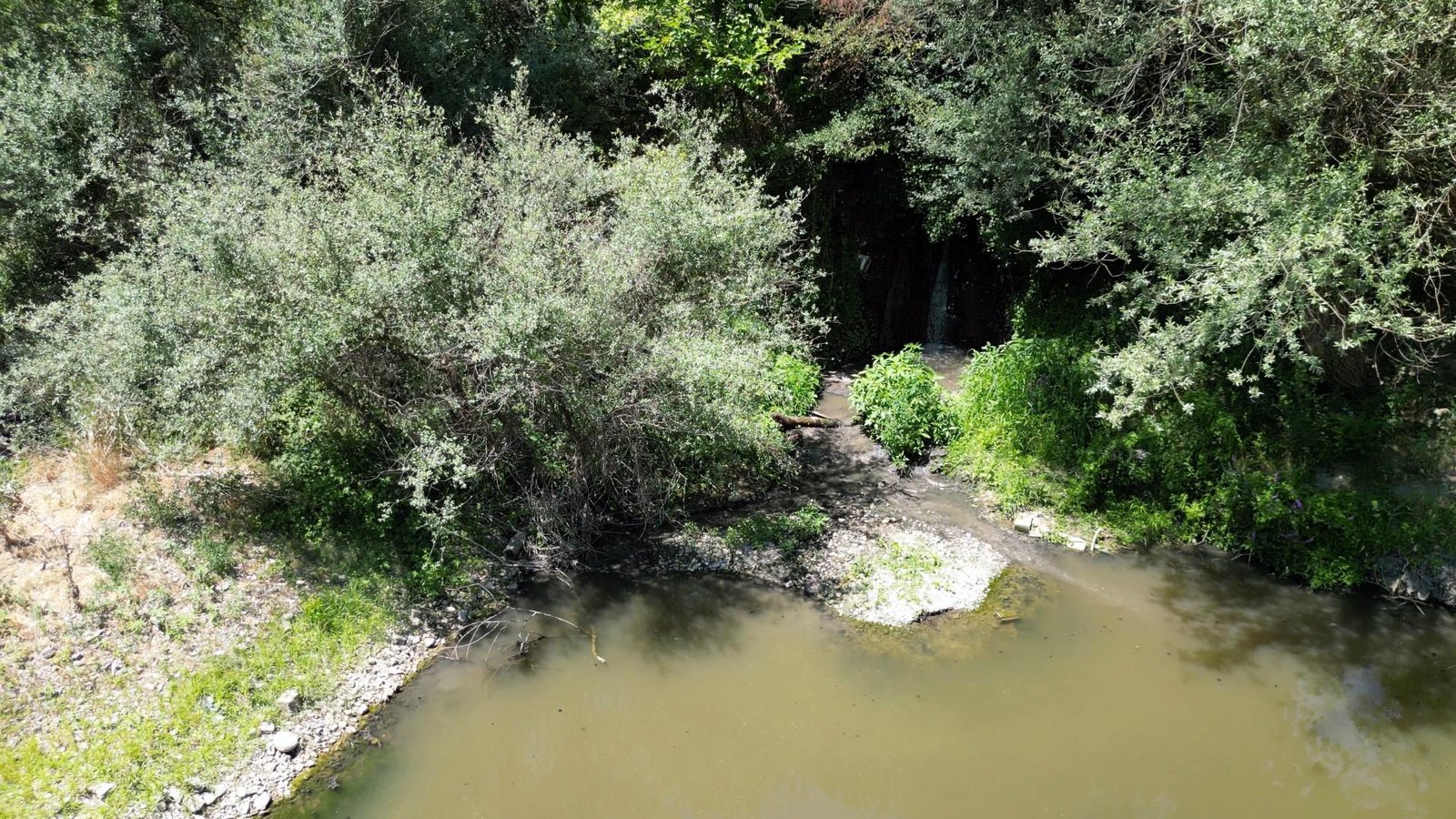
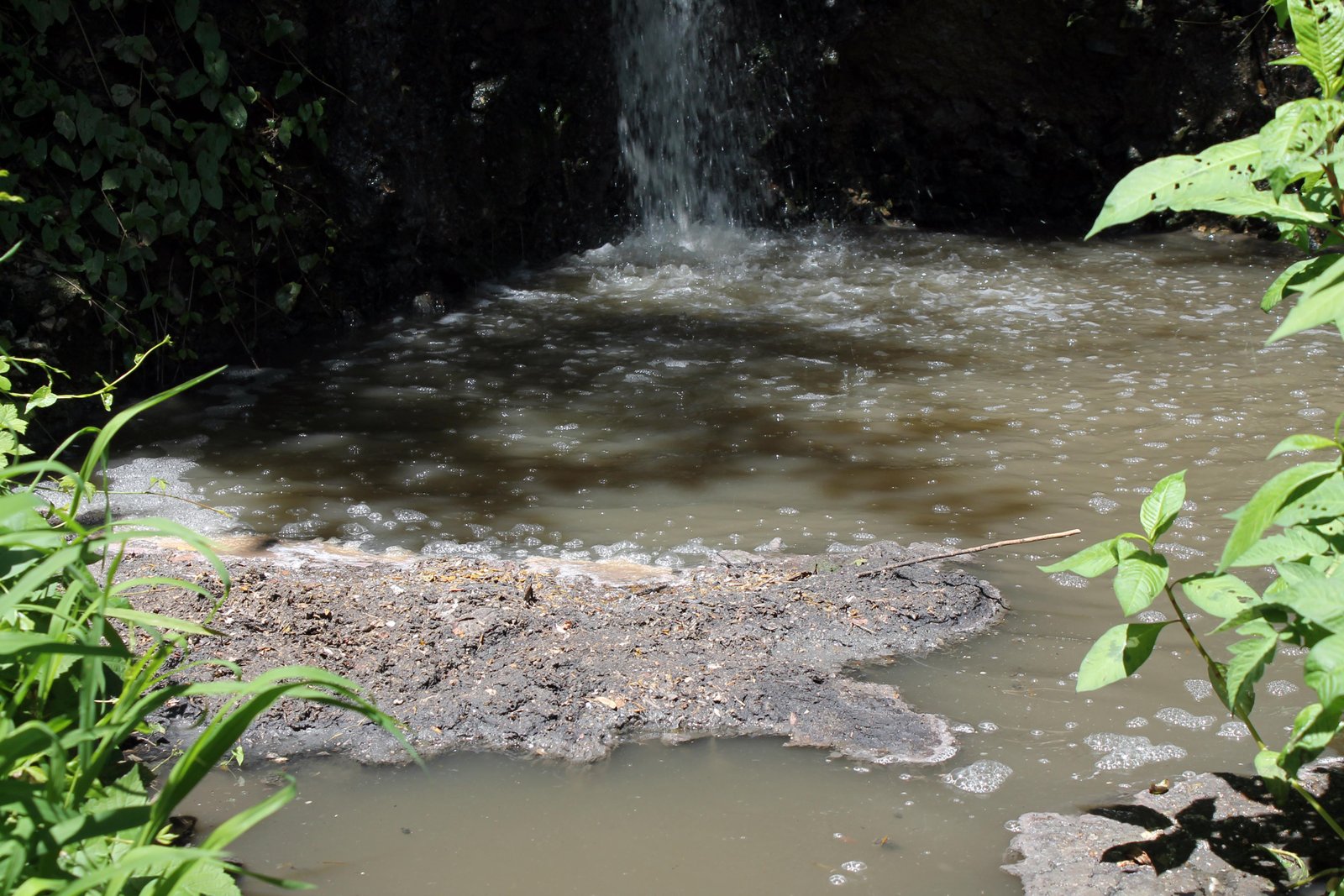
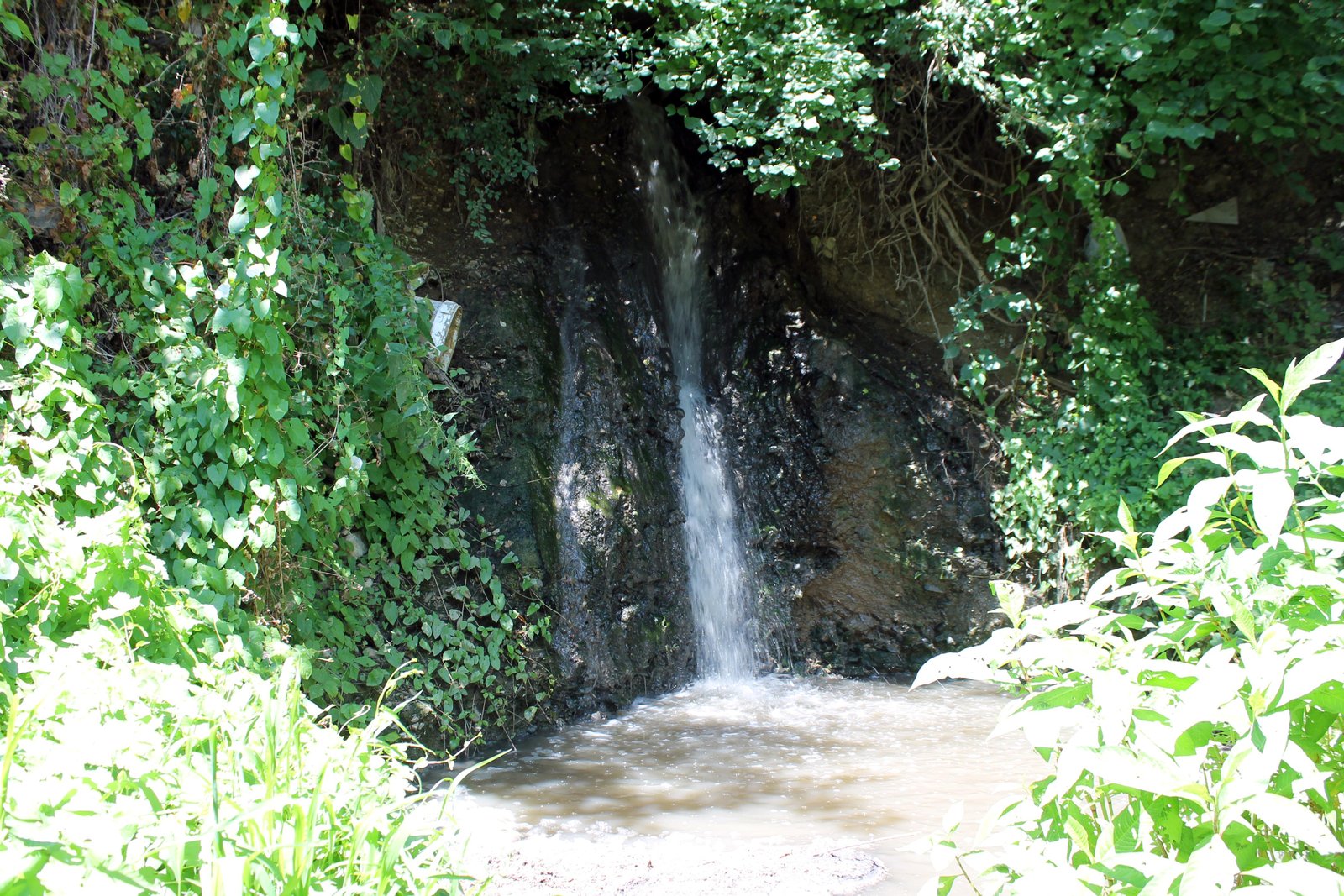
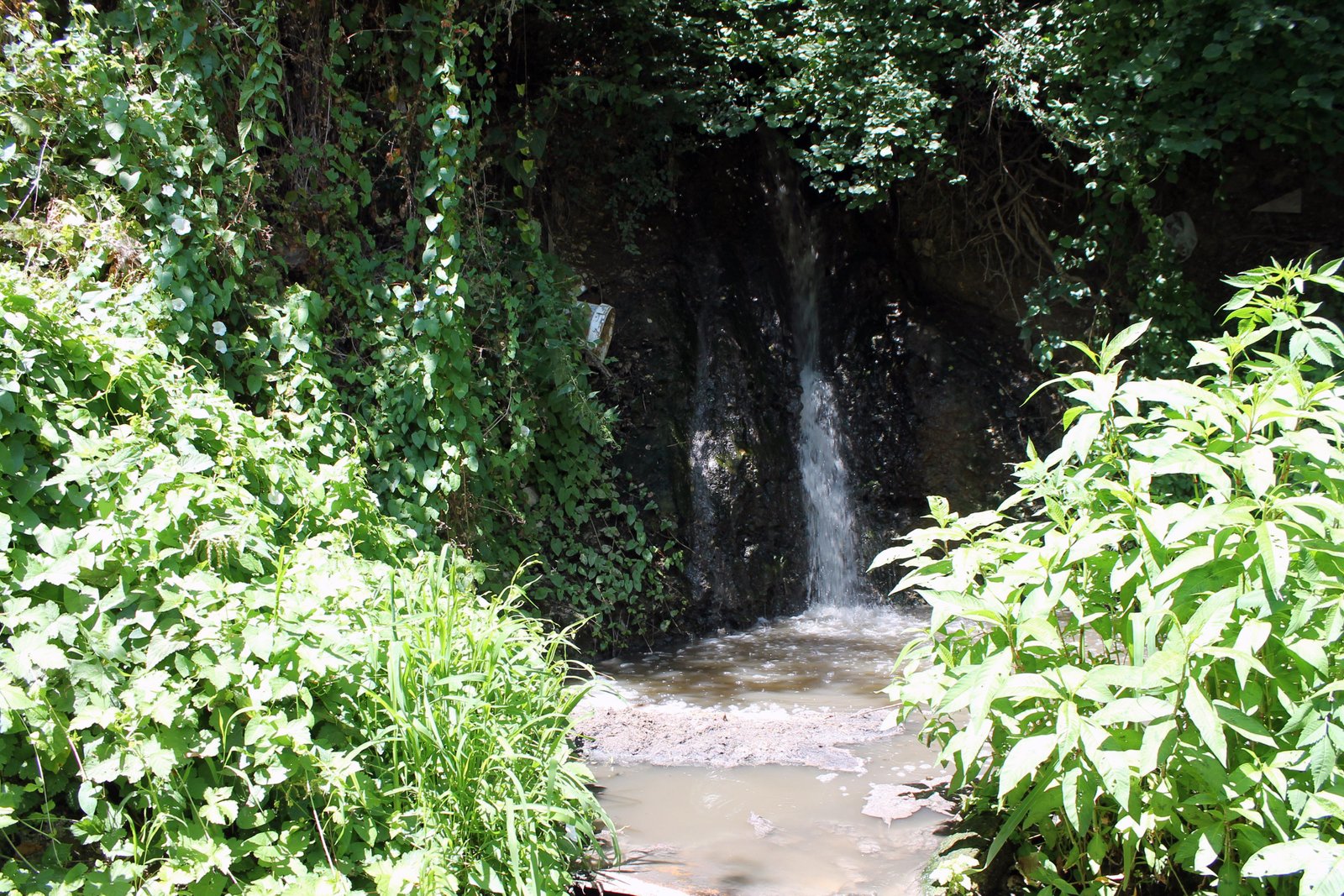
A large pipe discharges sewage and stormwater into the White Drin in the village of Gjonaj, Prizren. | Photo: Besnik Boletini
Fisherman Granit Berisha, who was fishing in the area, says that waste is thrown into the river or near it at various points along the White Drin and its tributaries. When the water level rises in spring, it carries all this debris downstream into Albania.
“I’ve seen waste in Kukës that you couldn’t even imagine,” he says.
After visiting Gjonaj, we explored several other locations. Between the villages of Lukinë and Romajë, there is a stream that, just a few meters before joining the White Drin, is blocked by large amounts of waste, including inert materials. Some of this waste is occasionally set on fire after being dumped. A little further along, there is a sewage pipe coming from the village of Romajë, emitting a strong odor that troubles nearby residents. At the beginning of Lukinë village, next to the river, there is a large illegal dumping site, mostly containing inert waste.
Sezair Shehu, head of Lukinë village, says that irresponsible individuals have caused this damage. He emphasizes that it is essential to clean this area and restore it to its previous condition.
“All summer we used to swim and spend time here. Now you don’t see anyone entering the river because of the water pollution,” Shehu says.
A few meters further, the White Drin flows. As in many other parts of this region, repeated excavations over the years have diverted the river, creating large pits and many obstacles. The movements of trucks and excavators where the river should have flowed have resulted in the creation of a road.
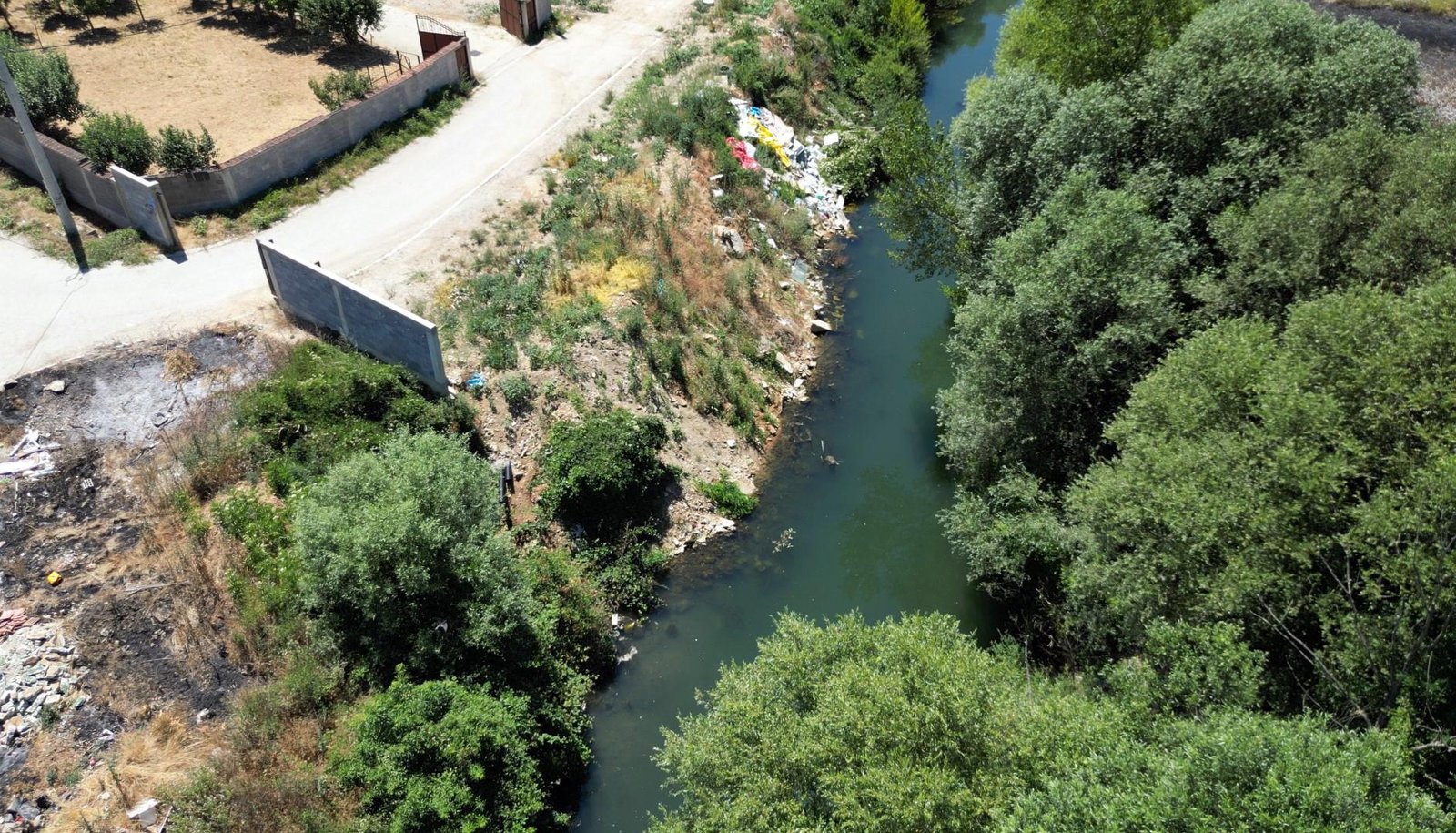
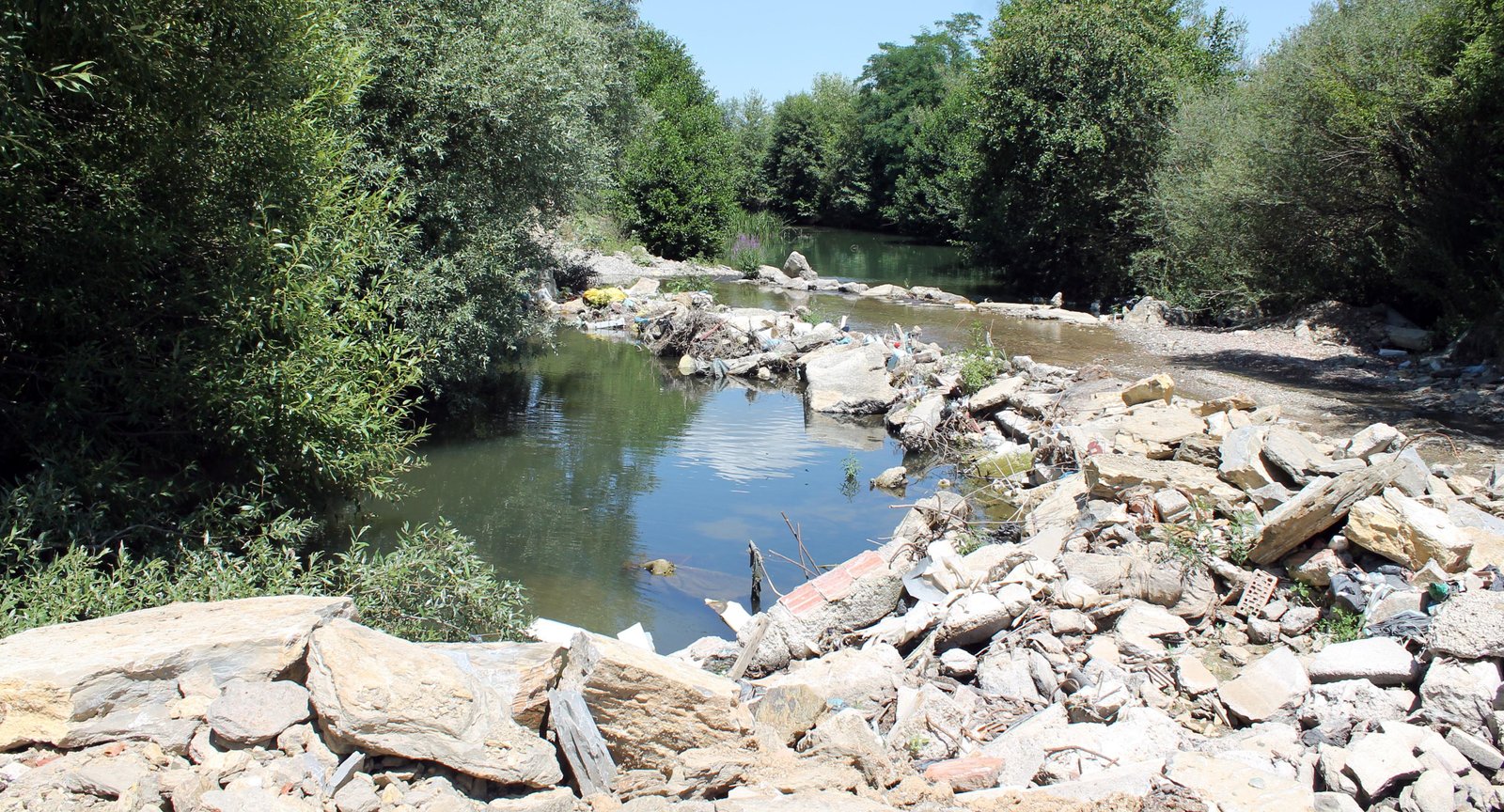
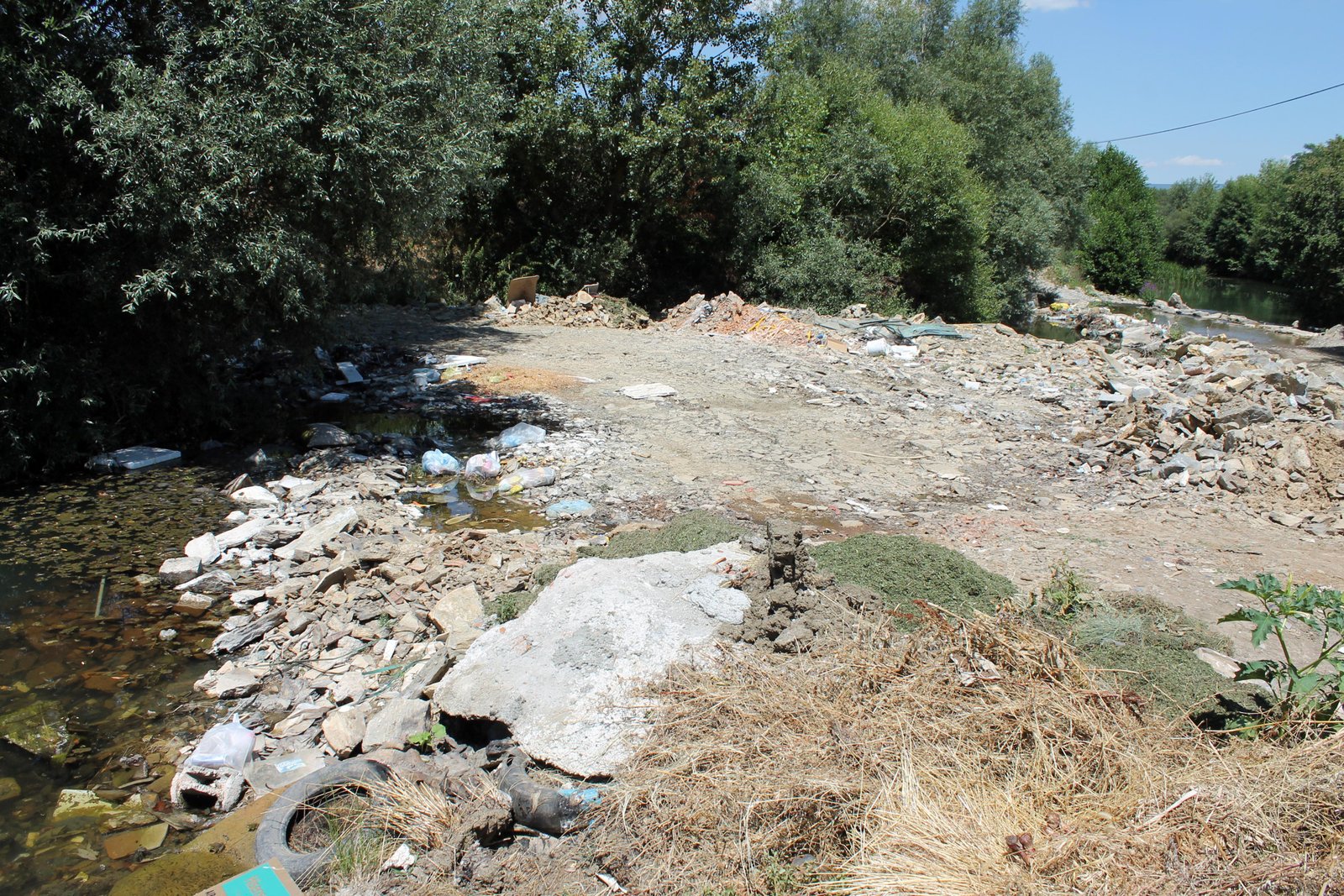
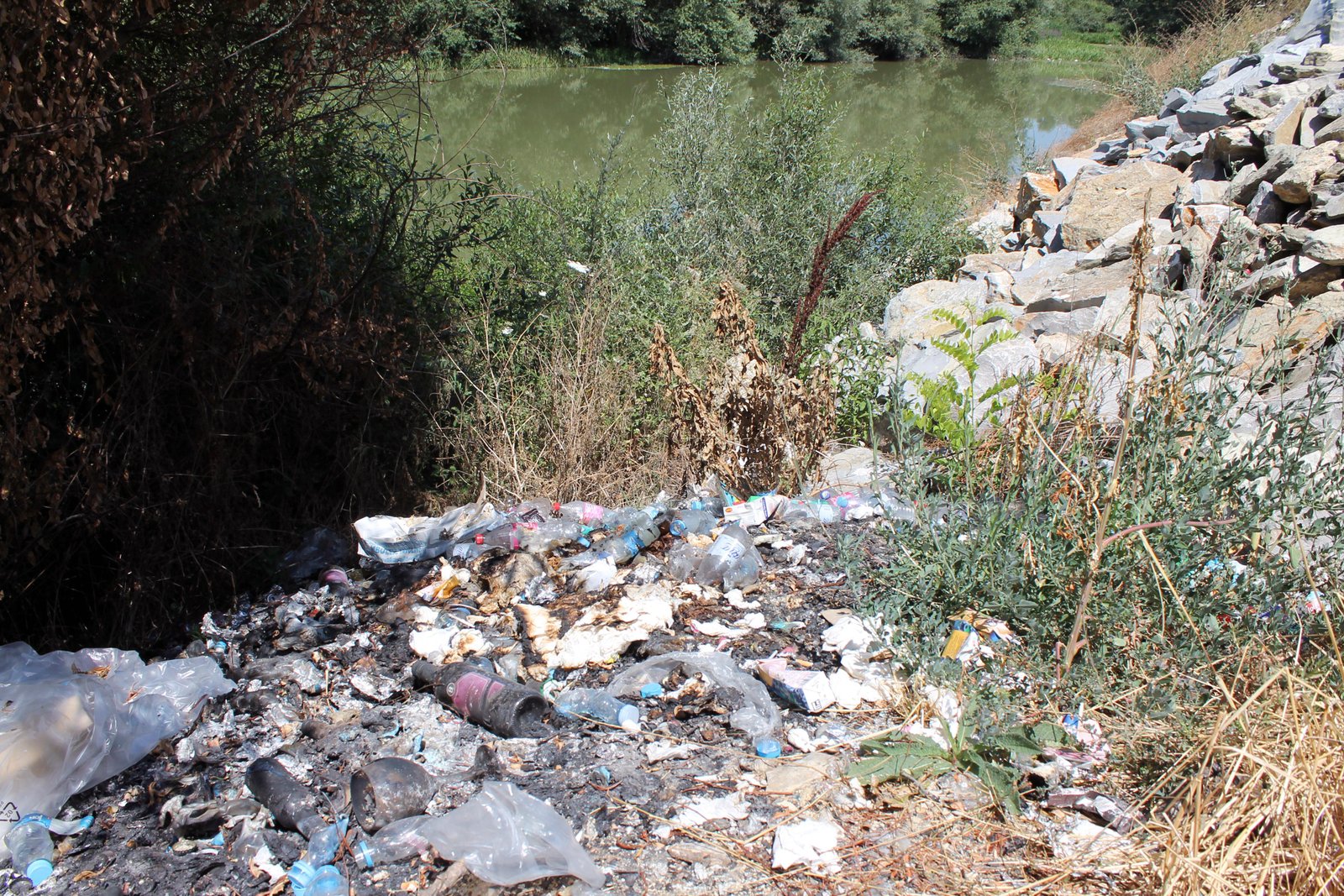
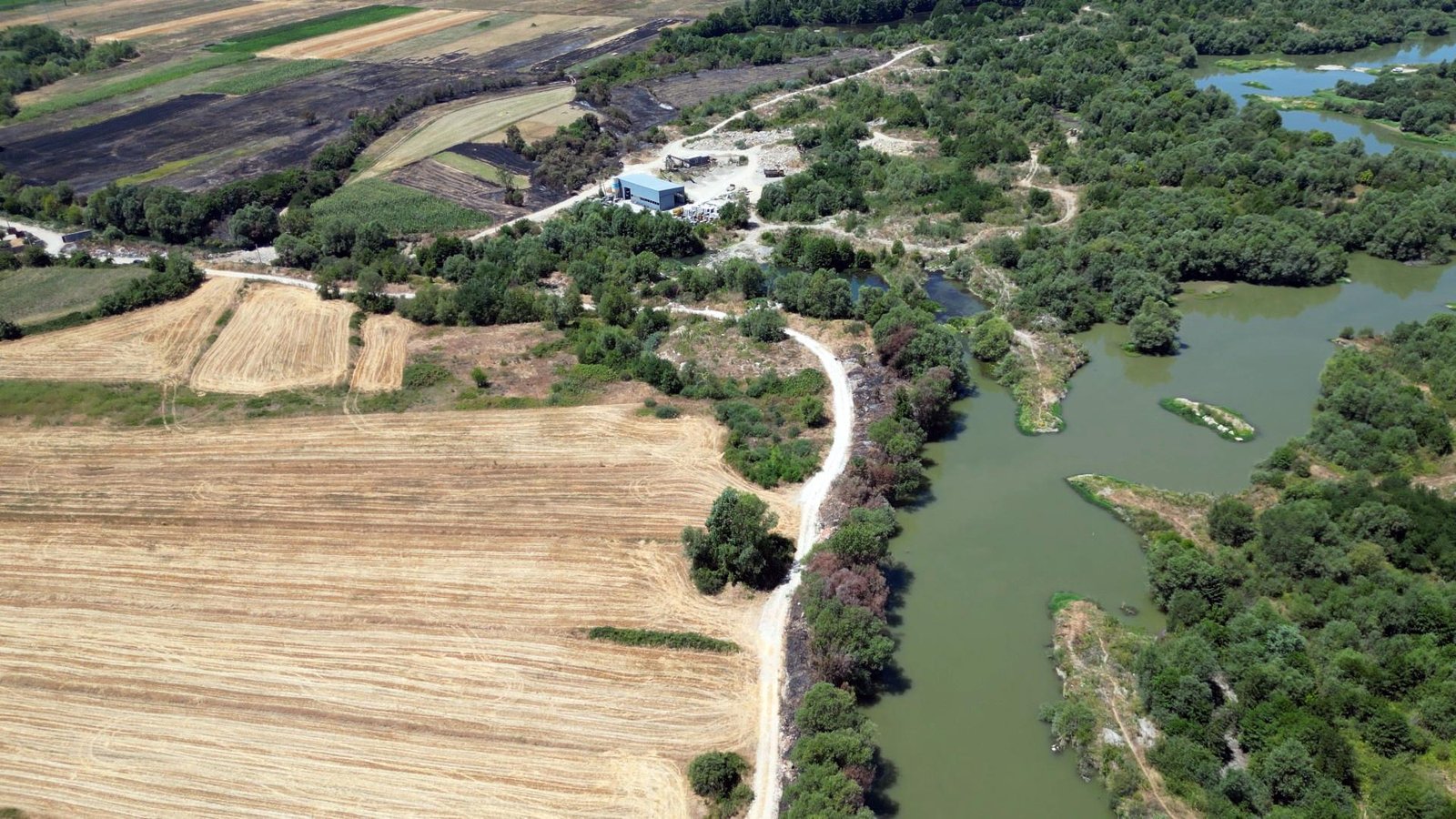
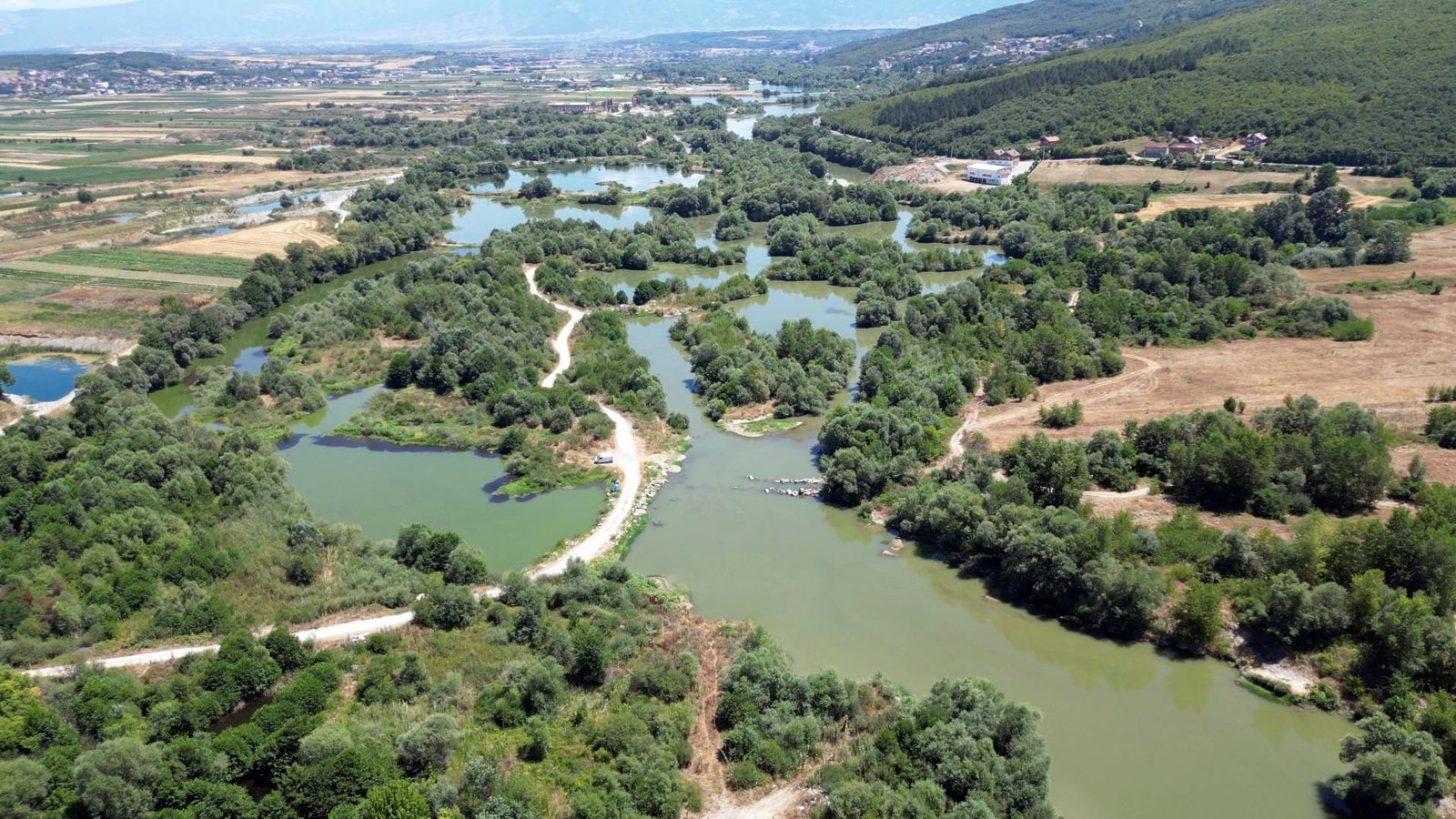
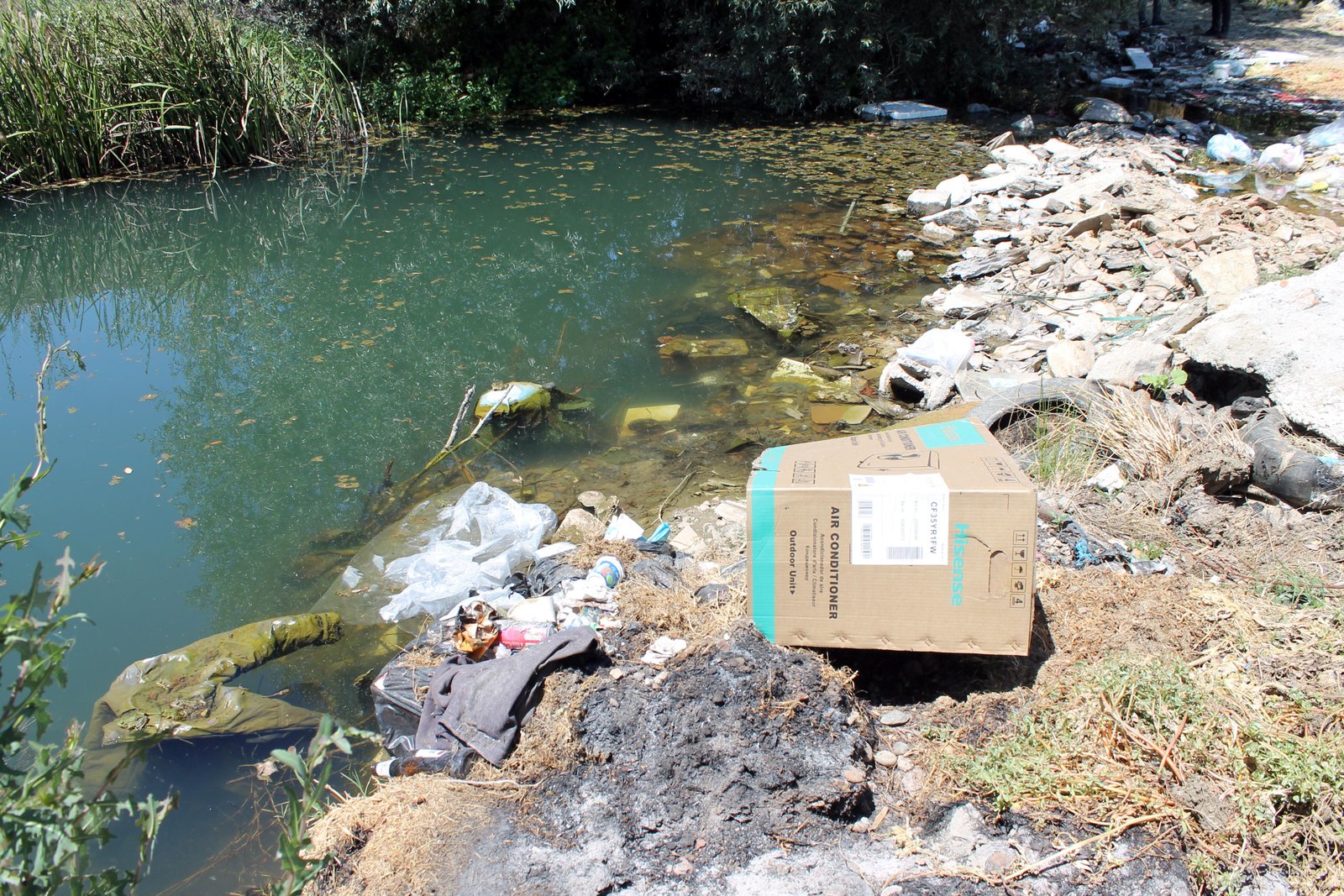
In addition to pollution in many areas, the riverbed of the White Drin in the village of Lukinë, Prizren has been significantly degraded by illegal extractors. | Photo: Besnik Boletini
Hasan Qollaku, fishing in the area, described the concrete consequences of the river’s pollution. He says that the White Drin’s pollution has led to a decrease in fish populations.
“Many fish species have disappeared. Even the fish that remain no longer have the quality they once did,” he says.
Vërmica is the last village in Kosovo where the pollution and waste from the White Drin pass into Albania, continuing toward Kukës. Although the lake in Vërmica was generally cleaner at the beginning of December, debris had left traces in several areas.
Bujar Pulaj, head of the Vërmica local community, says that the lake’s pollution neither begins nor ends there; it originates from the source of the White Drin.
“Usually, waste is more visible in spring due to the rains that start at that time. During the winter, the Drin is cleaner,” Pulaj explains.
He adds that this pollution primarily affects tourism development in Vërmica. Pulaj notes that attempts have been made to clean the lake several times, but these have been symbolic, short-term actions carried out only in certain sections.
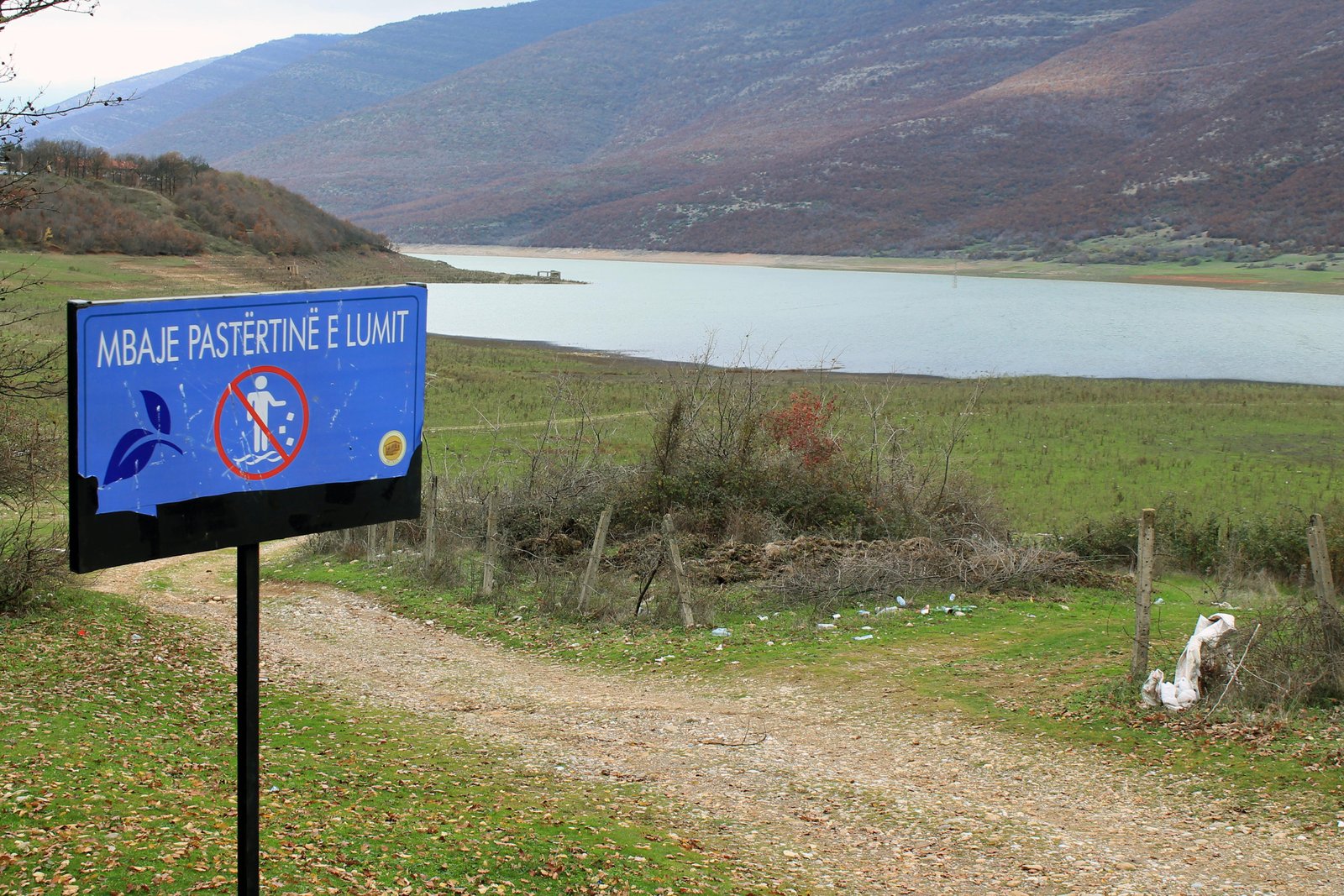
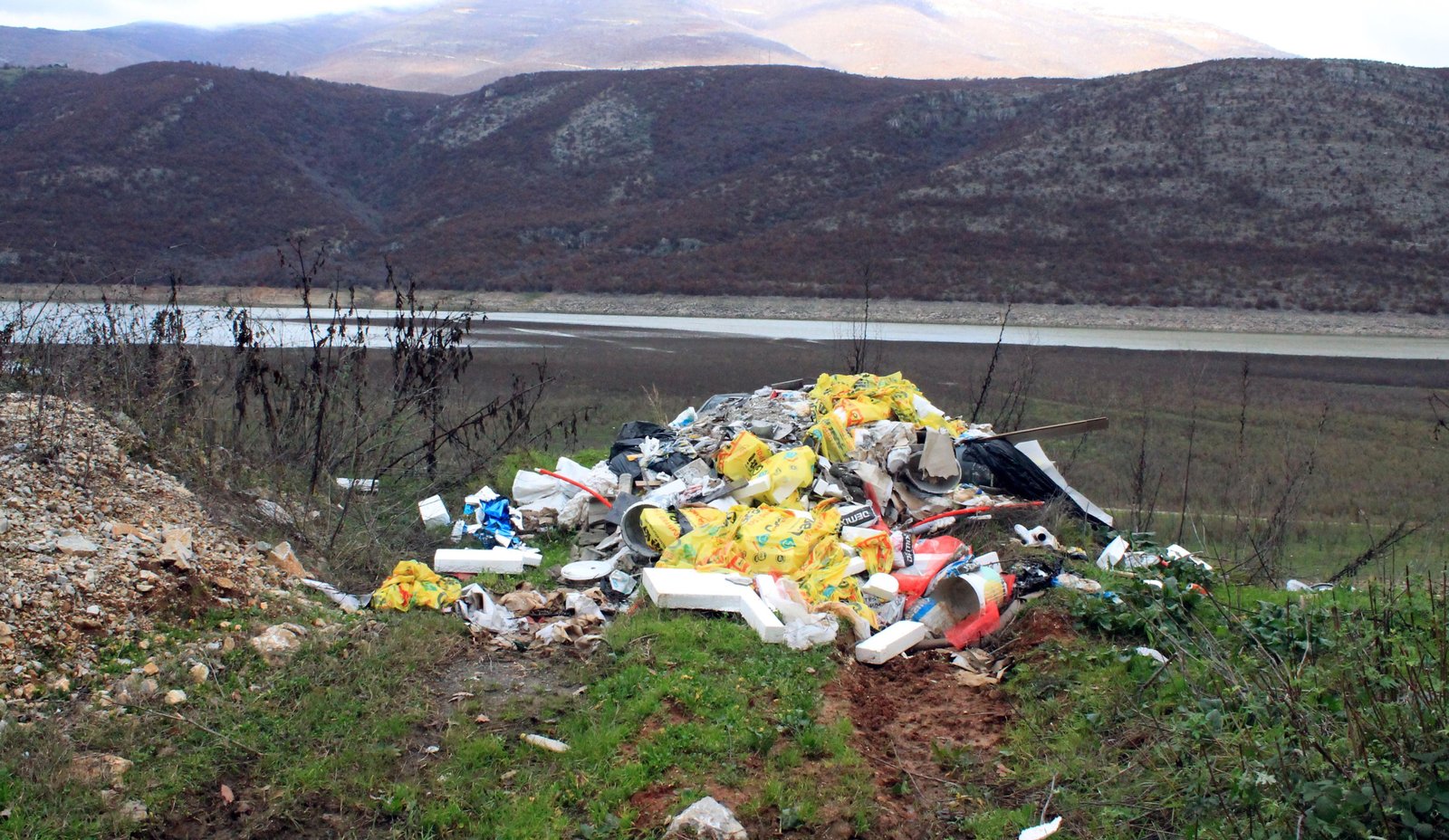
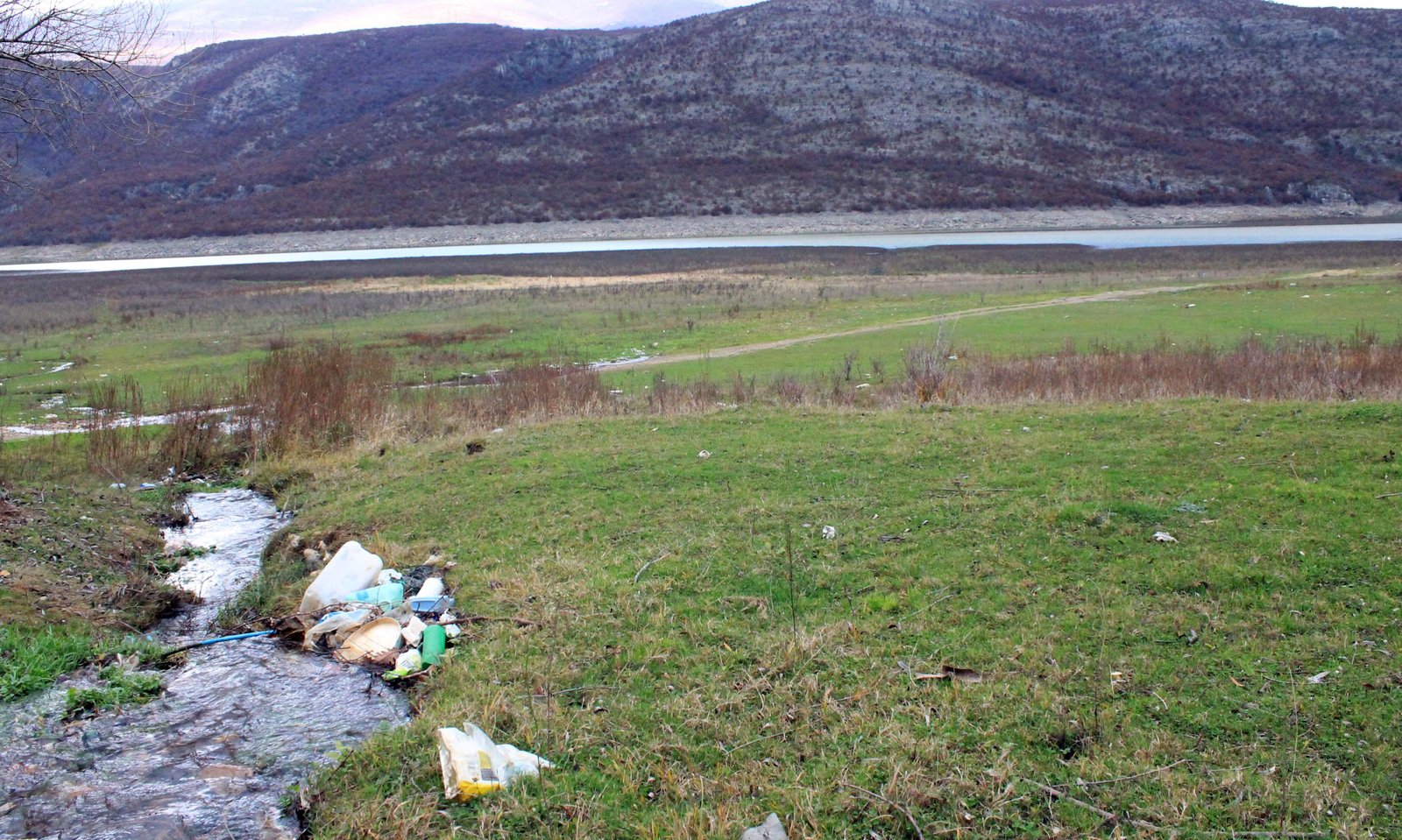
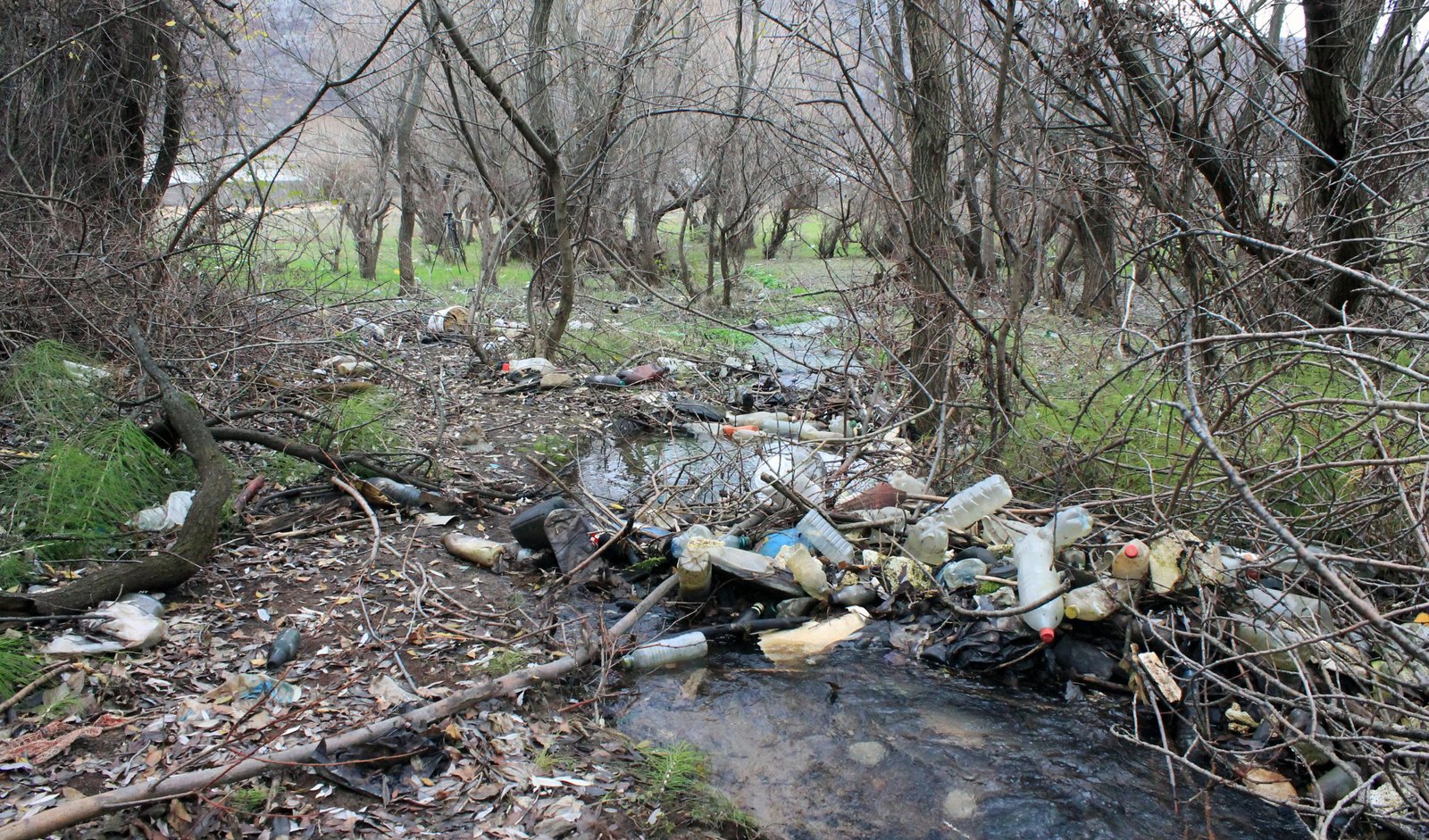
Vermica is the place where pollution and waste pass through before entering Albania | Photo: Besnik Boletini
From Vërmica, we continued to Morinë. There, we also saw polluted water and floating waste.
In Morinë, where the lake of Fierza begins to form, the water level drops during summer, allowing one to drive across areas that are otherwise submerged in winter and autumn, when the lake fills the surrounding hillsides.
What the summer’s low water leaves behind is a mass of debris, mostly plastic, hanging on the slopes of the lake’s tributaries and now shriveled from the sun.
Alban Xhaferri, a resident of Kukës and a local tour guide, explains that during winter, the White Drin carries all the waste from Kosovo into the lake of Fierza in Kukës.
This lake was created in 1978 following the construction of the Fierza hydroelectric dam, due to inflows from rivers such as the White Drin from Kosovo and the Black Drin from North Macedonia.
However, besides these water exchanges between countries, the inflow of waste and discharge of untreated sewage has created constant pollution, with no solution in place for years.
“Almost everywhere, the lake is polluted. The pollution comes from the White Drin and the Black Drin, and there is almost no awareness among residents to keep the lake clean,” says Xhaferri.
He hopes that the relevant authorities will take action to prevent or clean the lake, as “this is becoming a very serious problem.”
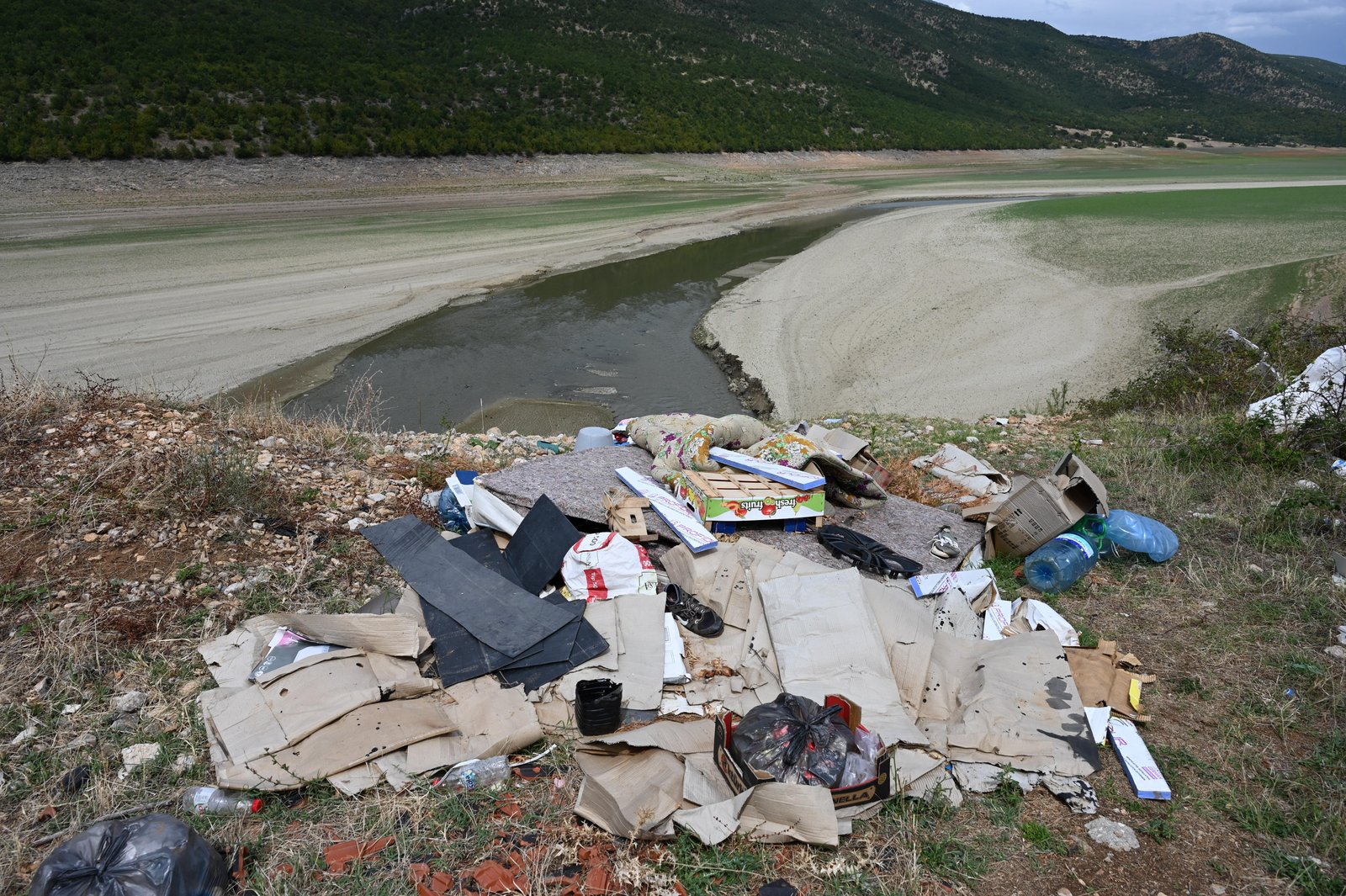
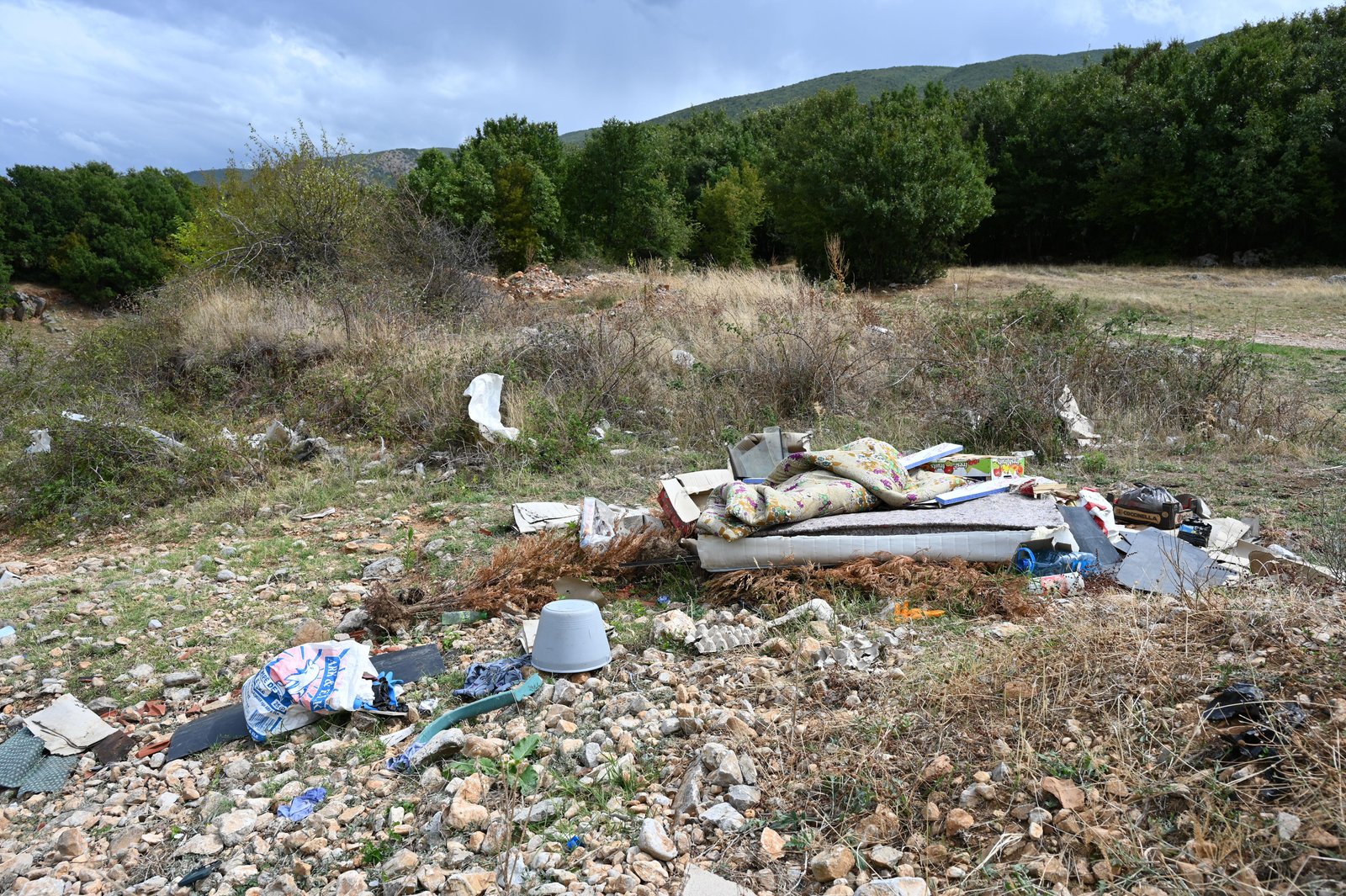
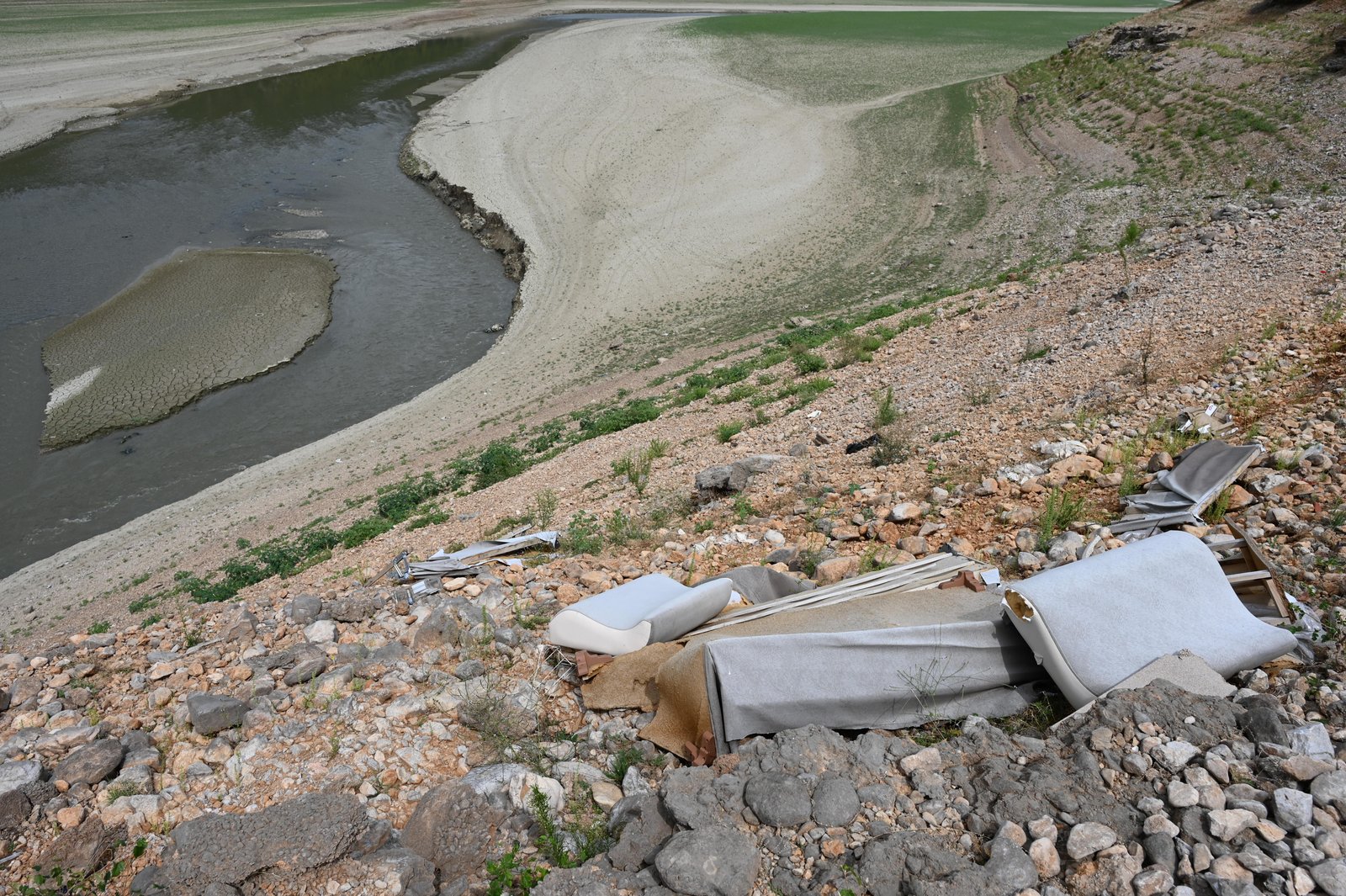
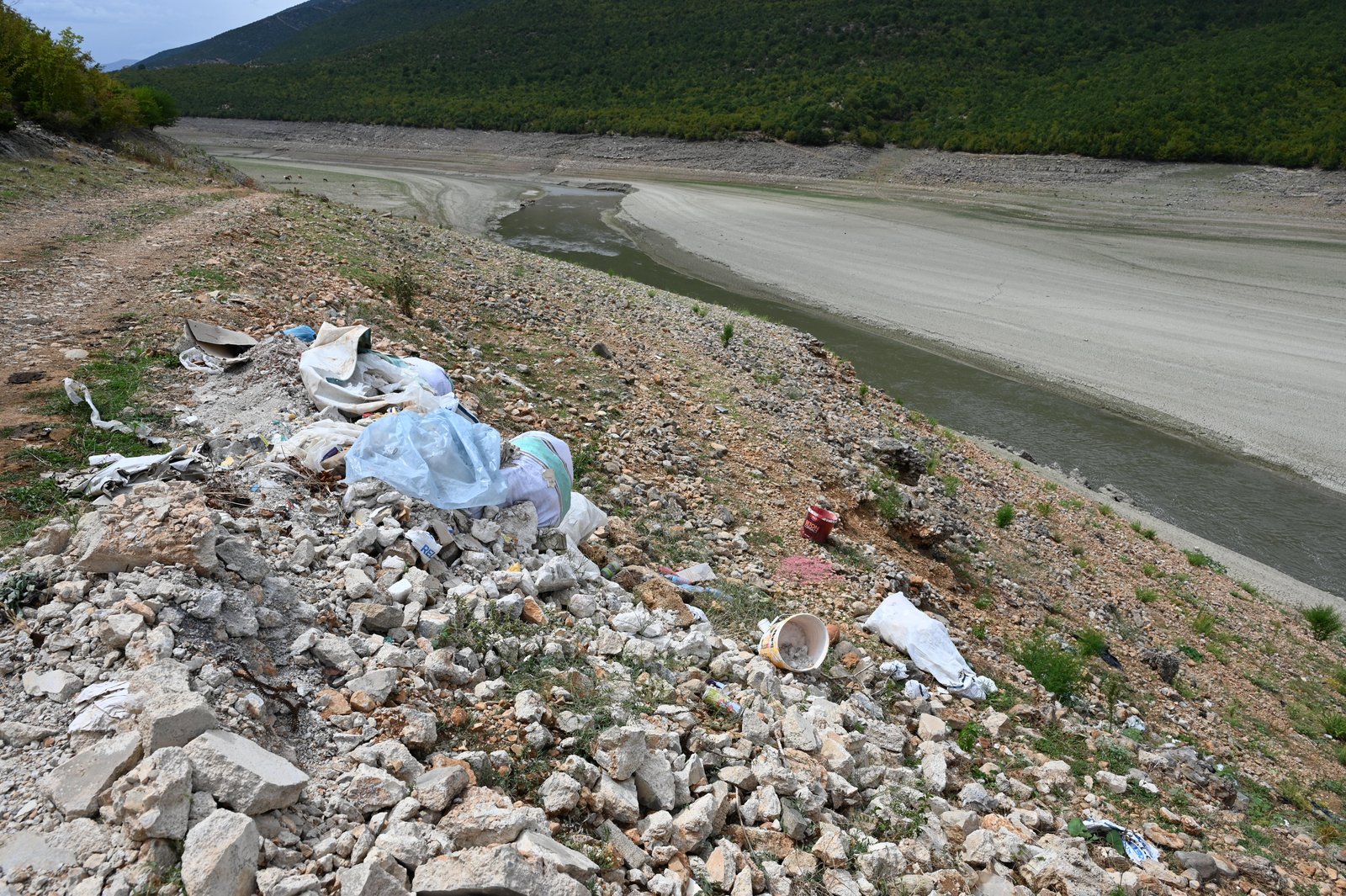
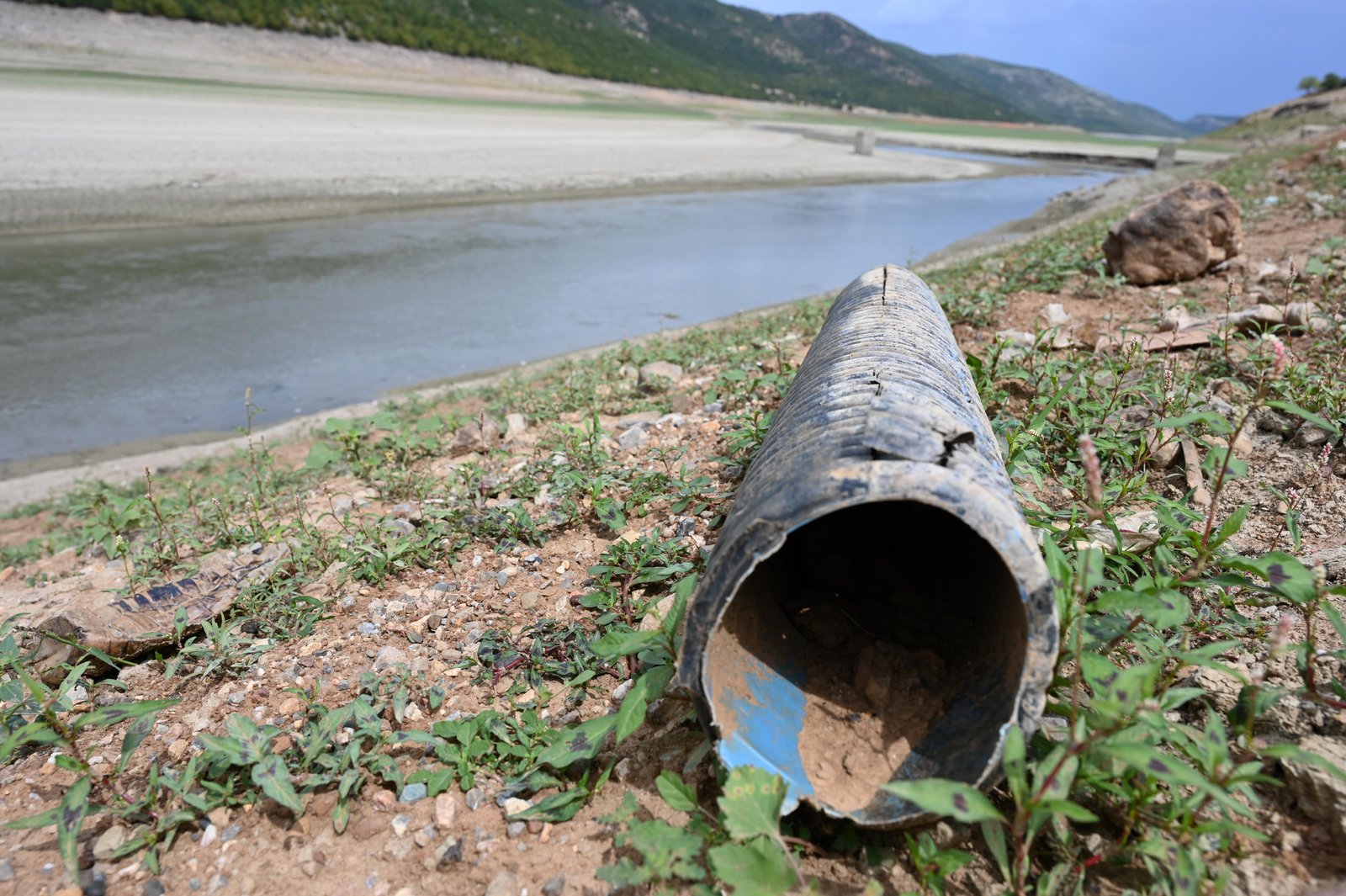
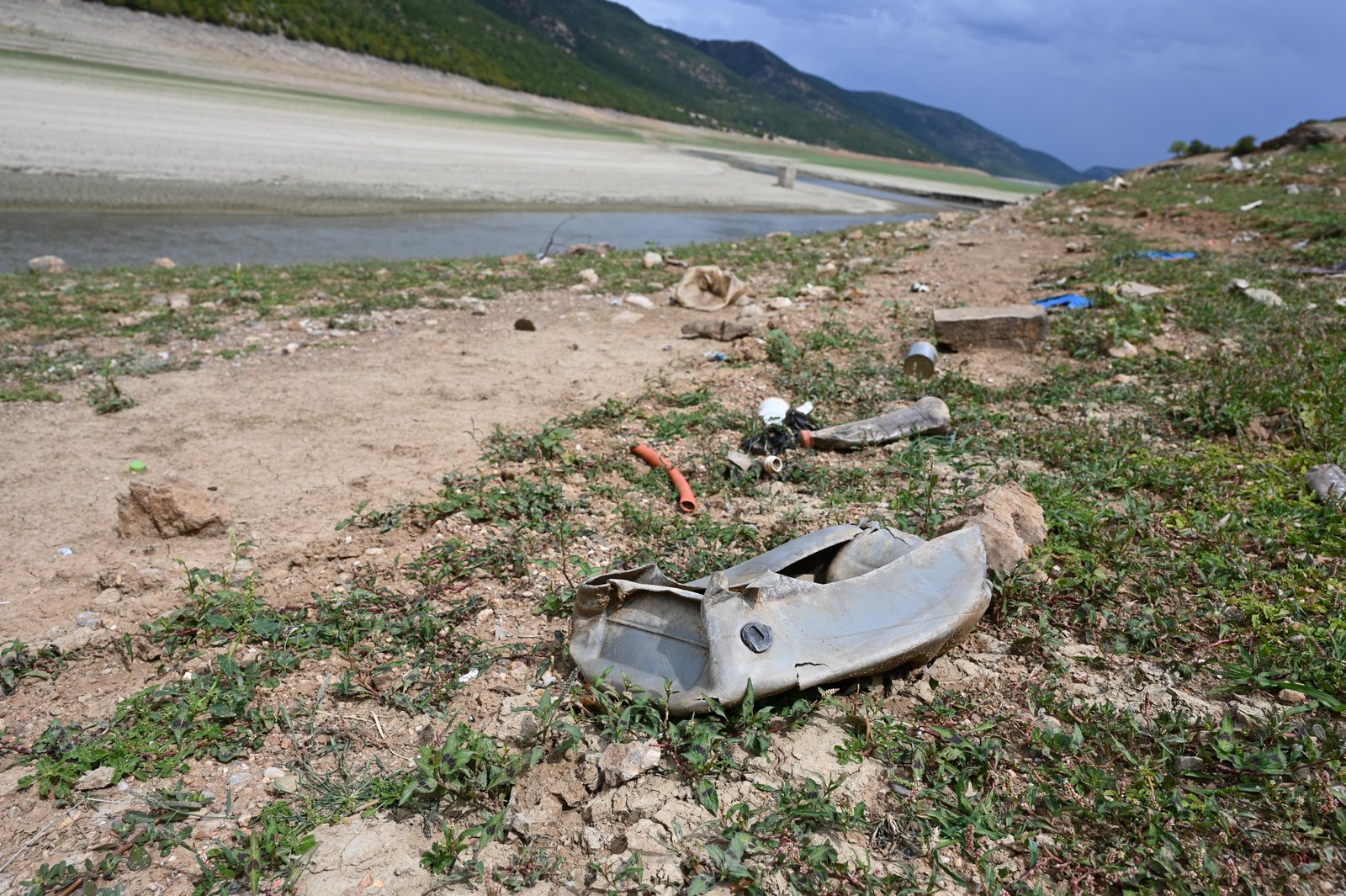
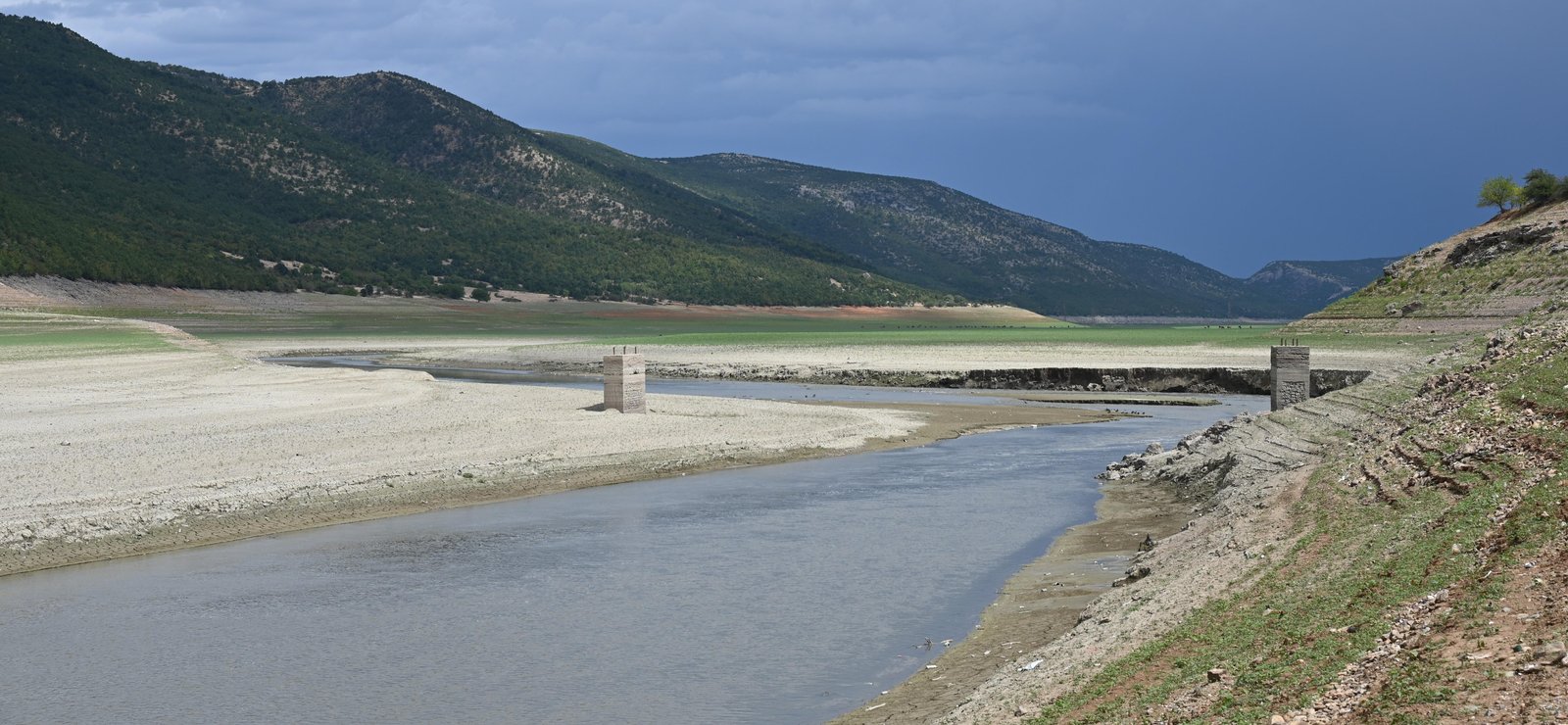
During the summer, the water level of Lake Kukës drops, and the waste remains trapped along the slopes of the valley. During the winter, it is deposited in the lake. | Photo: Erisa Kryeziu
This situation has even affected his own tourism initiatives aimed at promoting Kukës and the surrounding area.
“Unfortunately, due to the excessive pollution in the lake of Kukës, water sports activities have become impossible, as even tourists cannot tolerate or enjoy the lake in its current state,” Albani explains. He adds that although he was awarded a “start-up” project to purchase equipment for water sports, such as kayaks, the massive pollution in the lake has made it impossible to carry out these activities.
Even though there are no homes near the lake on the Morinë border, the view is dominated by plastic waste from everyday use, including food wrappers, cleaning detergents, and household items.
This debris, once we leave Morinë, accompanies the lake along its entire stretch, forming piles on the slopes or accumulating in vegetation left behind as the water level has receded.
Fishermen: the First to Feel the Impact of Pollution
Gëzim Doci has been fishing in the lake of Fierza for 25 years. According to him, pollution has made traditional activities like fishing not only difficult but also unsafe in terms of public health.
“The pollution in the lake of Kukës is very severe. We are fishermen, and half of the Kukës area relies on this work to earn a living. The waste includes plastic bottles that accumulate here, carcasses of dead livestock that wash up on the shore the lake smells terrible,” Gëzim explains.
Due to pollution and illegal fishing, both the flora and fauna in the lake are being harmed, and the consequences directly affect the livelihoods of local families who depend on fishing.
“Pollution severely damages the fish,” Gëzim concludes.
For Bukurosh Onuzi, an environmental activist and head of the organization Ecologists for the Region, which operates in Kukës and surrounding areas, the lake of Fierza is a major resource, particularly for water sports and tourism. However, pollution has hindered its development.
“A large amount of waste comes from Kosovo, especially from the areas around Peja, Gjakova, and Prizren, causing significant problems and concerns, both for cleaning the territory and for turning this large water reserve into a hotspot that cannot be used for tourism. Instead, it becomes a pile of waste that negatively affects tourism development and the performance of the municipality and the Kukës region,” Onuzi explains.
According to Onuzi, this situation also affects fish populations.
“The impact is visible. We are not seeing an increase in the populations,” he adds.
A Vicious Cycle of Pollution
December rains brought rising water levels in rivers and lakes. Along with the water, the debris carried by the rivers also increased.
At the lake of Fierza, alongside the fishermen’s boats, there is a boat equipped with a glass cabin and a mechanical collection system. During the summer, low water levels left it stranded on the shore, while in winter, for the past three years, it has been collecting debris brought by the rivers, piece by piece.
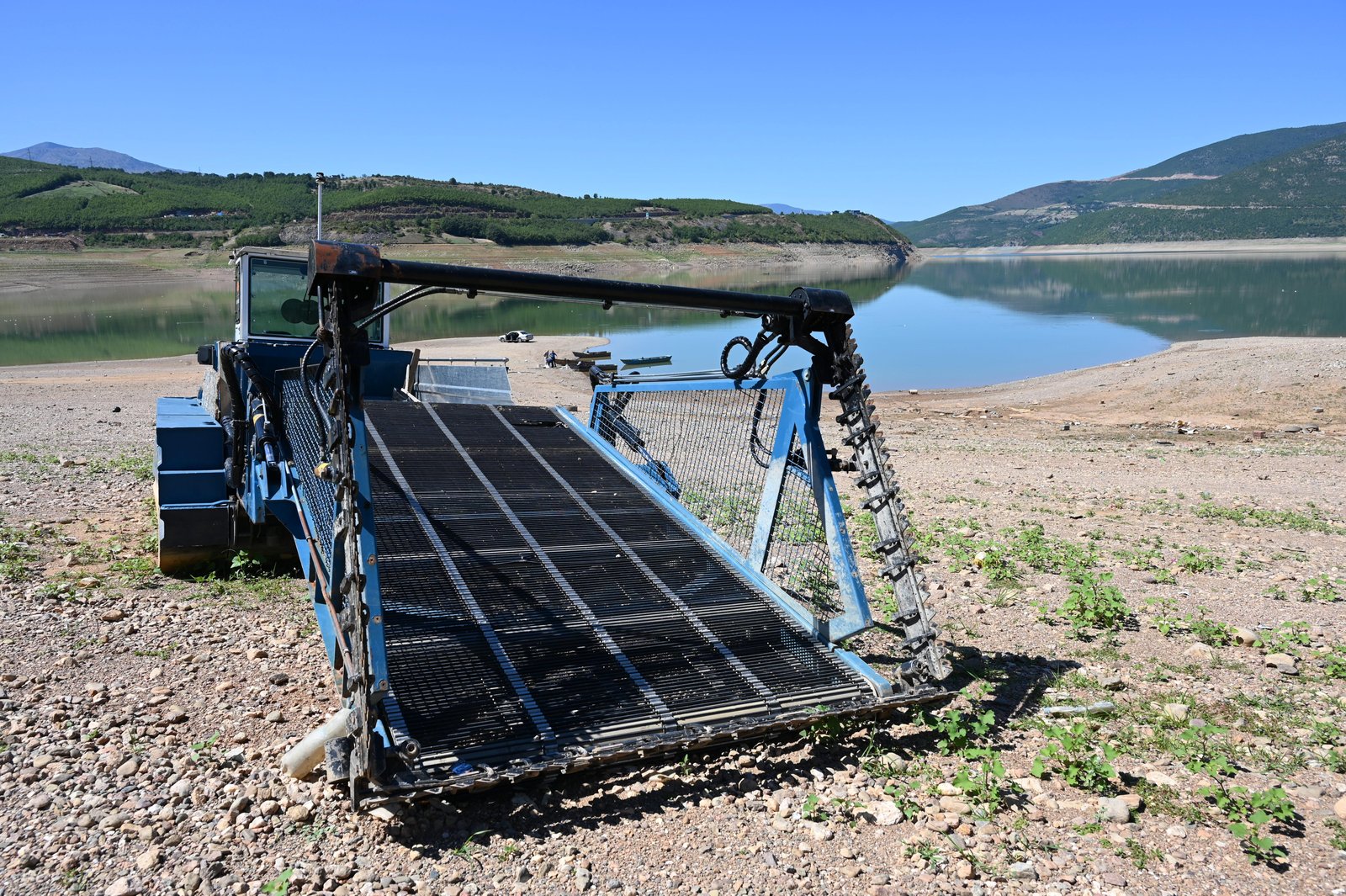
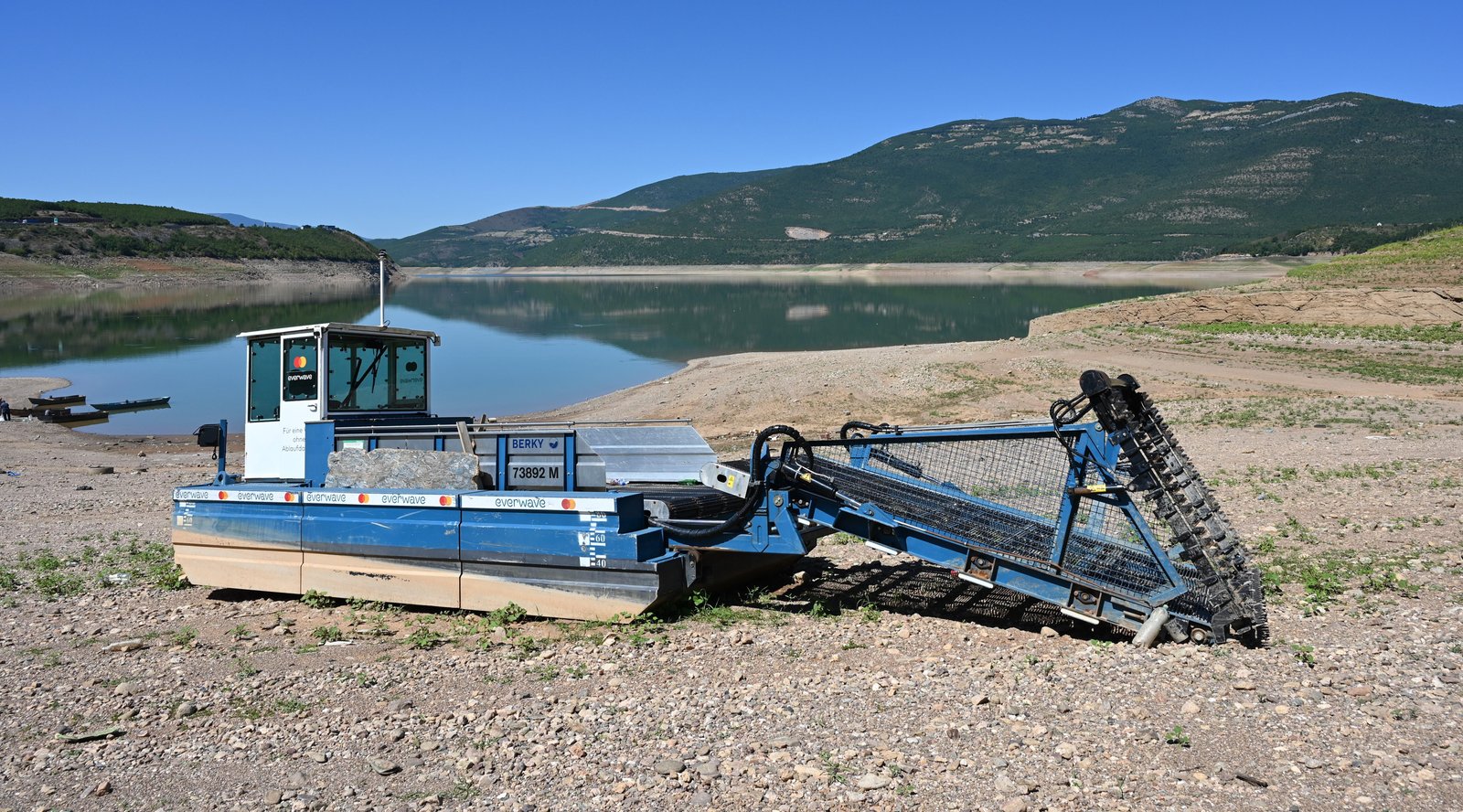
The boat that collects the lake’s waste, which stays on the lake shore during the summer months. | Photo: Erisa Kryeziu
“This is the third year of our clean-up operations. In the first year, we removed about 20 tons of waste from the lake. The second year, around 18 tons, as the water level dropped much faster. This year, since the water level rose very quickly, we are using every opportunity to collect as much waste as possible. As you can see behind me, there is a lot of fresh debris, mostly coming from Kosovo,” says Lulzim Baumann, an environmental activist and circular economy expert.
The boat, brought from Germany through a start-up called “Everwave” and managed by the company “Recycling Albania,” has been offered to the Kukës Municipality as a tool to address the waste problem.
While the boat operates in the lake, the lake of Fierza is shrouded in the dense December fog, with floating plastic materials that are occasionally pushed by the wind or gather along the shore.
“The plastic is collected by Everwave’s staff. We bring it to the shore, and the municipality handles the removal from the boat and placement in a site for sorting. The recyclable portion goes to the company for processing, while the residual, non-recyclable part goes to the municipal landfill, because it is municipal territory,” explains Valdet Cenaj, head of the cleaning sector in Kukës Municipality, while steering the boat during the collection process.
Meanwhile, Bujar Pulaj from Vërmica says he has heard about this boat and requested that the mayor of the Prizren Municipality make a seasonal loan request to the Kukës Municipality. This way, during certain periods, the waste could be collected in Vërmica, cleaning the lake there and preventing the debris from crossing into Albania.
On the other hand, Baumann notes that it is very difficult to quantify the total waste in the lake, as it comes from three countries simultaneously.
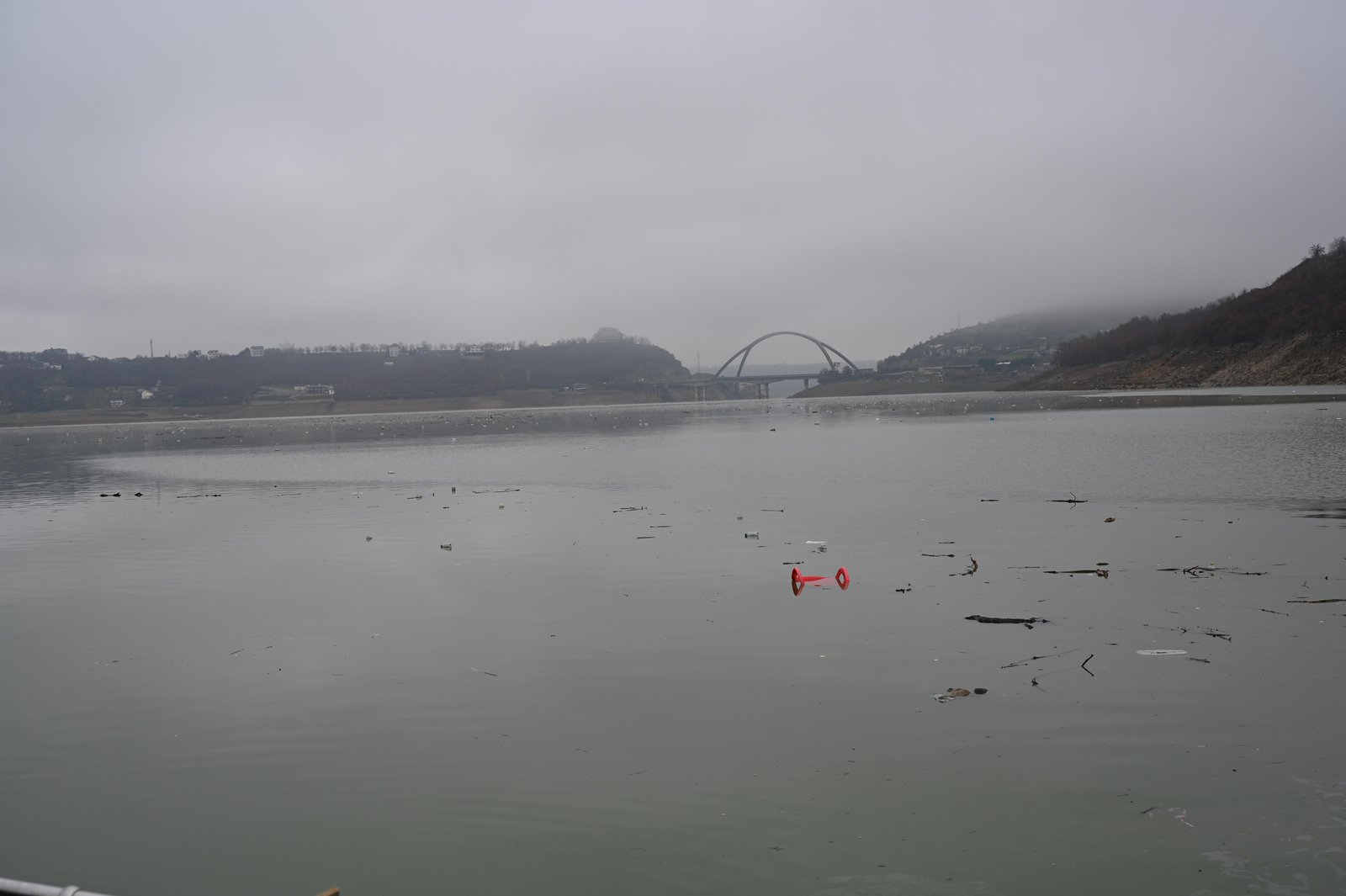
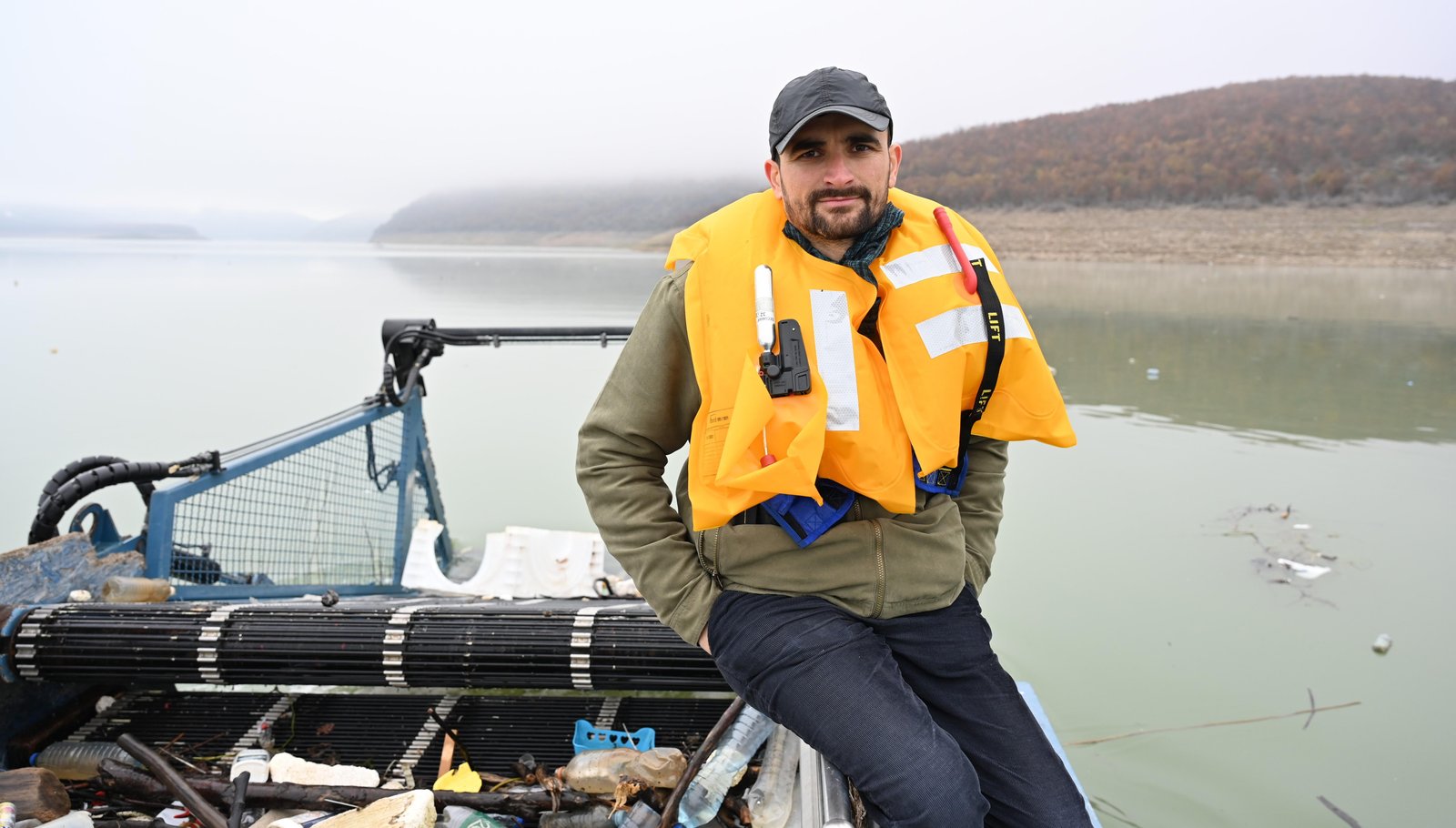
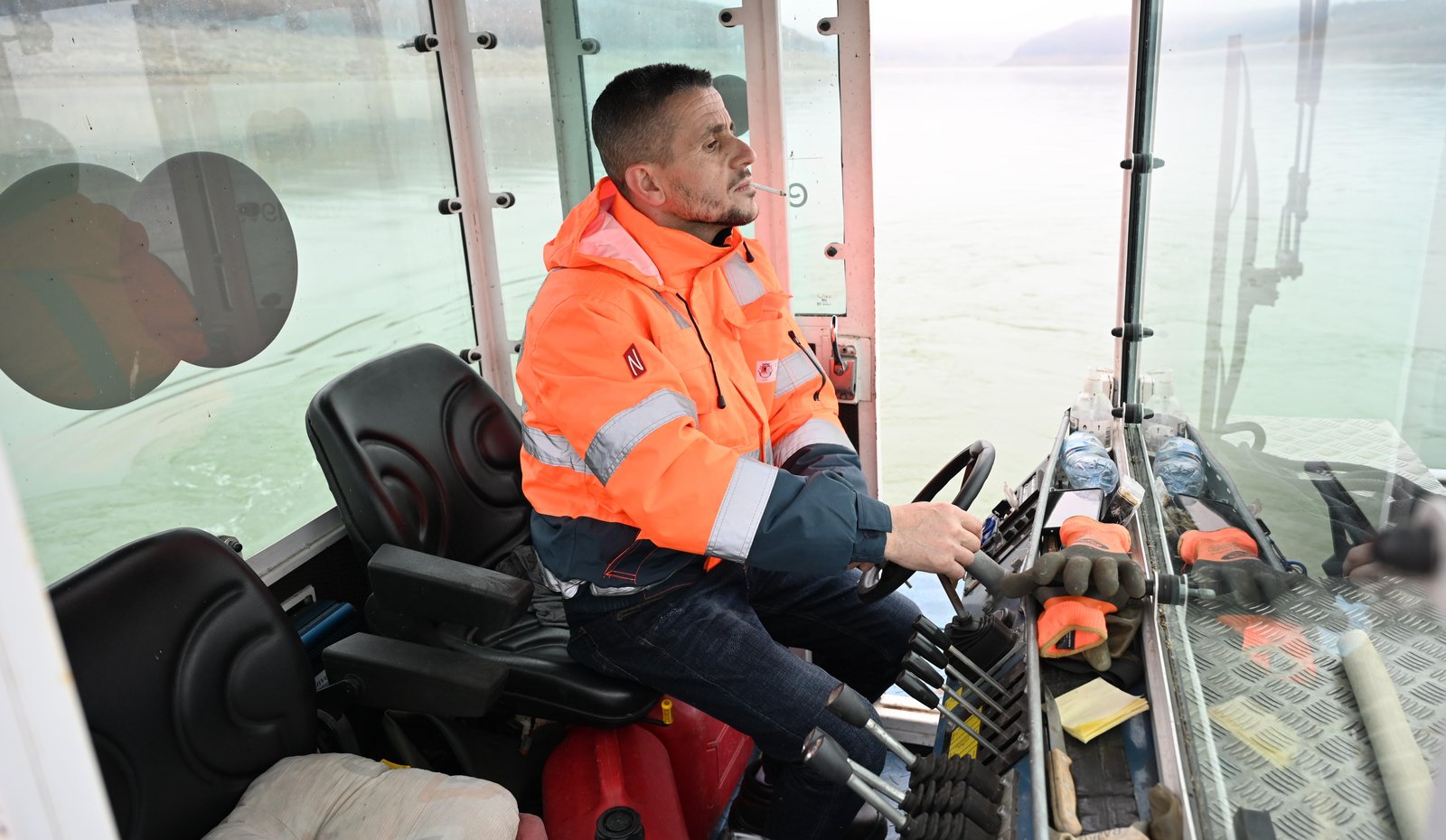
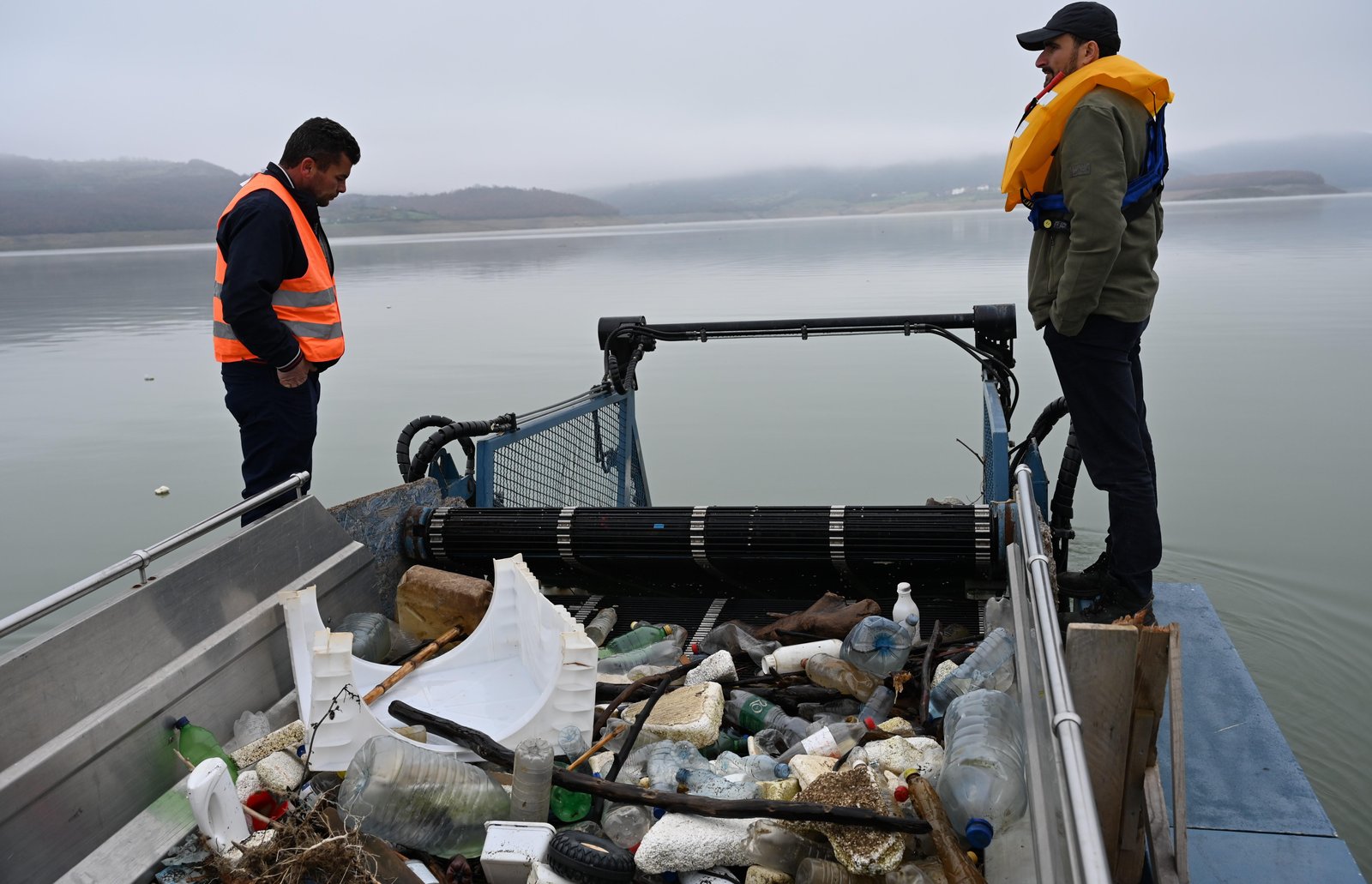
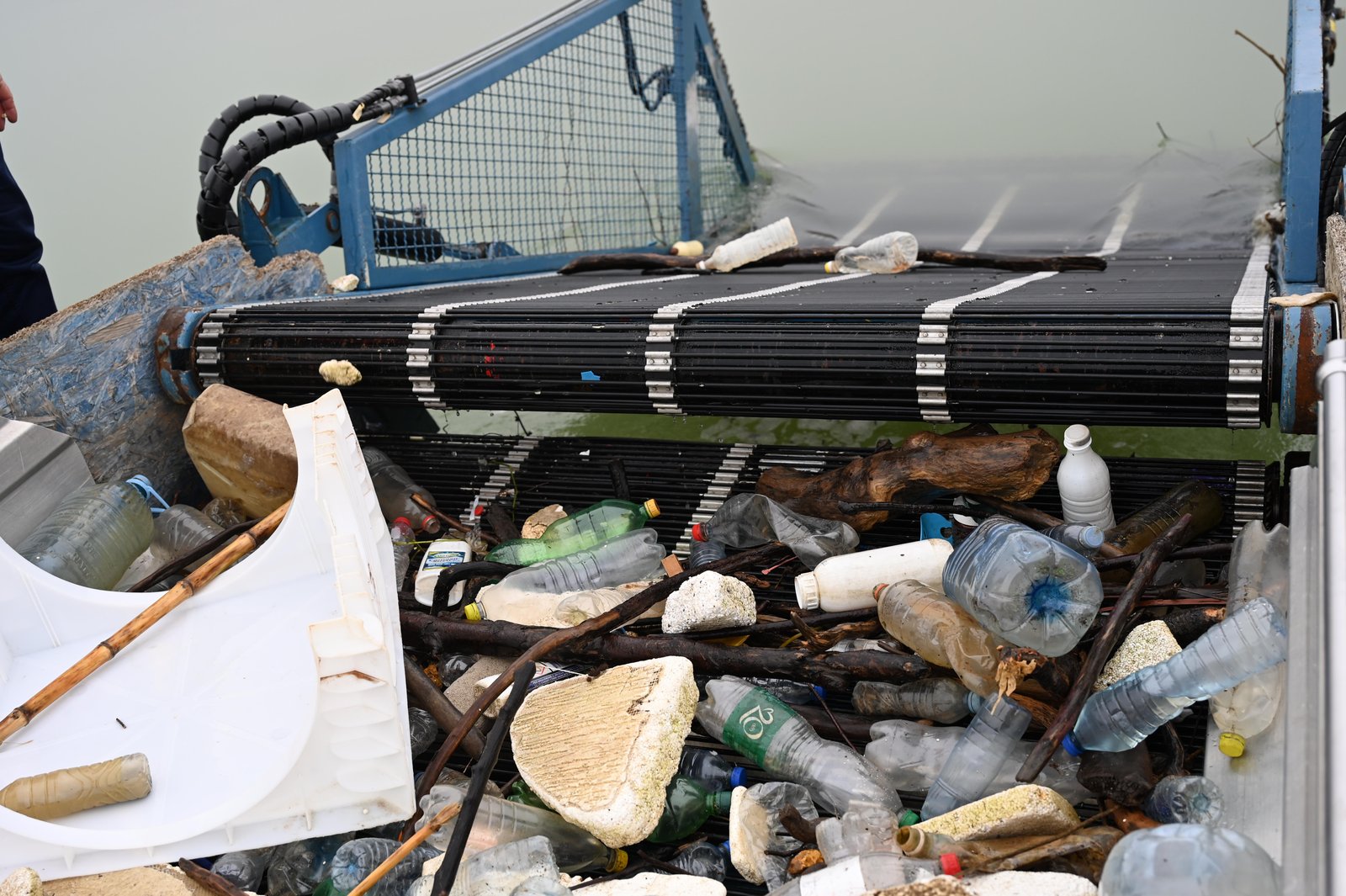
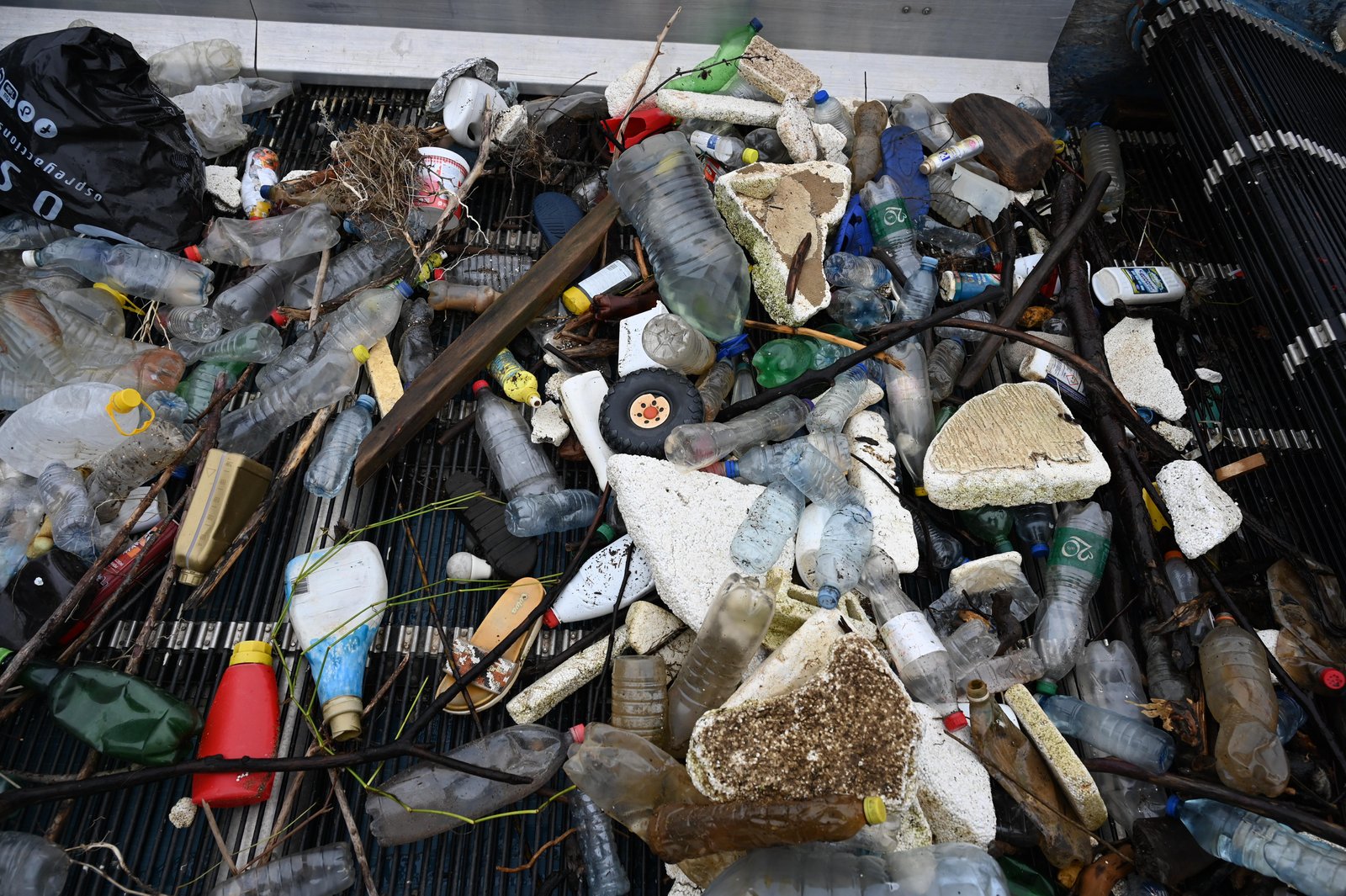
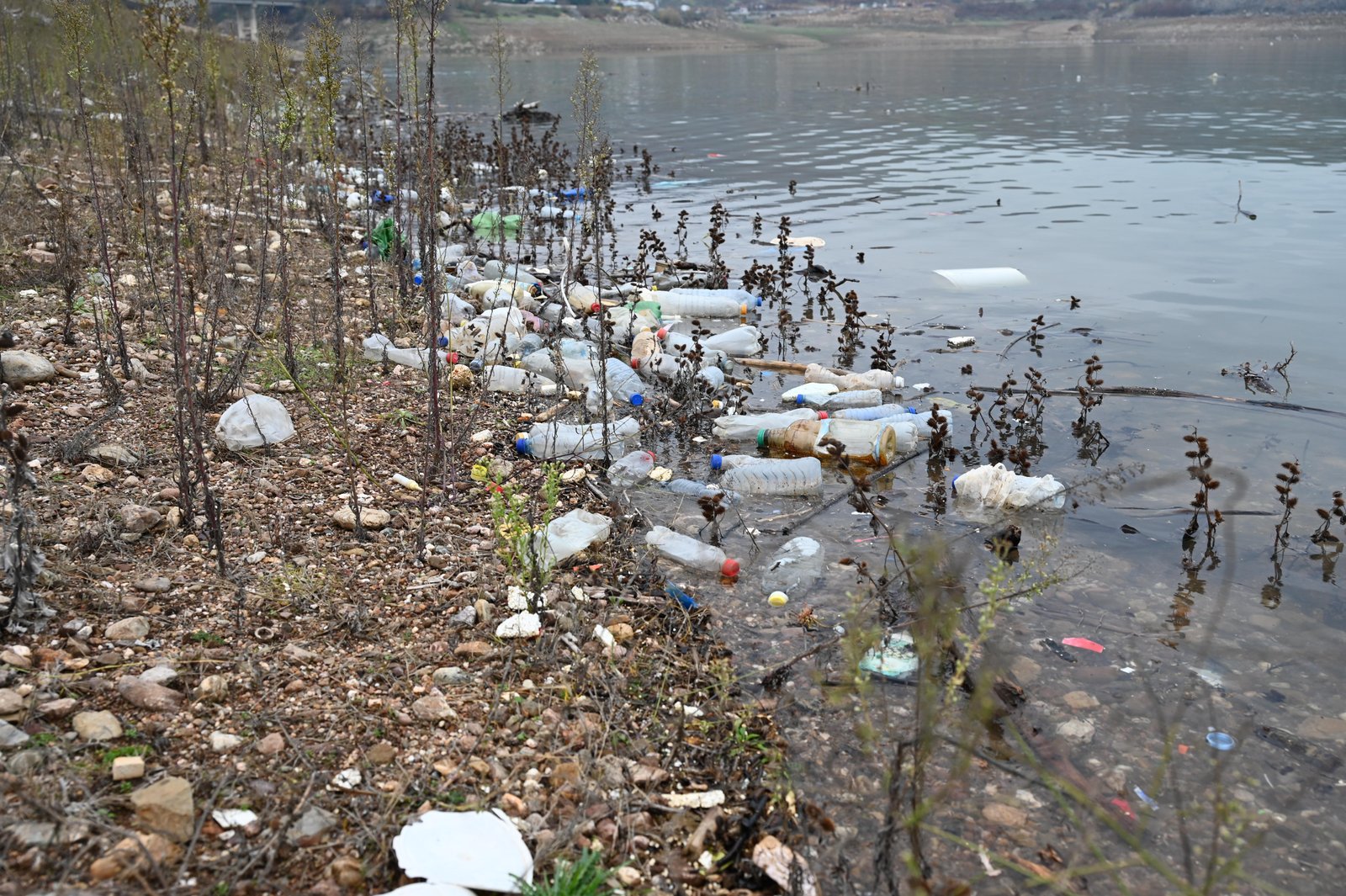
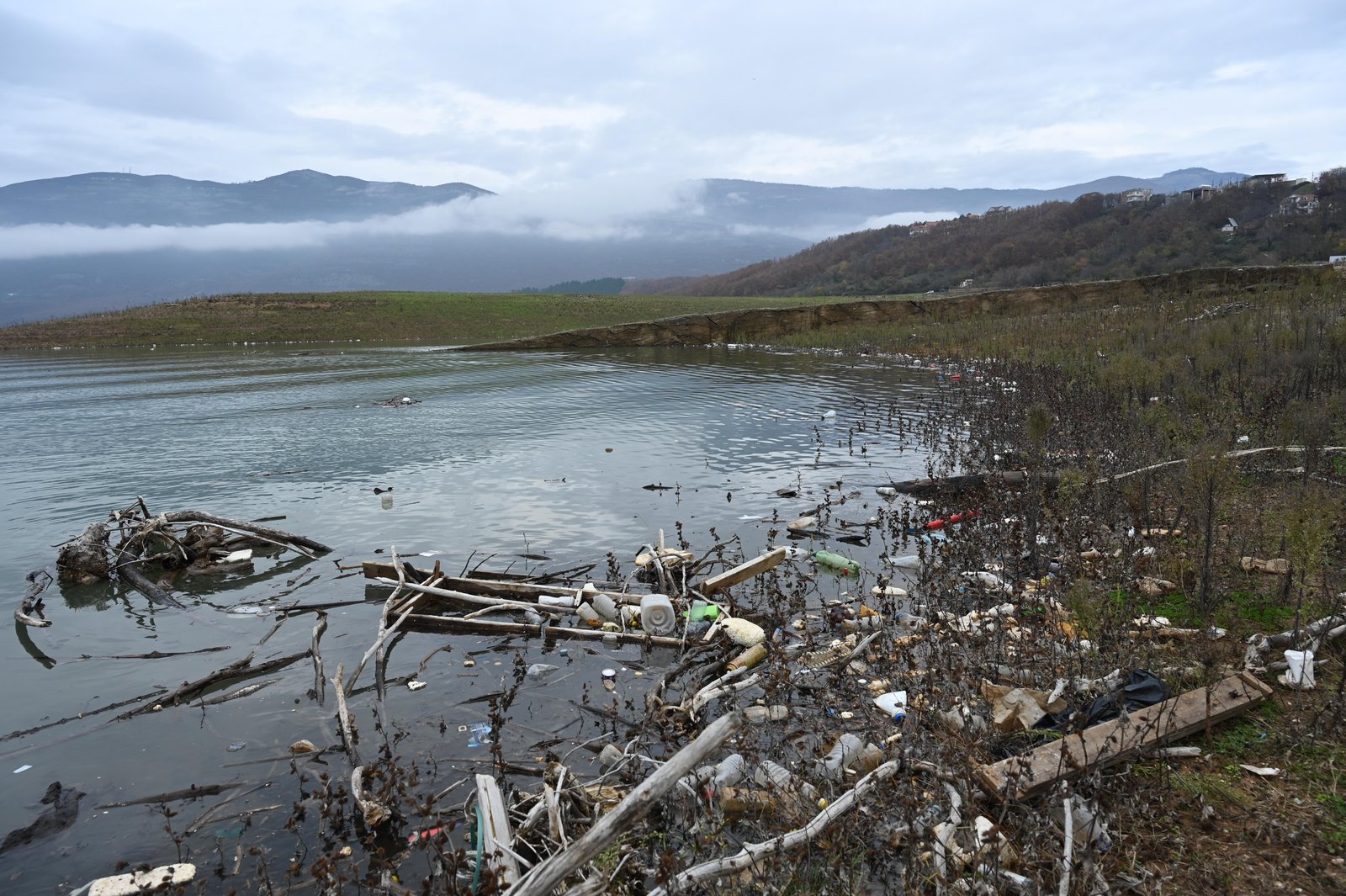
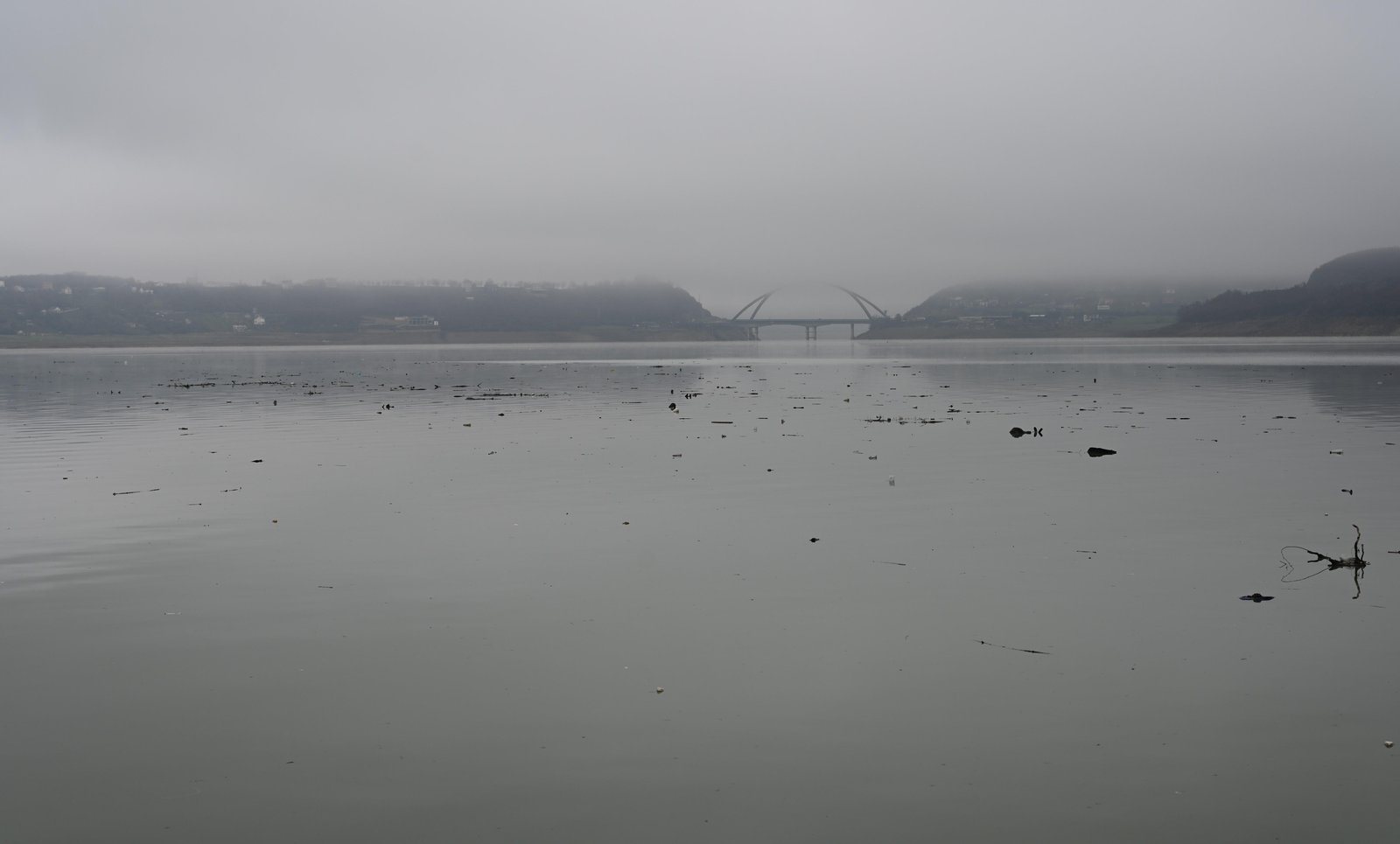
During the process of collecting plastic waste in Fierza/Kukës Lake. | Photo: Erisa Kryeziu
“Kosovo is by far the largest negative contributor. Some comes from North Macedonia via the Black Drin, and of course, even a small part comes from Kukës itself,” he explains.
According to him, the problem remains that new waste continues to flow into the lake every day.
“We have to accept that this situation could continue for 20–30 years if waste is not stopped at the source, and that is our main goal,” said Lulzim Baumann.
The dominant type of waste is plastic.
“About 80–90% of the volume consists of plastic floating on the water. These are mainly plastic bottles, because heavier plastics like buckets usually fill with water and sink, so we expect there is also a lot of waste at the bottom of the lake. Water bottles dominate,” Baumann explains.
He emphasizes that this pollution is harmful.
“Plastic that remains on the lake shore for years degrades from sunlight and collisions with other objects, turning into microplastics. These microplastics then enter fish and eventually the human body, so the health impact is definitely unavoidable. That is why plastic has no place in the lake,” he explains, adding that the plastics discarded are often already contaminated with detergents and heavy metals.
“Waste of various types, including chemical and biological waste, when washed into the water, stays there; it does not disappear.”
According to Valdet Cenaj, Kukës Municipality has two waste disposal sites.
“One is for green waste, partly for composting, and the other is for urban waste.”
The city’s main landfill, located above the lake, is visible from a distance as a line where leachate from the waste flows directly into the lake.
Kukës Lake: A Repository of Pollution
In the Drin Valley, through which the Sheja River also flows, near the village of Bushat in the Bicaj Administrative Unit, two young boys were running after their cattle grazing in the area.
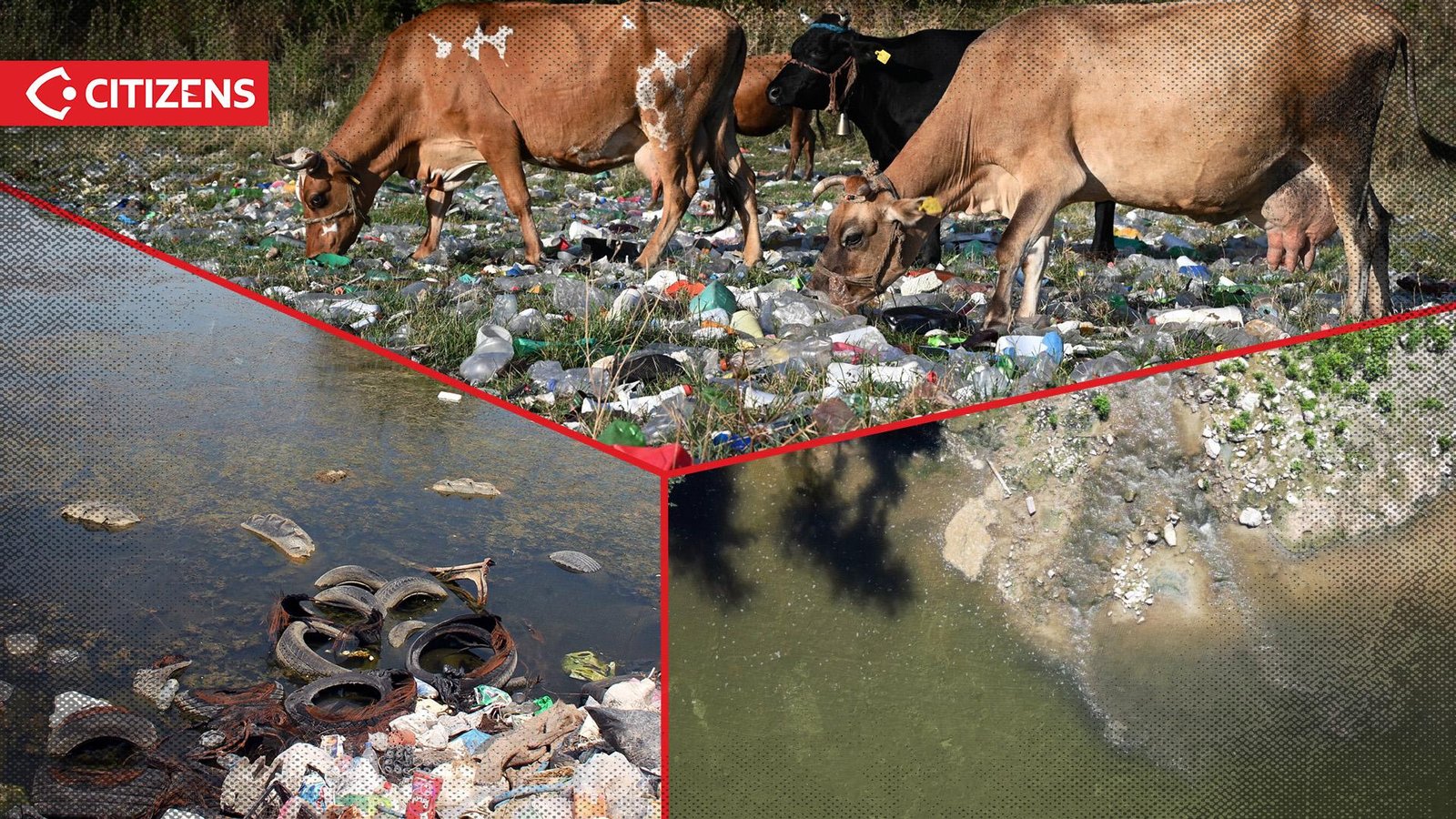
However, instead of grass and clean pastures, the boys’ cows were walking over a thick layer of plastic waste, trying to reach the grass underneath.
For the boys, this scene seemed normal, just as it did for the livestock. A little further along the valley, the Sheja River, which had very little water during the summer, was blocked by a small waste trap that had long ceased to serve its original function of catching debris.
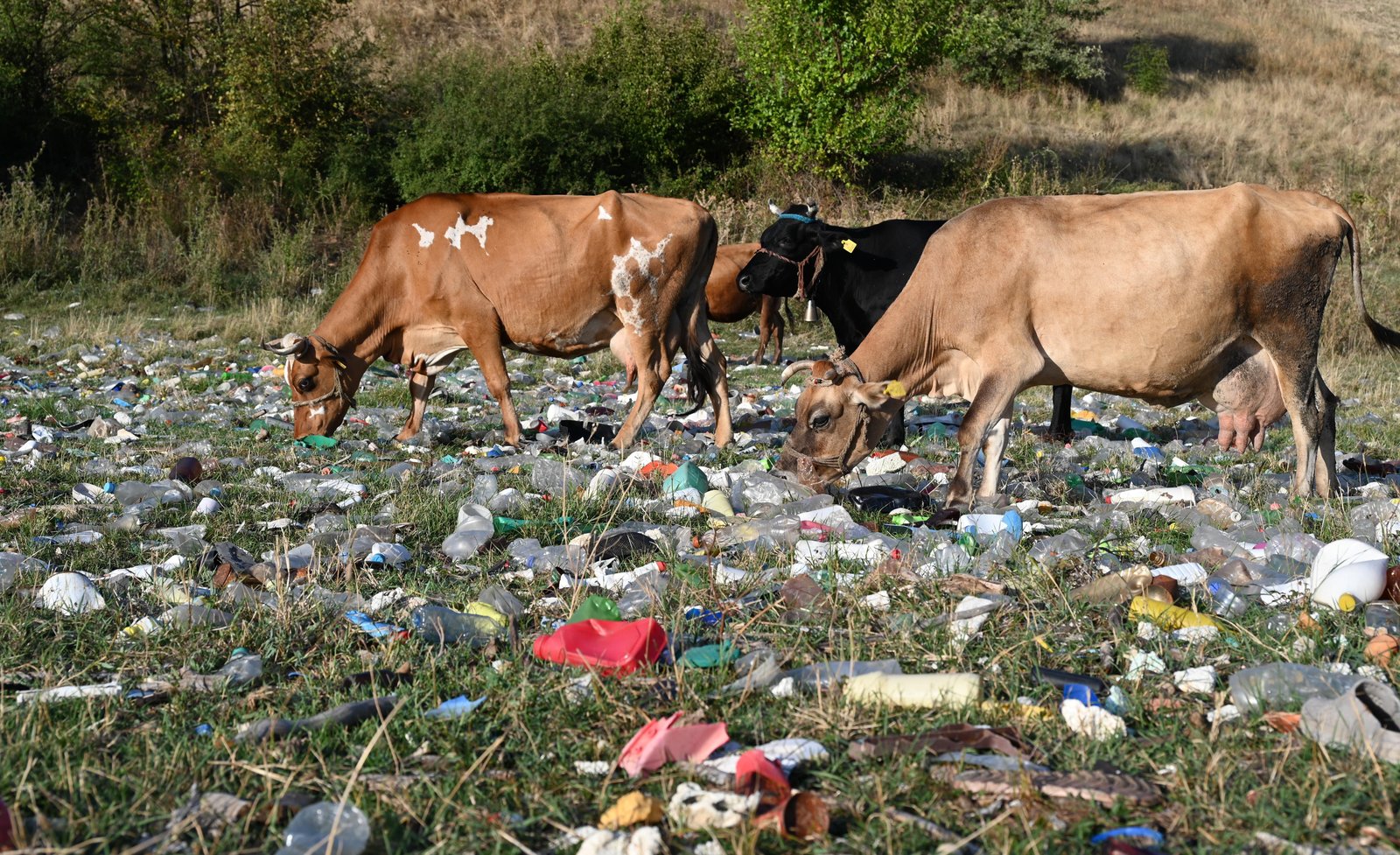
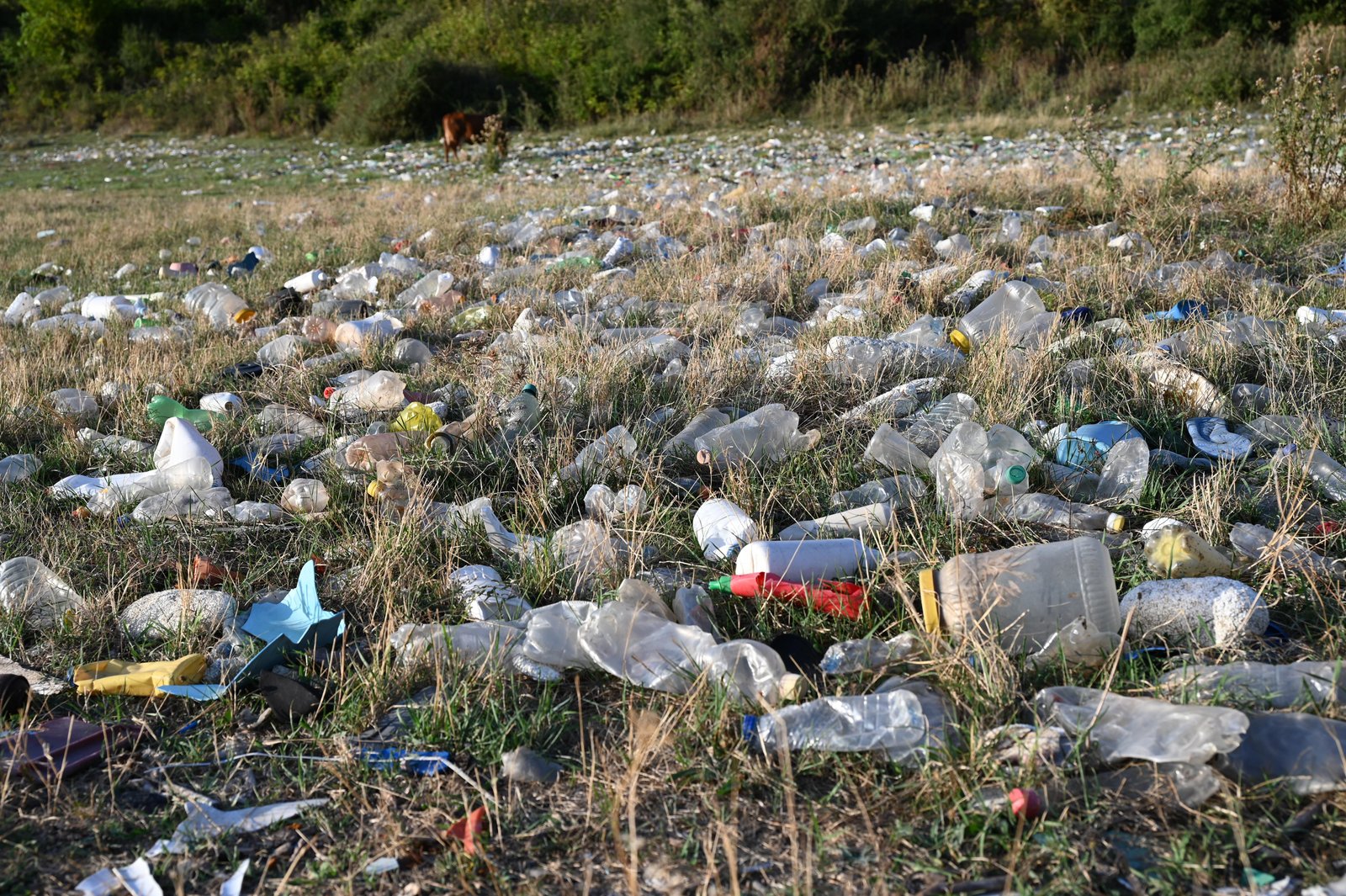
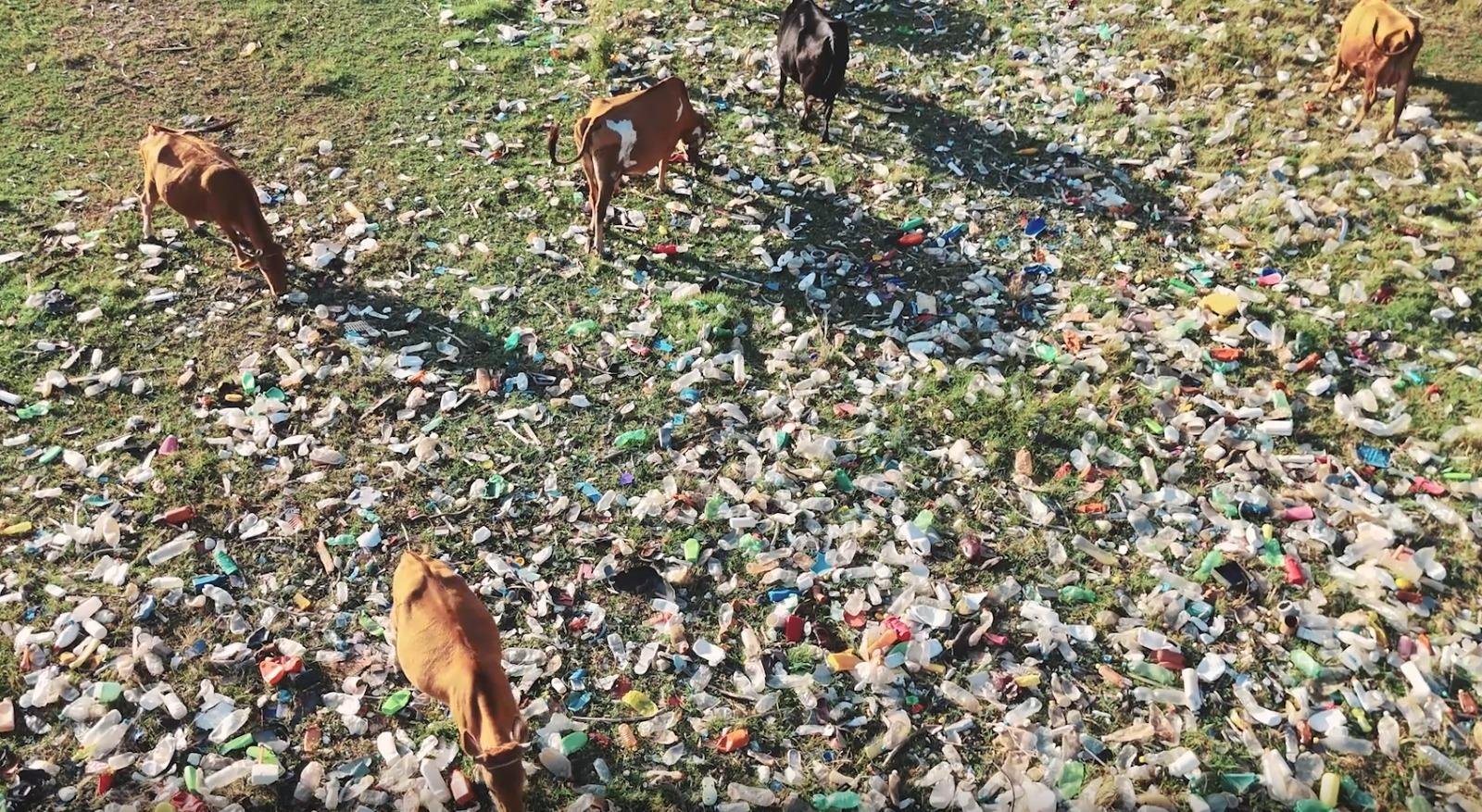
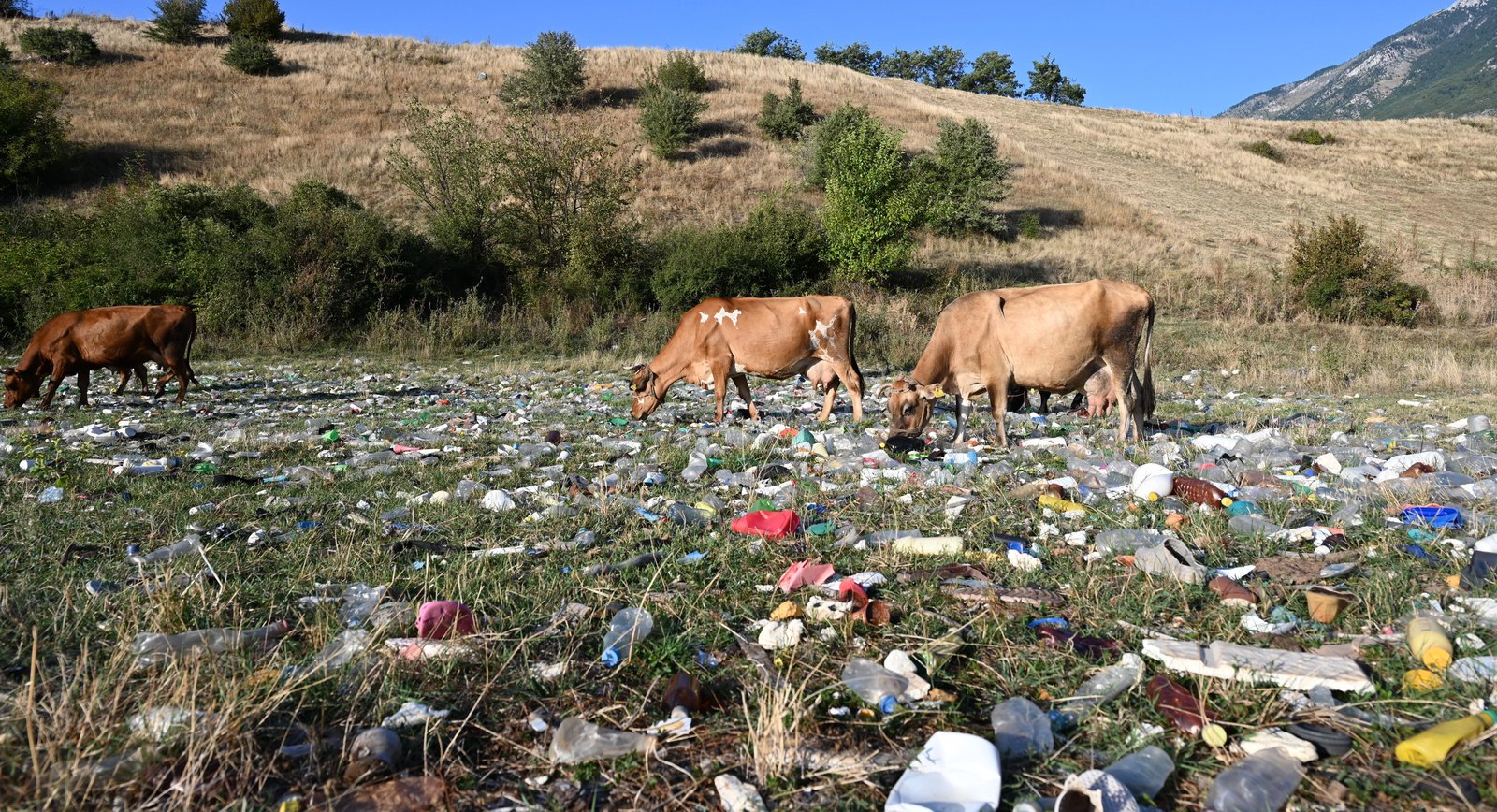
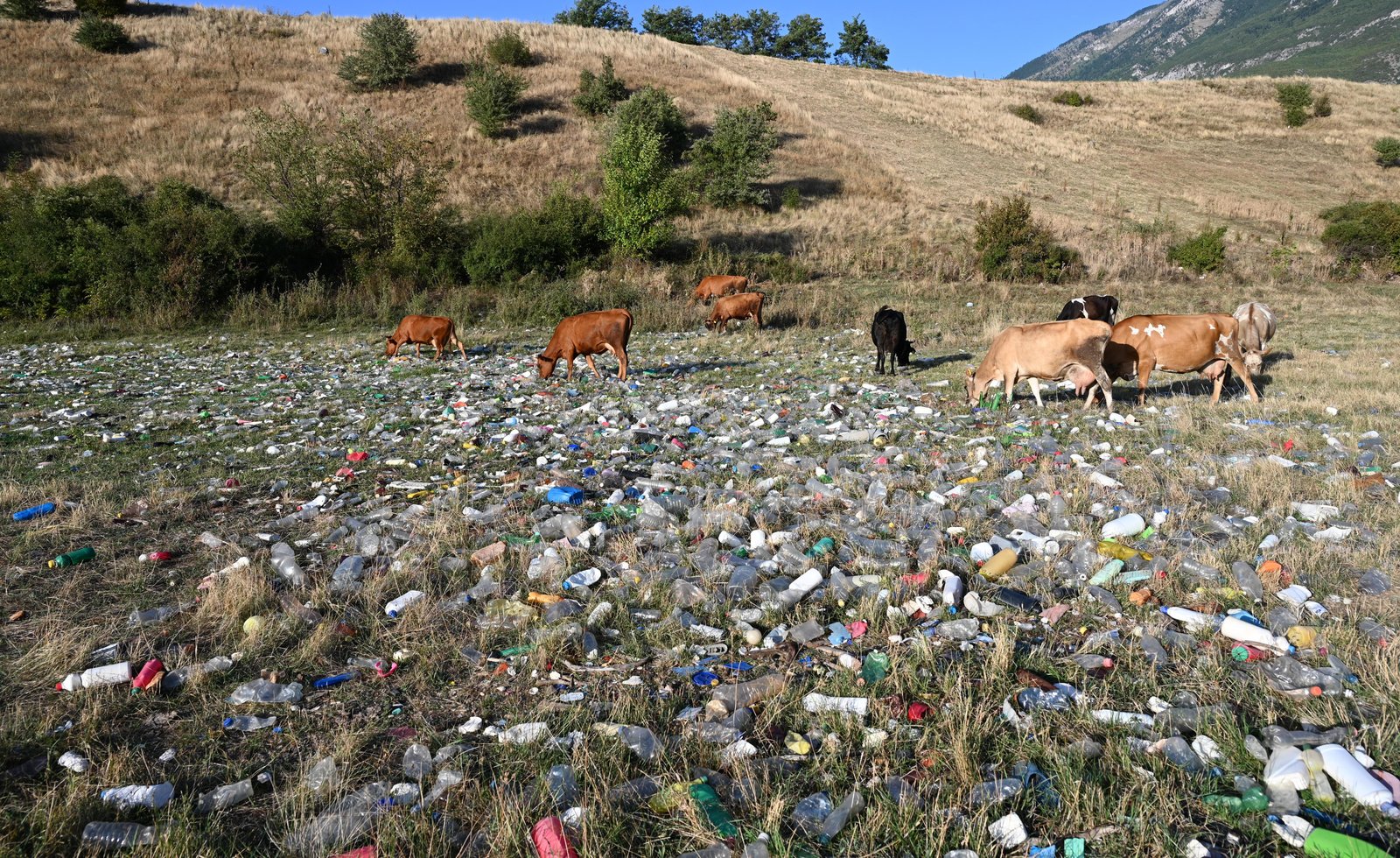
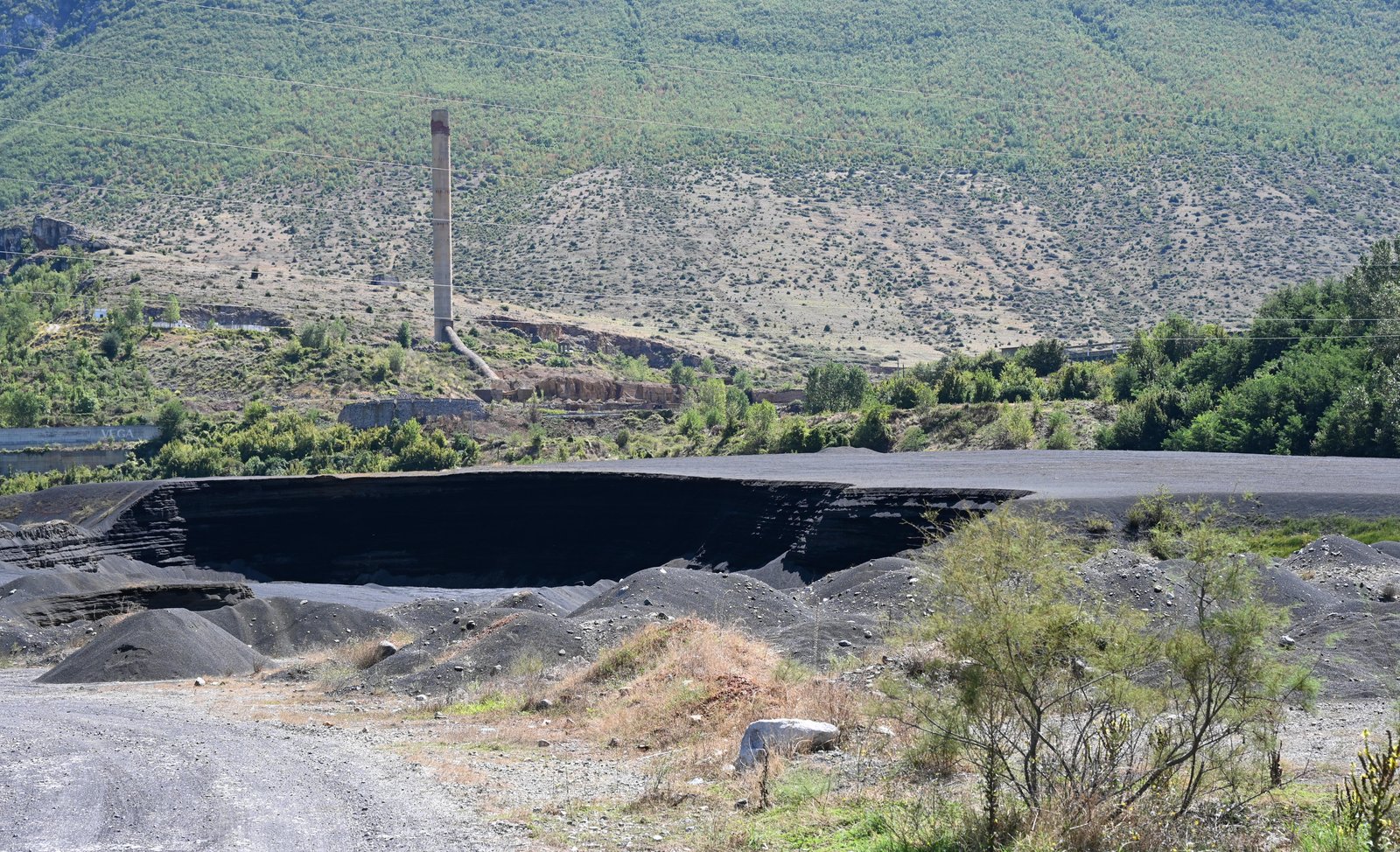
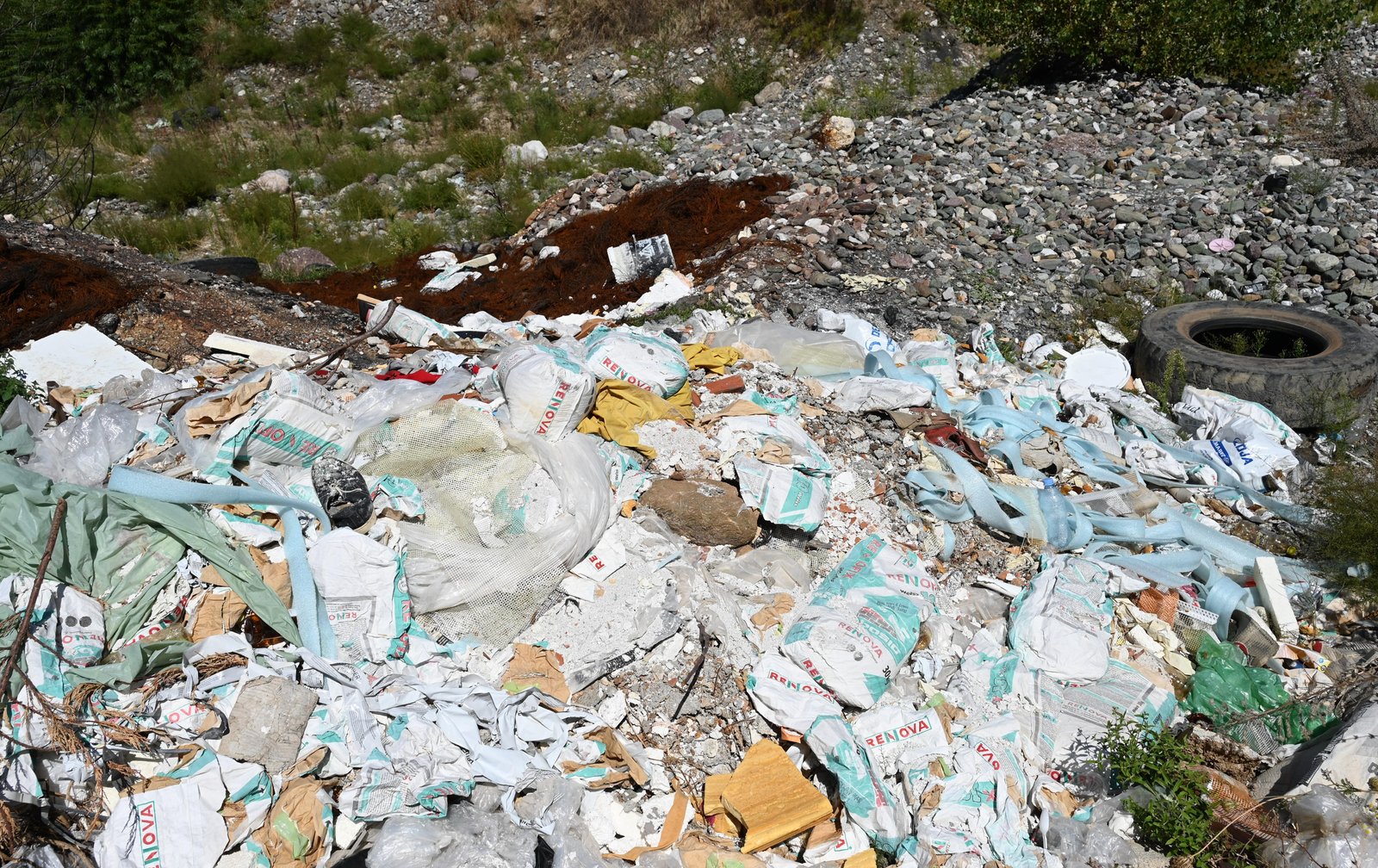
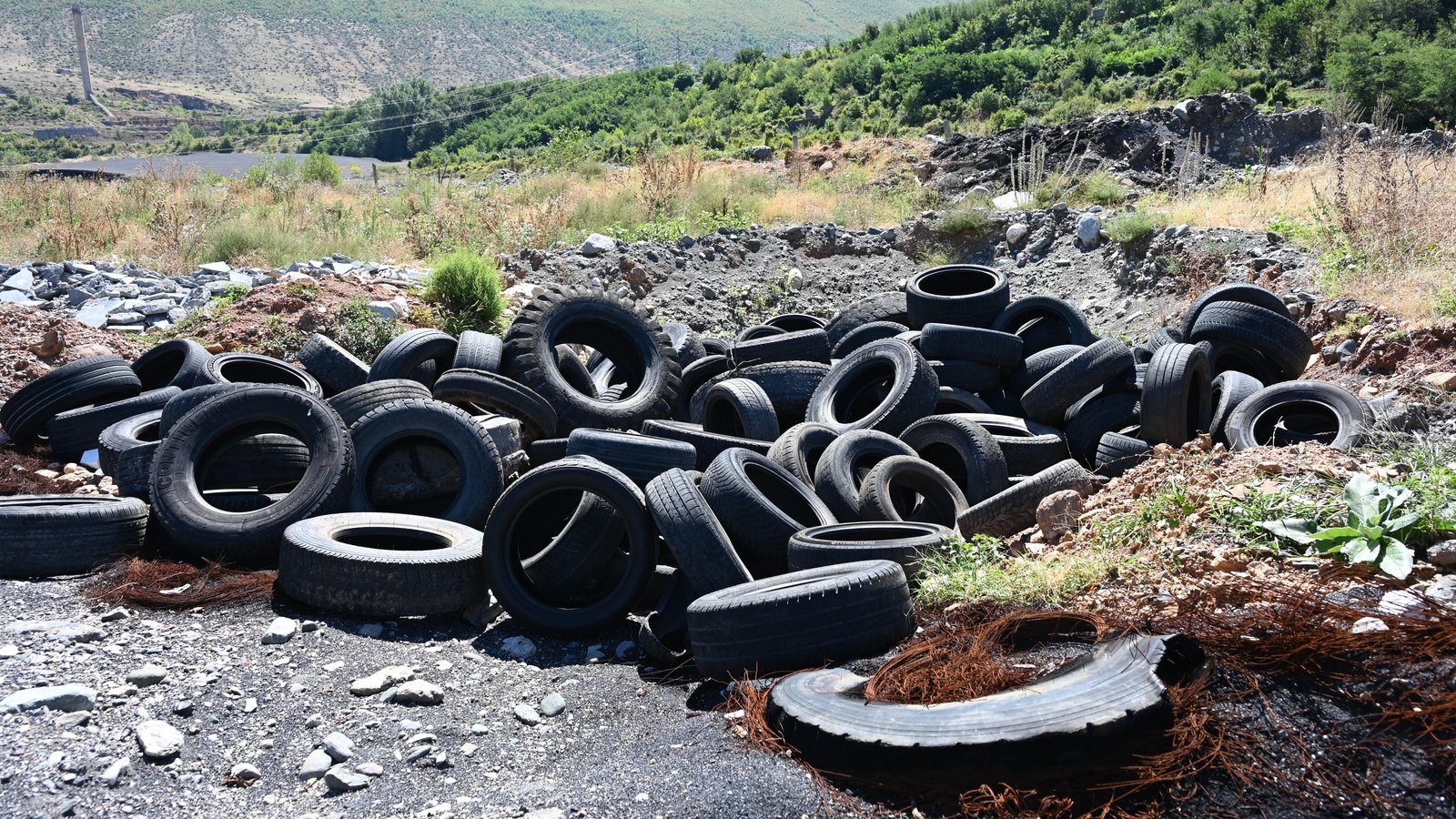
Piles of plastic left behind by the lowering of Fierza Lake in summer. During the summer drawdown, the lakebed turns into pasture for livestock, while in winter the waste floats on the water. | Photo: Erisa Kryeziu
Moving away from the lake, on the opposite side at the old Kolc bridge, where the Lishnica River also passes, several piles of sterile chromium waste are visible. This situation worsens in other parts of the Drin Valley, where the inert waste from the former copper smelting plant is eroded each year by the lake waters, which rise during the winter season.
These inert materials mix further downstream with piles of plastic waste, construction debris, and large quantities of discarded car tires. Nearby, a few private homes stand along the valley, while additional livestock graze unbothered by the pollution surrounding them.
Study: High Levels of Chemical Pollutants and Pharmaceuticals Found
A report conducted in 2023 and 2024 by Anna Wemming, Rasha Ishaq, and Ann-Louise Haglund from the Administrative Board of Dalarna County in Sweden documents extensive pollution in the White Drin River and its basin.
Officials from the Ministry of Environment and field experts consider this study among the most professional assessments carried out so far in Kosovo.
During the preparation of the report, all water samples were sent to laboratories in Sweden (chemical analyses were performed by ALS Global) and were also analyzed using effect-based methods (by BioCell Analytica).
The report states that nine out of 26 chemical groups analyzed were detected in surface waters.
“In 2023 and 2024, nine types of pollutant substances were identified in several water samples. In most samples, contaminants were found that cause cellular damage and may negatively affect the human hormonal system,” the report notes.
Laboratory findings revealed that, in addition to some natural elements useful for analysis (such as organic carbon [DOC] and calcium [Ca]), surface waters contained heavy metals, pesticides, plastic-derived chemicals (phthalates), pharmaceutical products, PFAS compounds (known as “forever chemicals” that do not easily break down in nature), and organophosphates (commonly used in agriculture as insecticides).
“The massive problem of waste in rivers and streams appears to result in pollutants in surface waters; for example, organophosphates, specifically associated with plastic products (bottles), were measured throughout the water bodies,” the report states.
One of the key segments of this monitoring focused on analyzing pharmaceutical substances in the White Drin basin. The report highlights that 34 pharmaceuticals were detected out of 109 analyzed. Most of these included antibiotics (9 substances), psychoactive drugs (4 substances), antiepileptics (4 substances), anti-inflammatories (4 substances), and cardiovascular medications (4 substances).
The highest concentration of a single substance was measured in Skenderaj in 2024 and was the diabetes medication Metformin.
Additionally, the monitoring report from the Albanian National Environment Agency (AKM), which tracks the water quality of the Drin through seven stations in different areas, emphasized that, besides pollution from waste, there is also the presence of cadmium and lead. These heavy metals were found in two villages in Dibra and in the waters of the Kir and Buna rivers.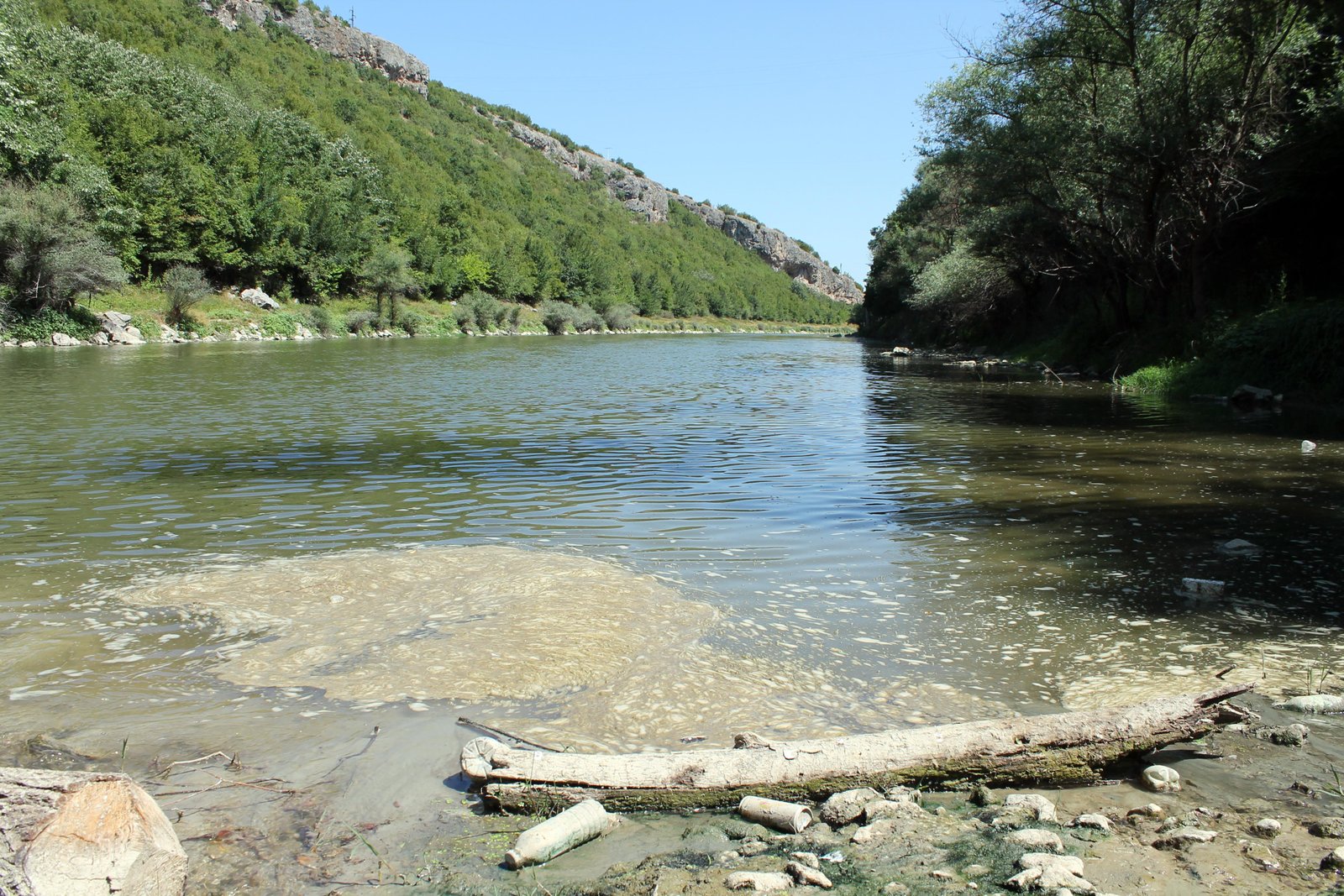
“These waters are classified as first-category according to Albanian standards, but have lower quality when referenced against the EU Water Framework Directive,” the AKM report notes.
Mining activities may be a source of these heavy metals. Lead and cadmium are classified as toxic metals, and prolonged exposure to them can cause serious health problems.
Cross-Border Cooperation: A Necessary Step
According to the Kosovo Water Law, in cases of pollution risk, sudden contamination, or discharges of polluted water from any river crossing the borders of the Republic of Kosovo, the ministry, in cooperation with relevant ministries, must inform the affected parties and states.
“The ministry is obliged to identify the causes and consequences of pollution and other negative impacts. Within the shortest possible timeframe, it must initiate procedures to undertake remedial measures, as well as begin negotiations and harmonization of actions with competent authorities in neighboring countries to implement measures that minimize risk and eliminate the source of pollution or other negative effects on water,” states Article 24 of the law.
However, in practice, this is not being implemented effectively.
Although there have been attempts at cooperation between the environmental ministries of Albania and Kosovo, field experts and environmental activists criticize that these agreements often remain on paper, without concrete plans or steps executed.
“One of the initiatives I saw as a more sustainable step was the installation of a catchment barrier to stop waste from the White Drin. Initially, this initiative was well received by both governments,” said Lulzim Baumann.
According to him, even though the Kosovo government agreed to the barrier, the Albanian government did not see fit to manage Kosovo’s waste.
“Certainly, the barrier would have worked if installed according to Kosovo’s requirements, and it would have been a step toward sustainable development. It would not have been fair in the long term for Albania to manage Kosovo’s waste, as Kosovo should take full responsibility, but at least it was a green light to start a step that could lead to a more sustainable solution,” Baumann added.
The installation of barriers is also seen as a practical solution by Bukurosh Onuzi.
“Creating barriers before these wastes enter Albania would be a good solution, ensuring that not only international conventions on transboundary waters are respected, but also bilateral agreements between the two countries,” Onuzi said.
Meanwhile, Lulzim Baumann emphasizes that the more concrete step is stopping waste at the source, which requires strong cooperation between the two governments as well as the municipalities on both sides.
“Many efforts are being made, but far too few and too slowly considering the scale of the problem and the endless waste. Every river, every lakeshore in Albania, every coastal area is contaminated with plastic, and this could be prevented with faster interventions without needing a more perfect law,” Baumann concluded.
In the absence of concrete cross-border cooperation, ad hoc cleanup efforts have occasionally taken place along the White Drin in Kosovo.
Luan Hasanaj from the organization Let’s do it Kosova says that in collaboration with municipalities, schools, and local volunteers, several cleanup campaigns have been conducted along the White Drin and its riverbed.
“Most of what we found were plastic packaging, small household waste, car tires, and construction debris. In some areas, there were also large piles of inert and bulky waste”, Hasanaj explained. He added that in each campaign, several tons of waste were collected and transported with the help of municipal companies.
Regarding cross-border cooperation between Kosovo and Albania, Fatlije Buza from the Ministry of Environment stated that they maintain regular contacts with Albanian water authorities. Kosovo has agreements not only with Albania but also with five other countries in the Drin basin, and continuously exchanges information with these states regarding water use and quality.
“With Albania, our relations are a bit more flexible. We have discussions, meetings for various projects. We are trying to ensure minimal harm, especially since plastic waste is a major problem and requires significant joint effort,” Buza concluded.
Given that in past years the lake of Fierza was heavily polluted with plastic waste originating from Kosovo, Fatlije Buza says the authorities are now taking a more careful approach.
“If waste accumulates again which we hope will not happen on a large scale we will take it into account and remove it through agreements. We will not allow it to penetrate Albania again in the large amounts seen in the past,” she said.
Buza added that in 2024 the ministry had a river-cleaning project, including branches of the White Drin. The project, aimed at removing waste and restoring the riverbed, will continue into 2026 with cooperation from local municipalities.
“Drin’s priority has been stopping gravel extraction and degradation. When you see river degradation, first you address that, and then you move on to water quality, biodiversity, recreation, etc.,” she explained.
However, halting river degradation requires more fieldwork. Currently, there are only two water inspectors, reflecting the institutional approach to river protection.
The Ministry of Environment notes that while this number is low, if local authorities appointed a municipal water inspector, the shortage’s impact would be noticeably reduced.
On the Albanian side, despite repeated requests, there was no willingness from the Ministry of Environment to discuss this issue.
Marked Impunity
Legally, environmental protection is well-regulated, but enforcement remains a major challenge. According to the Kosovo Penal Code, anyone who degrades the environment can face fines or imprisonment from 1 to 8 years, depending on the damage caused. The Kosovo Law on Water also provides fines ranging from €5,000 to €100,000 for those who pollute waters through various discharges.
Data from the Kosovo Mining and Minerals Commission (KPMM) show that between 2019 and October 2025, 38 companies and 2 individuals were recorded operating illegally along the White Drin riverbed, both in resource exploitation and material separation.
From 2021 to June 2025, the basic prosecutions in Peja, Gjakova, and Prizren brought a total of 155 indictments for environmental pollution, degradation, or destruction. While these figures cover environmental crimes more broadly, the White Drin’s passage through these areas means it is indirectly included as a trend in environmental justice.
Punishments for polluters and degraders are mostly suspended sentences or fines. According to data obtained by Preportr from the courts in municipalities along the White Drin including Peja, Istog, Klina, Gjakova, Rahovec, and Prizren only 2 prison sentences, 112 fines, 32 suspended sentences, and 3 judicial warnings were issued from 2002 to June 2025. This highlights the leniency in sentencing for environmental offenders.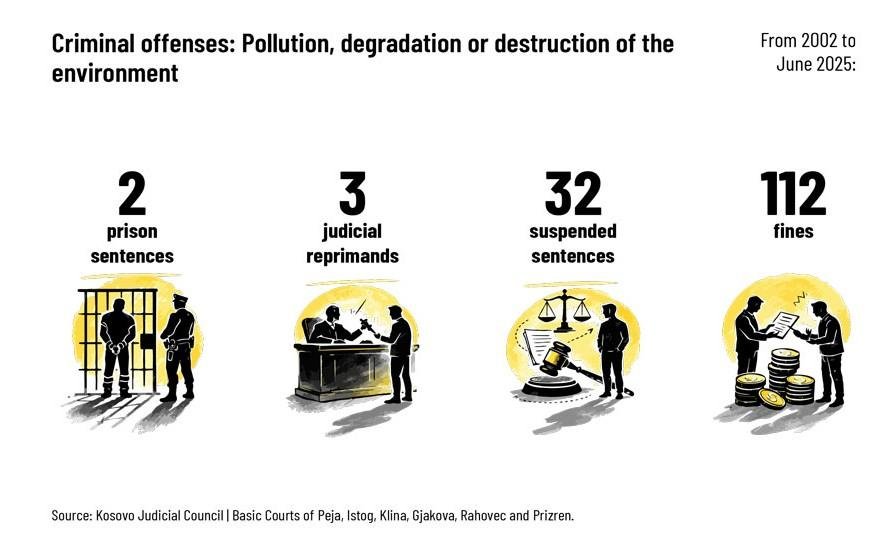
In the past year, the Prizren Prosecutor’s Office has arrested dozens of people operating illegally along the White Drin. However, the office notes that overall punitive practices, including for the criminal offense of “Pollution, degradation, or destruction of the environment,” have mostly been lenient, reflected in suspended sentences and fines.
“This approach has not always had the desired preventive effect, leading to repeated offenses,” the prosecutor’s office stated.
Regarding impunity for environmental polluters, Egzona Shala-Kadiu emphasizes that courts need greater awareness that judgments should consider more than economic value. The impact on local residents, plant life, and wildlife is rarely taken into account.
“There is no conversion of economic value into environmental value. For example, if two hectares of trees are cut, they convert this into an economic figure (how much a cubic meter of that wood costs) and issue a fine. For other environmental cases, they calculate by meter or ton—like gravel—and this becomes almost a joke when setting fines,” she explains.
Preportr’s research over the years shows that environmental offenses are among the most under-prosecuted in Kosovo. This means those who pollute or degrade the environment often escape without any legal accountability.
Field research contributors: Donjeta Murselaj and Bashkim Shala.
This article was developed with the support of Journalismfund Europe.