

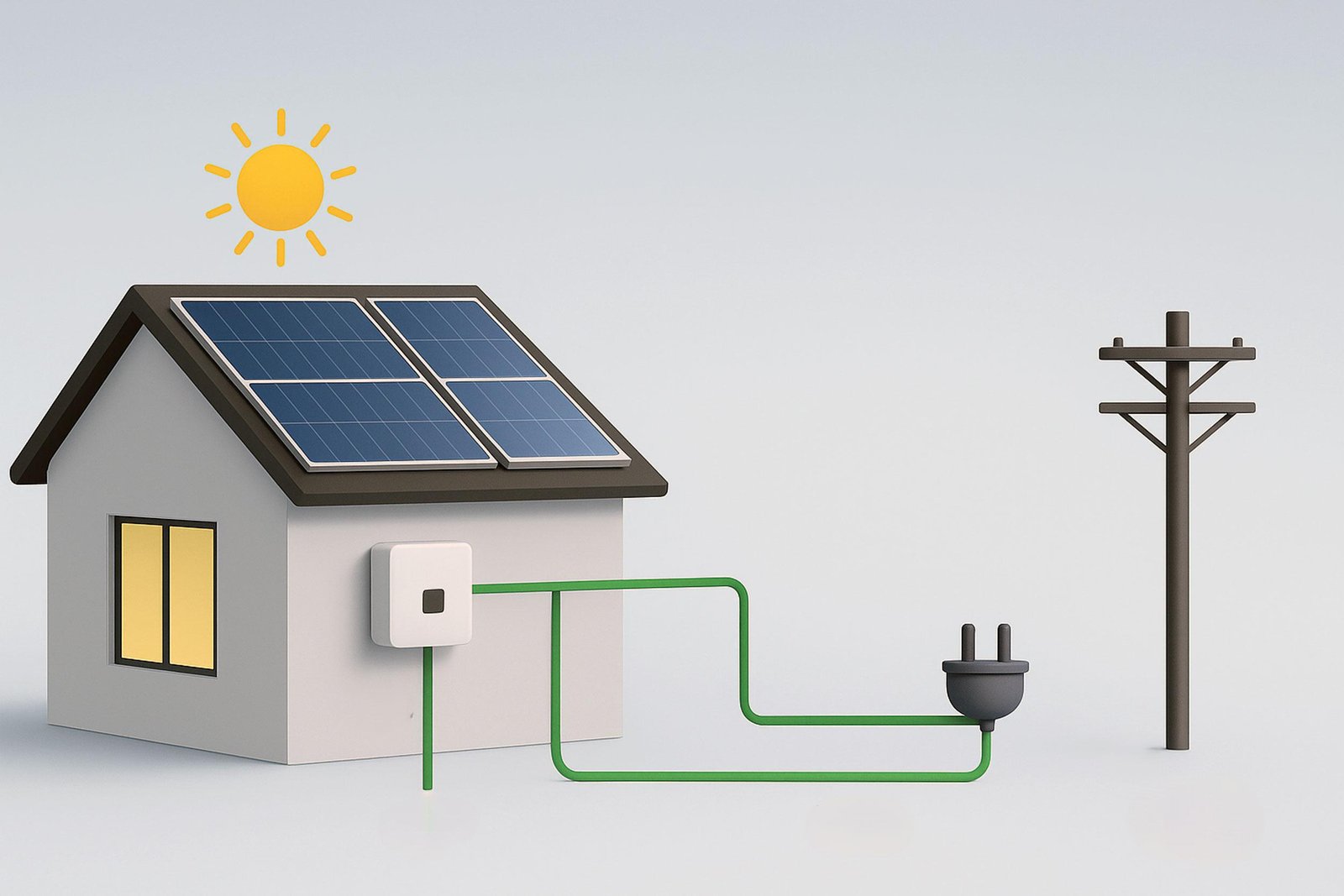
“During the summer my electricity bill used to be 70–80 euros, but since I installed the panels my bill has been 3 euros,” says Milaim Berisha, who together with his two brothers installed 7-kilowatt solar panels on their houses’ rooftops in Suhareka five months ago.
His decision was also influenced by a TV program he watched on an American media outlet.
“It said that in the near future, a rich person will be the one who has a roof, because those who live in apartments have money, but they have nowhere to place the panels,” he says.
Berisha says the investment was around 6,300 euros for one house and that he decided to install the panels because Kosovo has a suitable climate and many sunny months throughout the year. He says he is satisfied so far with the performance of the panels and with the savings on electricity.
He is optimistic that during months with enough sunlight, the panels will produce sufficient electricity and part of it will be injected into the KEDS grid, which will balance out his bills and allow him not to pay for several months, even during the winter.
Based on his experience as a user of solar panels, Berisha recommends them to everyone who has the financial means to install them.
“You can see the savings in the bill already from the first month. Based on the calculations I’ve made, the investment will pay off in four years,” he says.
Xhevat Muqa also says he installed solar panels on his house in the village of Vraniq, Suhareka, to save money, to protect the environment, but also to set an example since he is the owner of the company “Muqa Solar,” which operates in this field.
He says he installed both thermal and photovoltaic panels along with batteries, and that his savings reach up to 90%, allowing him to invest in other efficient devices.
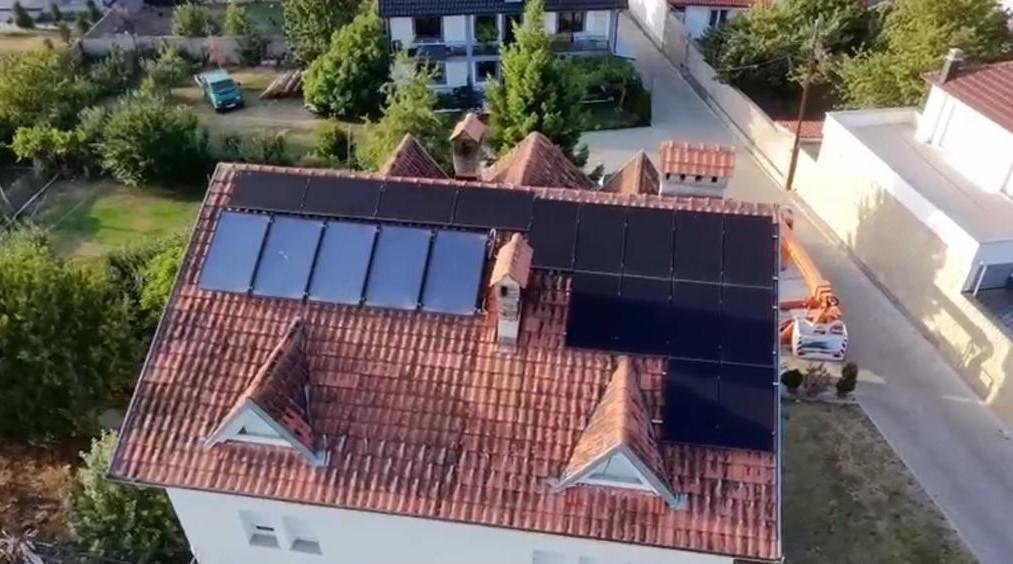
When asked about electricity production in winter, he explains that production continues even in winter, because panels need light, not necessarily direct sunlight.
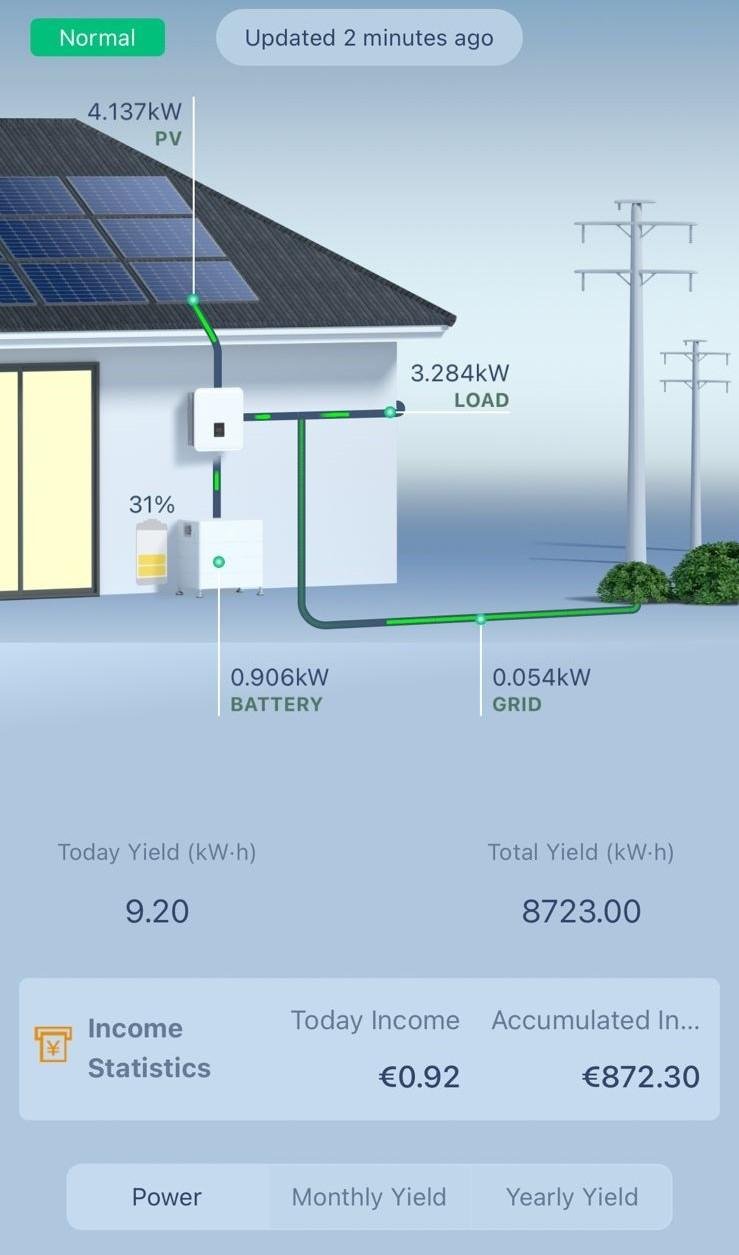
“Today is a rainy and cloudy day, but as you can see on the phone, the panels are producing energy. Based on my personal experience I can tell you that in Kosovo, solar panels can generate electricity throughout 11 months of the year, while only about 30 days of the year are not productive in terms of generation,” he says, adding that Kosovo has more potential in this aspect than many European countries.
 “Germany ranks first in the world per person for installed solar capacity even though it has 40% less sunlight than Kosovo. Why not use this potential?” Muqa says.
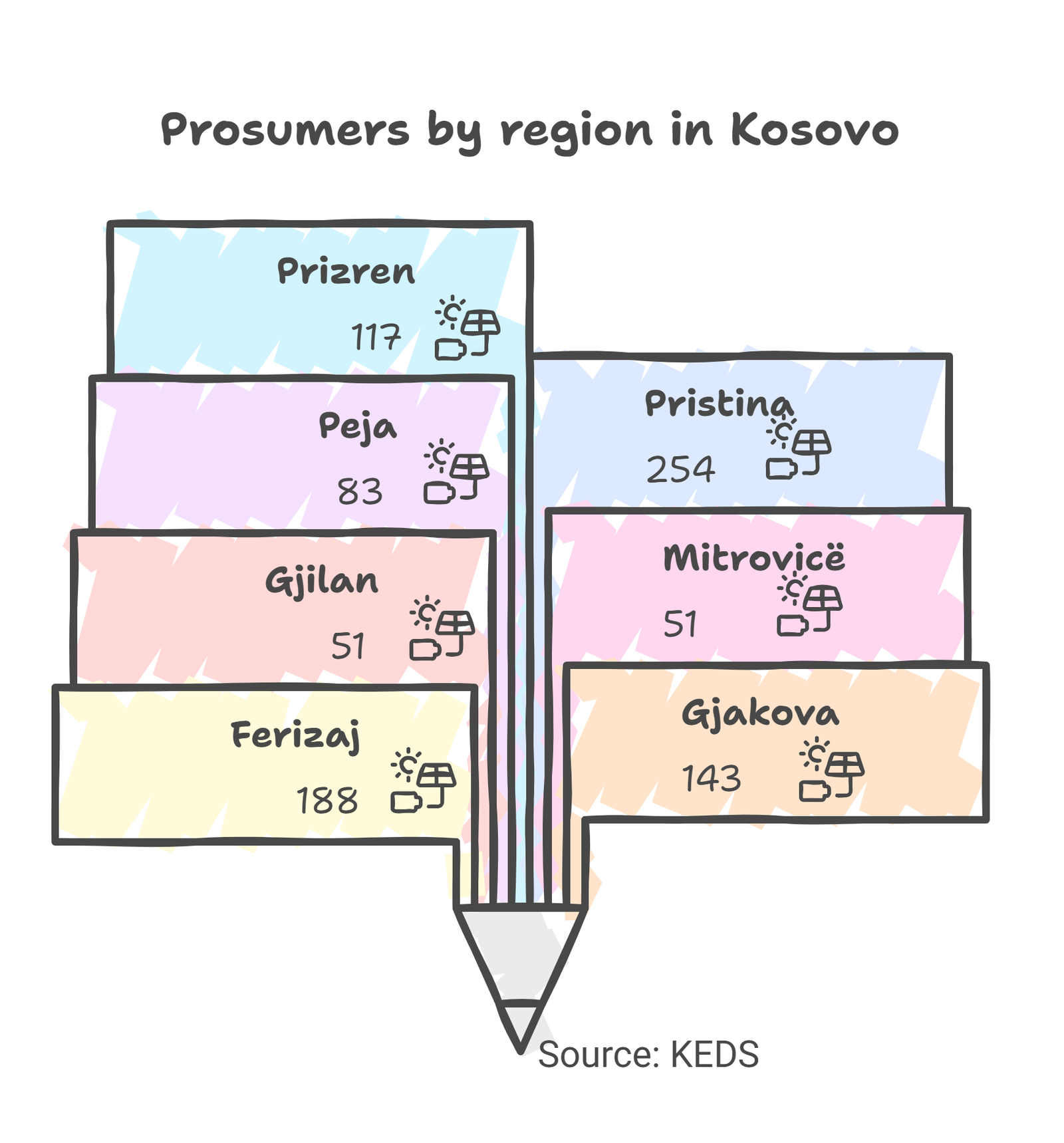
According to data that Preportr obtained from KEDS, just like Berisha and Muqa, another 887 prosumers – consumers who produce their own solar energy have installed solar systems in their homes.
The largest number of installations is in the Prishtina region with 254 homes, followed by Ferizaj with 188, and Prizren with 117. In Gjakova there are 143, in Peja 83, and in Mitrovica and Gjilan 51 each.
“The total installed capacity reaches 23.17 Megawatts (MW), representing a significant increase in the integration of renewable sources in the distribution grid,” KEDS stated.
It should be noted that the maximum capacity allowed for households by the Energy Regulatory Office (ERO/ZRrE) is 7 kilowatts. Experts say this limit should be removed because it is too low and households should be able to install as much as they actually need.
According to KEDS, a house with solar panels with up to 7 kilowatts capacity, produces roughly 8,000 to 9,000 kilowatt-hours per year. Of this amount, typically 30–40% of the produced energy is not consumed in the house and is sent to the grid as surplus.
Compensation of surplus energy
The surplus is injected into the KEDS grid and then compensated or balanced in the following electricity bills of that household. This balancing is done twice a year and if it is not used, in the next year the surplus returns to zero.
The issue of compensation is still unclear for some of those who have installed solar panels at home. KEDS did not provide a clear answer about the price and the calculation method.
This calculation is somewhat complicated, but to simplify it, we asked Muqa for one of his electricity bills, which shows consumption from the KEDS grid and the injection of surplus into the grid.
In his bill for September, it can be seen that the injected energy is compensated with around 3.5 cents per kWh. That month he injected 317 kWh and received a discount of 11.24 euros. This amount was deducted from the 45-euro bill, reducing his monthly bill to around 39.5 euros including taxes.
According to the Regulation for Renewable Self-Consumers, prosumers who inject more than 10% of the energy they consume in the same calendar year will lose their prosumer status once verified by the distribution or transmission operator, depending on their connection level. This means they will no longer be compensated.
It appears all these measures aim to ensure that prosumers focus on producing mainly for their own needs, and not for “trading”.
Preportr contacted the Energy Regulatory Office (ERO) for three months, but despite repeated attempts, ERO did not respond to any of the questions.
Where are panels imported from, how much do they cost, and how do they work?
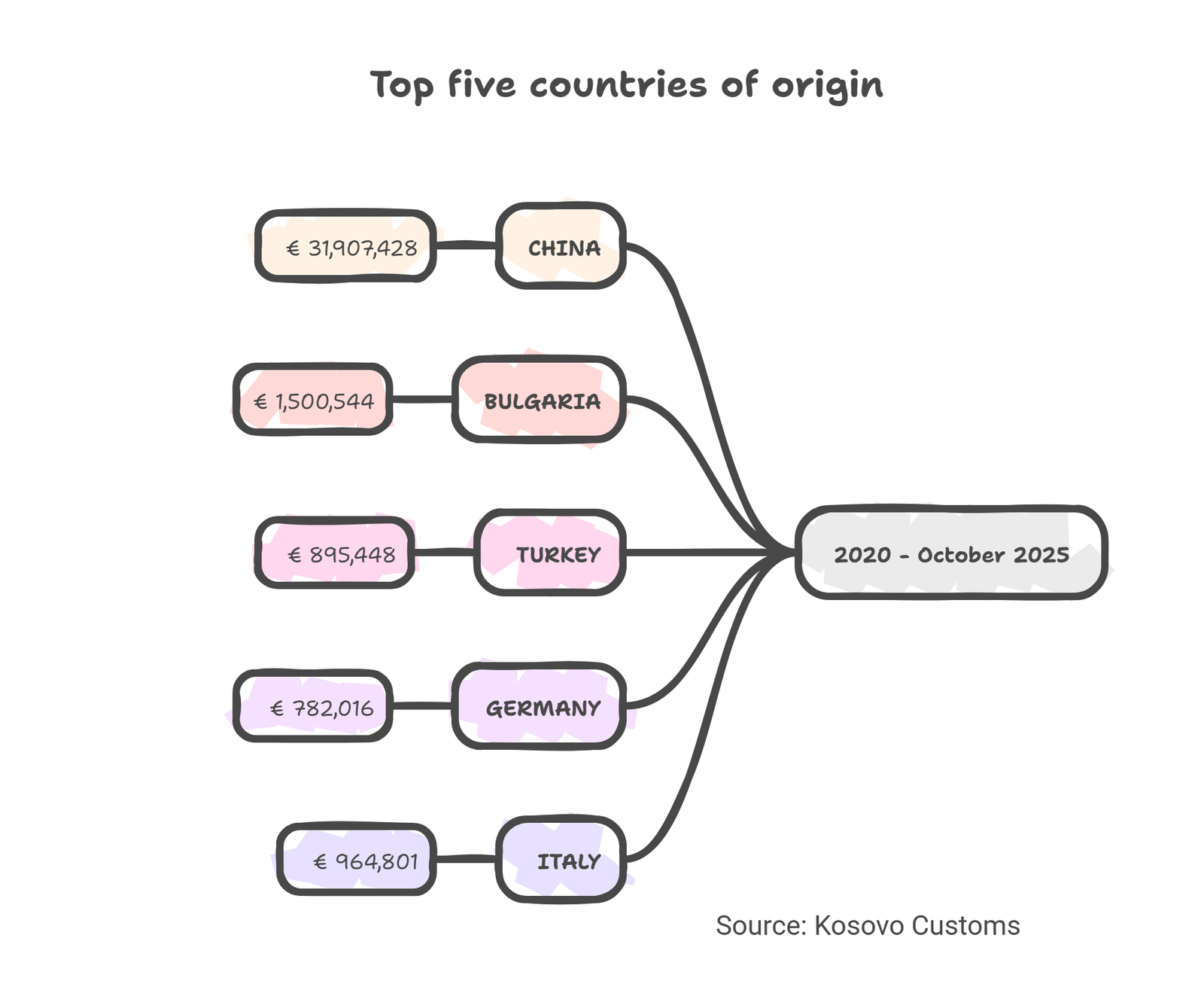
All solar panels installed in Kosovo are imported. According to data from Kosovo Customs obtained by Preportr, there is a growing trend of solar panel imports over the years. In the period 2020–October 2025 the imported value reached 38,216,981 euros. China is the country from which most panels were imported, participating with around 32 million euros.
 Preportr asked and interviewed several company owners about the cost of 7 kW photovoltaic systems. Prices range from 5,000–7,000 euros depending on the country of manufacture, roof characteristics, etc. The cost almost doubles if a battery is added, which stores energy for later use.
Xhevat Muqa says he began working with solar panel installations in 2007, initially with thermal panels for heating water, and later with photovoltaic panels for electricity generation.
He explains that three types of systems are used in the solar market:
On-grid systems connect directly to the grid, the energy produced is used immediately in the home, and any surplus is injected into the grid.
Off-grid systems operate independently, typically used in areas without grid access, mountain houses, villas and work with batteries.
Hybrid systems combine both: they can power homes or businesses, store energy in batteries, and inject surplus into the grid.
Muqa says there has been a rising trend in demand for solar panels. “Last year there was a 20–25% increase from businesses and households,” he says.
Panels are typically installed on rooftops but can also be placed elsewhere, including decorative panels for terraces.
Muqa states that photovoltaic panels come with a 30-year warranty, meaning they will function for at least that long without deforming or breaking.
“Thermal panels have a five-year warranty, but they function for 20–50 years and cannot really break,” Muqa adds.
Once activated, an app is installed on the user’s phone showing in real time how much energy is produced, how much is injected into the grid, and how much is stored in the battery.
Procedures, procedures, procedures
When everything seems simple and attractive, procedures appear to complicate and prolong the entire process.
Because of so many procedures, citizens are hesitating to invest in solar panels. For this reason, installation companies now offer to handle the process. Clients must give them a notarized authorization to represent them before the relevant institutions.
“Any citizen who would try to deal with these procedures alone would give up along the way,” Muqa says.
Here are the technical and administrative steps a citizen must follow after agreeing with an installation company and determining the panel location: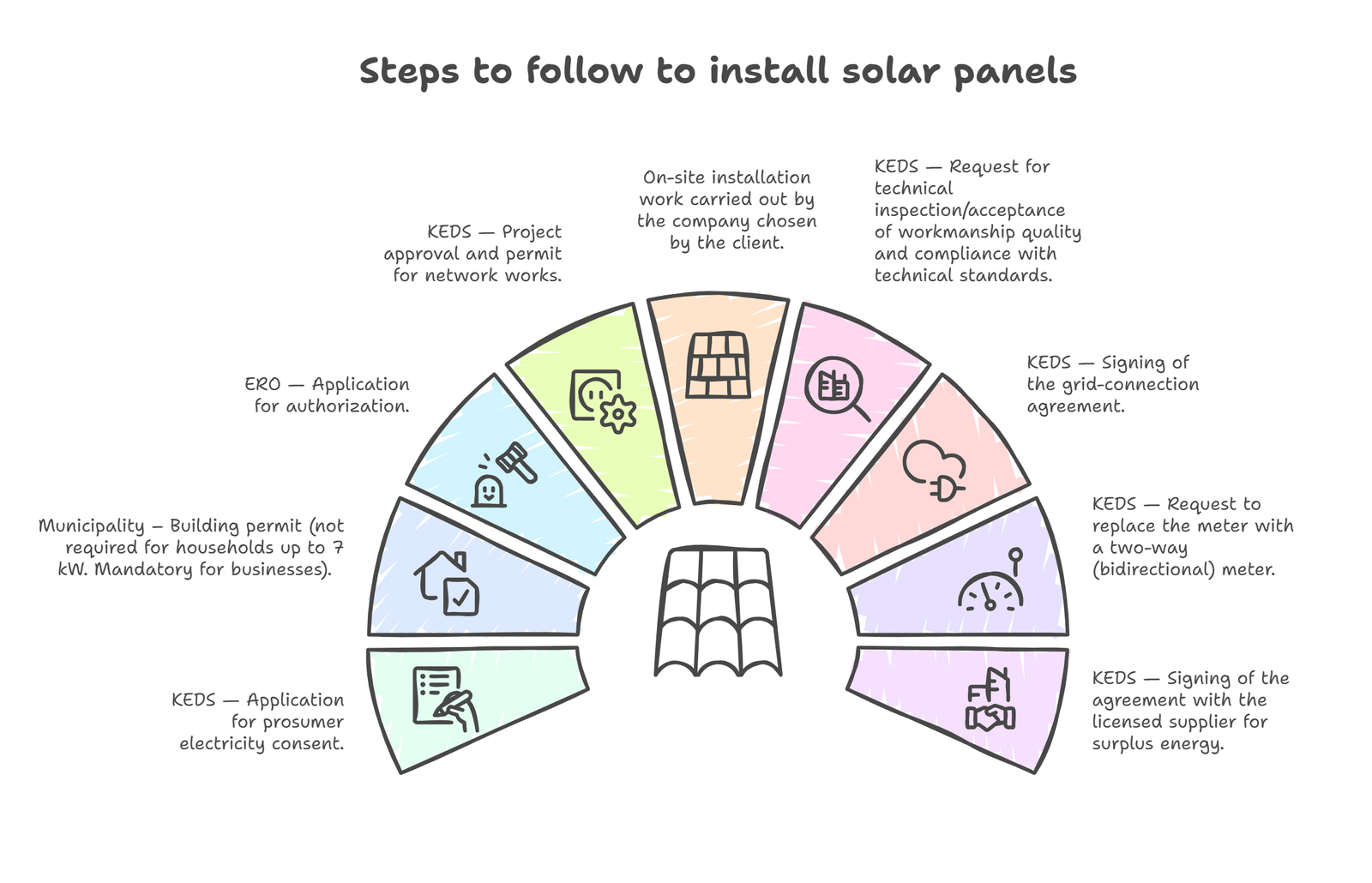 These applications are not done at once, but they depend on each other, on field work, on inspections, and sometimes additional documents or corrections are required, which causes extensive delays. According to all companies interviewed, these delays range from 3 to 12 months.
Bashkim Thaçi, who installed panels on his house in Prishtina three months ago, is dissatisfied because he still cannot use them due to missing final permits and the lack of a bidirectional meter from KEDS.
“The panels I have installed are only 7 kW, but to make them operational, one has to go through a long procedure, which causes many delays. These procedures need to be simplified for household-level installations. The bureaucracy is too lengthy and unreasonable for a family-level investor in green energy, which is a necessity and one of the 17 UN Sustainable Development Goals,” he says, emphasizing that 7 kW is not enough, and that at least 10 kW is needed for a typical house.
A positive development occurred in 2023 when the Ministry of Environment and Spatial Planning decided that households (up to 7 kW) will no longer need a municipal building permit.
Just to obtain the municipal permit for installing the panels, I waited an entire year. The procedures, in general, need to be simplified and made more practical, and it would be ideal if everything could be handled in one place
But businesses still require this permit, and delays remain the main issue.
“Just to obtain the municipal permit for installing the panels, I waited an entire year. The procedures, in general, need to be simplified and made more practical, and it would be ideal if everything could be handled in one place,” says Agron Kolukaj, owner of the woodworking company “Qarri.”
He expressed dissatisfaction with the procedural aspects of this process, which are slow and cause significant delays.
Kosovo under the sun
Kosovo’s solar potential is considered high. Reports, as well as installation companies, estimate that Kosovo has around 290 sunny days per year. A scientific study from 2021 states that Kosovo has an annual average of 278 days and 2,000 sun-hours.
Energy expert Lulzim Syla agrees.
“The best indicator that this data is correct are the solar projects already implemented in Kosovo on rooftops or on land. All have very good performance,” he says.
He adds that Kosovo also has a favorable climate, which ensures good energy production and protects solar panels and inverters.
Syla says Kosovo needs new energy capacities, therefore this momentum should be used wisely mobilizing financial resources and adapting laws to support investments and benefit citizens.
Regarding grid-connection challenges, he says that in some cities the grid is at full capacity. He believes the Energy Regulatory Office should revise the latest regulation to allow businesses and industries to install solar capacity according to their consumption and transformer size.
KEDS says the current distribution network requires continuous modernization and digitalization to support the growing number of prosumers and guarantee supply security.
Although Kosovo has significant solar potential, with over 270 sunny days per year, this capacity is still largely underutilized. It seems that this potential is not being taken seriously, as Kosovo continues to be held back by limited infrastructure, complex procedures, and insufficient investment. As a result, a major and genuine opportunity for producing clean and affordable energy is not being fully realized.
Bills reduced by 50–90%
Gentiana Alija-Shala, owner of “Alfa Solar Energy”, says that in her experience solar panels can reduce electricity bills by 50–90%. She notes that this depends on the system size compared to consumption, the household’s usage hours (how much they match to solar production), and the rules on how surplus energy is deducted from the bill.
“For a family that consumes mostly during the day, the savings are greater,” she says.
Muqa says that based on many cases, some families who used to pay electricity bills of 100 euros during the summer months, they now pay zero after installing panels, except the fixed charge of about three euros.
“On average, for a period of over 12 months, I can say that the total electricity bill is reduced by more than 80% for those families who installed a solar system,” he says.
Savings and investment payback are even faster for businesses, because they consume more electricity, mainly during the day, and electricity price for businesses is higher.
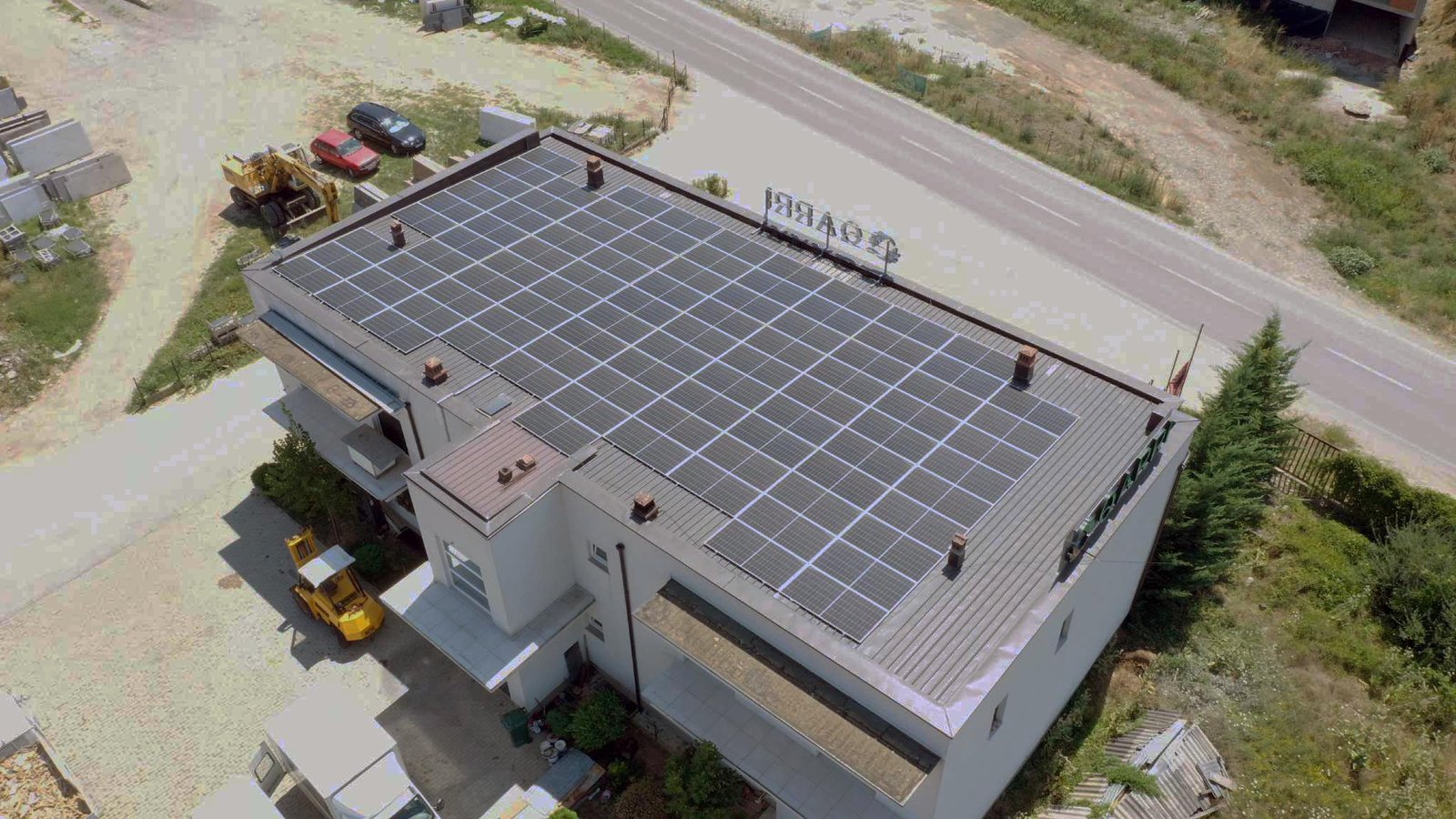
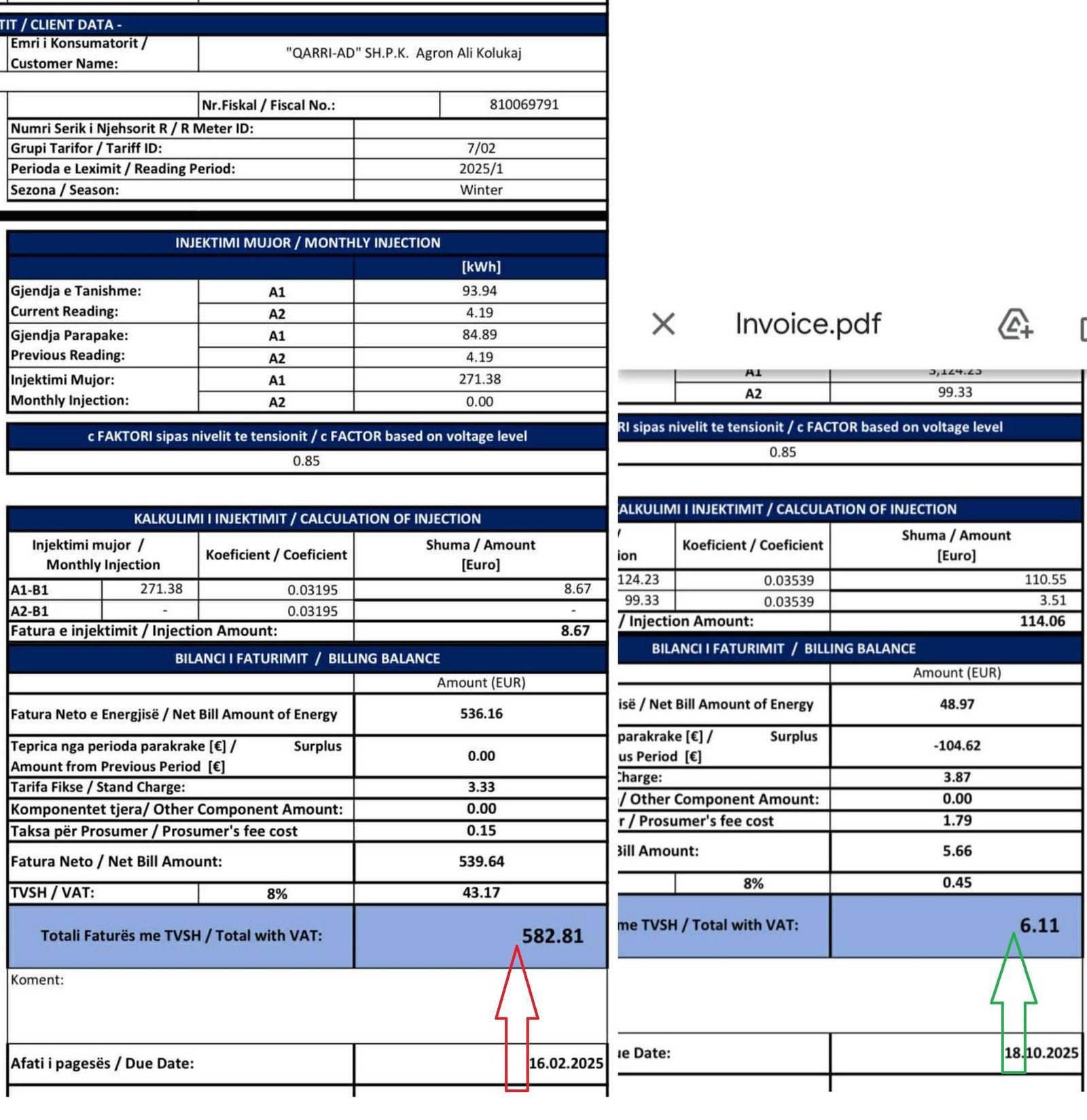
Agron Kolukaj, who installed a 65kW system, says his electricity bill was around 600 euros per month before installing the panels, but since April this year his bills dropped to zero (excluding the fixed fee). He says the investment is worthwhile for both businesses and households with higher consumption.
 Burim Ejupi, economist and director of INDEP, says that considering the 16.1% increase in electricity prices for households this year and the expected increases in coming years, solar panels are the most rational economic investment.
He says it is good news that solar panel prices have dropped around 50% in the last two years.
“If someone has 2,000–3,000 euros saved, it is better to invest in solar panels because that money will be spent anyway in 3–4 years on electricity bills. After that, panels produce energy and bills drop significantly or disappear entirely,” he says, adding that the return on investment takes three to five years, depending on the installed system size and electricity consumption.
“At present, there’s no investment that brings returns faster than solar panels,” Ejupi says.
He emphasizes that the maximum benefit from solar panels is achieved when combined with other efficiency measures, such as home insulation.
At present, there’s no investment that brings returns faster than solar panels.
Ejupi says that the Kosovo Energy Efficiency Fund (KEEF), an independent public institution, has invested in this area, making it possible for those who have benefited to now invest in solar panels.
According to data obtained by Preportr from KEEF, from 2024 until now, around 3,700 homes have been insulated through the grants provided by this institution, while an additional 200 homes are currently in the process of being supported under social schemes.
Environmental impact of solar panels
Electricity generated from solar power does not pollute the environment, unlike coal power plants. Currently, Kosovo produces around 95% of its electricity from two aging lignite plants, which are a constant source of pollution.
Egzona Shala-Kadiu, director of EcoZ, says that every megawatt-hour (MWh) of energy produced from renewable sources, solar or wind, avoids roughly 1.1 tons of CO₂ emissions that would have been produced by coal.
According to the International Energy Agency (IEA), the average emission factor of Kosovo’s grid is around 1.145 kg CO₂ per kWh consumed.
Based on this and the current 887 households producing solar energy, these systems avoid 8,100–9,100 tons of CO₂ per year.
She says solar energy reduces air pollution because it produces no emissions during electricity generation, directly improving air quality.
Another advantage is that panels can be installed on existing rooftops without using additional land, and modern technology allows production even with up to 80% cloud cover.
Solar panels also help preserve water resources, as they require little to no water for operation, and do not cause noise pollution unlike heavy industry.
She emphasizes that solar energy is clean, renewable, increasingly affordable, and supported by many suppliers. With reduced bureaucracy, Kosovo could become a potential generator and seller of solar energy in the now-liberalized market.
Shala-Kadiu says there have been several institutional and civil society initiatives to raise awareness about the importance of using solar energy, but according to her, these efforts are not sufficient. She emphasized that achieving sustainable change requires a more comprehensive approach, including broader subsidies for individuals and businesses, simplified procedures for installing solar panels, integration of solar energy education in schools, and the involvement of local communities in pilot projects.
Institutional support
The Ministry of Economy, through IPA funds, has subsidized the installation of photovoltaic panels for household consumers. According to data provided to us by the ministry, 283 household consumers have benefited, with a total value of €461,117, and a total of 1,844.47 kW of panels has been installed.
“According to assessments carried out by experts engaged for the call, this has resulted in an estimated net annual reduction of 5,391.17 tCO₂ (tons of carbon dioxide),” the Ministry of Economy stated in its response.
The ministry considers that these investments will contribute to reducing the demand for electricity consumption. According to them, these investments will help achieve specific targets outlined in the 2022–2031 Energy Strategy (100 MW of self-producers), contributing with 3.86% toward meeting this goal.
The Energy Strategy of the Republic of Kosovo for the period 2022–2031 aims for a significant expansion of energy production from solar sources. By 2031, it is planned to develop 600 megawatts of new photovoltaic capacity, while an additional 100 megawatts are expected to come from self-producing consumers, such as households and businesses installing solar panels for their own needs.
In addition to investments in photovoltaic panels for electricity generation, the strategy also foresees the use of panels for water heating, aiming to equip around 3,500 residential rooftops with this system over the next decade.
On the other hand, the Ministry of Agriculture in recent years has also included, in its grant calls, assessment points encouraging the use of solar panels in buildings funded through ministry grants, particularly in barns.
According to data provided by this ministry, under the Rural Development Program 2022 and 2023, 955 grant beneficiaries have invested in renewable energy, with a total capacity of 4,513 kW.
Rising demand and the future
The growing demand for solar panel installations has also contributed to an increase in businesses engaged in this sector. Accurately identifying them is difficult because, in the Business Registration Agency, they are not registered under this category alone. According to the agency, based on the economic activity code for electrical installations, and partially under plumbing, heating, and air-conditioning works, where integration of solar thermal systems is also included, there are a total of 1,865 registered businesses.
Gentiana Alija-Shala is among the few women in Kosovo who owns a company specializing in solar panel installations. Her company, Alfa Solar Energy, has been operating since 2021, and she says that in recent years there has been greater demand from households, but noticeably more from businesses focused on long-term savings.
“There are several factors driving the increased demand, such as energy prices, awareness of savings and environmental protection, more affordable technical solutions, and financing options like subsidies,” she says.
Gentiana Alija-Shala adds that solar energy will be used much more frequently on rooftops of homes, businesses, and farms, and that grid connection will become easier.
“I expect growth in rooftop projects and large photovoltaic parks. The contribution of solar energy to the energy mix will increase significantly, especially if there is political support and investment in the electricity grid,” she said.
Separately, in May 2023, Kosovo held its first electronic auction for a 100 MW solar park, which was won by the Orllati consortium at a price of €48.88/MWh. The project, with an investment of around €70 million, is expected to be built in Rahovec and is considered a cornerstone for large-scale solar energy production in Kosovo.
This story was produced with the support of Thomson Media and Open Society Foundations – Western Balkans, within the project Greening the Narratives: Advancing Awareness of the Green Transition in the Western Balkans. The content is the sole responsibility of the author and does not necessarily reflect the views of the supporting organizations.